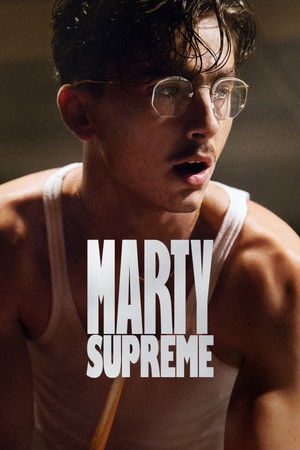
[83/100] I don’t know what to do with this movie. It’s well made. The performances are strong. The cinematography is sharp and propulsive. There is an omnipresent, unyielding tension that holds your attention despite an extended runtime. You feel the grit, the sweat, the ambient desperation that infuses the film and gives it a distinctive character at a time when so many films feel like they come off a conveyor belt.
But it’s also two and a half hours with a self-centered, largely unrepentant asshole who uses people and leaves nothing but destruction in his wake. I get it. It’s a character study. We’re prompted to question what would make someone like this, teased with moments when he might show a little decency only to see him double-down on his wicked ways, made to wonder if we should root for him to succeed or to receive the heapfulls of comeuppance he so richly deserves. It’s compelling, but it’s also kind of miserable.
During the movie, a part of my brain kept saying, “This is just Uncut Gems again, right?” Marty Mauser is not Howard Ratner, exactly. But once again, Josh Safdie (sans his sibling) delivers a selfish prick, grifting his way through New York City in the hopes of ginning up the cash he needs for his grand quest, stepping on every friend, ally, and family member in the process, and pissing off all the wrong people in the process as his prospects get lower and the peril gets higher.
Hell, I swear to god, in a few moments, Timothée Chalamet sounds like he’s doing the infamous Adam Sandler yelling voice. There’s a cynical, not-very-serious part of me that says, “Your last film came close to breaking through on the award circuit, but couldn’t quite get over the hump, so you do basically the same thing again, only this time, you make it a period piece and cast a more traditional Oscar contender as the lead for another bite at the big apple, huh?”
I don’t really believe that, though. And the comparison to Safdie’s prior film is, admittedly, a reductive take. Beyond the Safdies’ own work, there’s echoes of the Coen Bros.’ Inside Llewyn Davis here, with parallels beyond the common motif of abandoned pets. The savvy, smalltime operator getting caught up in larger events has shades of last year’s Best Picture winner, Anora. The movie also plays like a grittier, more hardscrabble take on something like Catch Me If You Can. And Marty Supreme is far from the first film to feature an amoral but motivated con artist hustling their way through the five boroughs.
But despite a range of comparators, the film suffers from the same pathology that Uncut Gems. Put simply, it’s not fun to spend this much time watching a two-faced jerk take advantage of decent (or decent enough) people, only to turn around and hang them out to dry at the first opportunity.
Marty is good at what he does. At the beginning of the movie, even if you have reservations about the ethics of some of his choices, there’s a certain thrill to watching him work. Especially when he’s taking advantage of well-heeled schmucks, seeing a talented grifter in their element can be enjoyable.
There’s also value in undercutting that archetype. The longer we spend with Marty, the harder it is to stomach or rationalize away his choices. I take that to be the point. It’s easy to have your reservations about Marty from the beginning, but in the early going at least, he’s at least somewhat sympathetic. A motivated viewer could write his ill-behavior off as someone from the wrong side of the tracks doing what they have to do to live out their dreams when starting from such a disadvantage. The rise isn’t always pretty, and there’s something to be said from not flinching from that.
There’s even more to be said about how sometimes an asshole is just an asshole. The way he tries to screw over his own friends and family, the way he turns a blind eye towards death that happened because of his choices, the way he neglects and abandons a poor dog, the way everything he touches turns to shit, makes it increasingly impossible to do anything but recognize Marty Mauser as a bastard.
So often our culture idolizes the people who have a goal and are determined to realize it no matter what. That's especially true for sports movies, where those who present a singular focus on winning and the love of the game are held up as heroes. Marty Supreme commendably subverts that archetype with vigor. The film manages to elevate table tennis to the pedestal of grand, heart-pumping sport. But it also cleverly uses the trappings of the sports movie grind to take the usual protagonist’s mindset apart piece by piece.
Nothing drives that home more than Marty’s treatment of his quasi-girlfriend, Rachel Mizler. His refusal to acknowledge his baby, his using the eight-months-pregnant mother of his child as a pawn in his schemes, his corrupting her into trying the same sort of crap in the hopes of either fending for herself or grifting her way into his good graces, him fucking abandoning her at the goddamn maternity ward after his bullshit gets her shot -- all reveal this guy to be complete and utter scum on a practically cellular level.
And look, as you can tell from my profanity there, it kind of makes me mad just thinking about it. That is, ironically, a good thing! Movies should provoke a reaction! Marty’s actions feel extreme, and there is certainly a heightened tone to the film, but they never feel unbelievable. They scan as a larger-than-life rendition of real life behavior from abusers and narcissists, stitched together for maximum cinematic frustration. A certain part of me respects how the film dramatizes that tremendously.
But a certain part of me hates it. Marty Supreme just escalates and escalates and escalates. And on the one hand, that's a good thing. Even more so than Uncut Gems, you get the sense of the noose steadily tightening around Marty. He resorts to more and more desperate measures, with more and more perilous consequences. The schemes feel less static and ever more suspenseful as Marty takes grander and grander leaps to make his ping pong dreams come true, and bigger and bigger edifices come crashing down around him.
On the other hand, it all comes at the cost of other people’s misery, and seeing someone so devoid of empathy, so obsessed with their own shit to the point of utter callousness at anyone else’s most basic needs, is exhausting and despiriting over the course of one hundred and fifty minutes.
I can't claim there’s a part I would cut. Every interlude of misery has meaning. It’s all connected. It all feeds into the movie’s themes and reveals character. But by god, at some point, we get it, and it’s just a bad time at the theater to have to keep watching an asshole be an asshole over and over again.
Despite that, Marty Supreme manages to do better than Uncut Gems. For one thing, Marty is not nearly as actively annoying as Harold was. As much trouble as he gets into, Marty seems genuinely good at his hustles (they’ve gotten him this far, after all), so it’s more fun to see him work his magic. And there are at least a few moments of decency (like when he bashes Rachel’s husband), and a few hints that he comes from difficult circumstances and a manipulative family, that make him comprehensible and even sympathetic in moments, even if the movie is practically designed to tear any shred of goodwill the audience may harbor for the character asunder.
Despite all that, I don’t fully know what to make of him. He deserves all the hardships he faces, and if anything, gets off too easy given the torrent of pain he causes. But however silly doing all of this for table tennis feels, he has genuine pride in himself and in his work, often to his own detriment. You do see occasional glimpses of the human being buried beneath all the layers of cruelty and grifting. And he’s often positioned as a working class kid set against powerful, moneyed men who look down on him.
Marty Mauser is presented as the polar opposite of his table tennis ally, a Holocaust survivor who braved bees and bombs to nourish his fellow starving prisoners with his own body. He cannot leave well enough alone, cannot control his basest impulses, and cannot stop pushing the envelope to unreasonable extremes time and time again, much like Harold Ratner before him. But unlike Marty’s gemological counterpart, there is still something tragic about the young man who has set the course of his life according to this crooked star, grasping for things he seems fated to fall short of.
So it is melancholy when, against all odds, he makes it to Japan, only to be told by the commissioner of the world championship that all his schemes to make the tournament are too little too late. It is understandable when he can no longer stomach the humiliation of his farce of a scripted exhibition against his Japanese rival. And it is intense yet hollow when, in a match that is both meaningless and means everything, he avenges his loss from the film’s opening, proving that, by god, for all his bluster, he is truly the best in the world at this.
Only it’s not enough. A combination of pride, poverty, and circumstances will not allow him to rise to his potential. Here is the culmination of his grand, much-ballyhooed purpose, and try as he might, no matter how many bodies and bitterness he leaves behind him, it still remains just out of reach.
There is so much power in that idea. I don’t love the way that Marty Supreme dramatizes it. In my heart of hearts, I’d probably rather see the kid get what’s coming to him from everyone he’s hurt. But the choice that Josh Safdie and co-writer Ronald Bronstein makes is more interesting than that.
Because there’s two ways to read the ending, with Marty’s return to the mother of his child and tearful look at his newborn baby. One is hopeful, of a man who claimed to want fortune and fame but deep down, only wanted to prove himself, or at worst, satisfy his fixation. In that sense, it doesn't matter that he was too late to intrude on the official championships. He proved himself against the best competition available, and can now turn to a normal life with his head held high and be a real person.
The other is cynical. It suggests that Marty gave everything he had to achieve his dream, however abhorrent and ill-advised his methods were, and having come up short, he has no choice but to go home and “settle.” It’s the prospect that he decries to Rachel and that Kay seems to implicitly warn him against, herself a symbol of great talents cabined and squandered. In that telling, he is chastened by life’s setbacks, and his tears at this sparkling (if oddly skeptical) infant are not of joy, but the fruits of a realization that no matter how high he aspired to fly, he has now floated back down to Earth.
I can't pretend that I would race to watch Marty Supreme again. It is not a fun experience. And even as someone who can appreciate and even enjoy when a film is not meant to be a fun experience, the film is a lot of that to have to withstand for what often feels like an eternity. Yet, by god, it is doing something with all that misery, turning into a study, a parable even, that can, in the right moments, captivate almost as much as it repulses you. After all that, I don’t know if I like it, but I can't deny the value of the film’s project and what it ultimately achieves, even if I’m not exactly happy to be along for this twisted, futile ride.

 Plex
Plex  Kodi
Kodi  Stremio
  Jellyfin
  Netflix
  Disney+
  Prime Video
  HBO Max
  Trakt
Trakt  TMDB
TMDB  Letterboxd
  IMDb
IMDb  Simkl
Simkl  TVTime
 United States