[9.1/10] The universe is bewildering. Our tiny, ape-like brains aren’t meant to hold the whole of existence within them. The sheer volume of possibilities, of points along the path where our lives could diverge, of the alternate selves that exist for want of a nail, is overwhelming.
*Everything Everywhere All at Once* embraces that as a theme, an aesthetic, and an ethos. The film interrogates that feeling of aimlessness and powerlessness underneath an ever-shifting and seemingly indifferent firmament. It uses a raft of sharp choices in rapid-fire editing, creative use of colored lights and repeating symbols, and other split-screen effects to visually convey the controlled chaos of our choices and the consequences that ripple out from them. It deploys a surreal sense of humor and visuals to capture the unimaginable swath of possibilities that lay before us, with an undercurrent of sincerity that makes it okay to both laugh and feel. And it tells a story of one woman confronting not just her own life, but all the lives she might have lived, and her relationship with her father, her husband, and her daughter, caught up in the multiversal mania that somehow puts all three into stark relief.
In that, it is a triumph. Somehow, writer-directors Daniel Kwan and Daniel Scheinert combine the reality-questioning kung-fu bent of *The Matrix* (which receives more than a few clear homages), with the dada-ist existentialism of *Rick and Morty*, with stylistic flourishes and genre-bending mash-ups a la Quentin Tarantino, with the outre introspection of Charlie Kaufman’s filmography, with a recent strain of intergenerational understanding flicks like *Turning Red* and *Encanto* (not to mention another hilarious Pixar homage). This combination of styles and influences never feels ungainly, but instead calls to the diversity and multiplicity of experiences and relationships that are the beating heart of the film from start to finish.
All those grand choices might not have worked without a conveyor belt of tremendous performances all around. Michelle Yeoh has to wear a ton of different hats as Evelyn, the curt and unyielding matriarch of the Wang family who finds herself expanding her mind as she slips into the multiverse, and Yeoh is up for all of it. No persona, no matter how intimate or outsized, is too much for her, and she inhabits both the sharp-elbowed matriarch who regrets the missteps that have led her to a life of challenges, and the more open-hearted mother, wife, and daughter who comes to see the wonderful connections in her life that give that existence meaning despite the struggles.
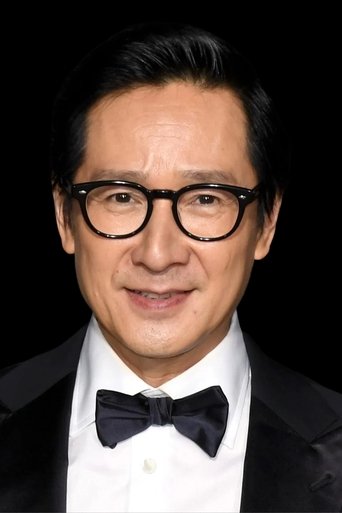
Ke Huy Quan is the heart of the picture as Waymond, Evelyn’s husband who seems meek and meager at first, but whose kindness turns out to be the strength that turns everything around, even outside of his badass Morpheus-like alternate role in the story. His sympathy and earnestness prove to be the most touching part of the film, and Quan sells it like gangbusters. The legendary James Hong is still a powerhouse at age 93, giving a layered performance as Gong Gong, Evelyn’s disapproving father and avatar of the generational mistakes that stand in the way of a family’s happiness. Jamie Lee Curtis shines as Deirdre, a prickly IRS inspector whose audits plague the Wang family, which make her that much more impactful as an interdimensional bruiser, but who has depths and a sense of understanding of her own which lends to the empathetic nature of the film.
And yet, the true counterpoint to Yeoh’s outstanding performance is Stephanie Hsu as Joy, Evelyn’s daughter and, alternatively, Jobu Tupaki, the multiverse menace who the gang of verse-jumpers is fighting against. The script calls on everyone to play dual roles here, and Hsu soars as both the put-upon daughter in an immigrant family who struggles to feel accepted by a parent who doesn’t understand them, and as the nihilistic big bad ready to embrace the lack of destiny as a reason to abhor the notion of caring about anything. And yet, it’s the resolution of the two, the child who feels lost without her mother’s embrace, and the being on a higher plane of existence reckoning with unmooring “discoveries” and the harsh truths of the universe that elevates the role and the performance. Hsu is piercing in how she communicates both these ideas and the sentiments that erupt in her character as both evolve.
Along the way, *Everything Everywhere All at Once* is a stylistic tour de force. A magnum opus of editing, the film’s creative team blends a variety of aesthetics, aspect ratios, mediums, props, costumes, and persona into one complete, but kaleidoscopic whole. There’s a unity of theme and craft here, where the audience shares the characters’ experience of bouncing through these different worlds, experiencing the same rush of images and emotions Evelyn does, while light, sound, and plot combine to make these questions of grand philosophy something you can reach out and grab, even as it inevitably falls through your fingers.
Oh, and if that weren’t enough, the movie is also action-packed and hilarious. The Daniels and their team put together some truly inventive fight scenes, which turn fanny packs into deadly weapons, sign-spinning into a martial art, and other everyday objects into fuel for calamitous combat. The fights and fisticuffs are matched in ingenuity with the film’s loony sense of humor. The ability to swirl through different realms results in absurdity after absurdity, from a dimension of hot dog fingers, to Randy Newman-voiced raccoon puppeteering a chef a la *Ratatouille*, to a pair of rocks with googly eyes dialoguing about the infinite mysteries of the universe.
Yet again, it’s when the creative team combines these disparate, superlative elements that the movie truly shines. The fight scenes are that much more inventive and exciting when the film’s villain turns a pair of floppy dildos into her means of attack. The ridiculousness of humans with big dangly hotdogs for fingers somehow has that much more force when the movie pivots toward taking the idea seriously, examining the beauty that would emerge even in such a silly realm. And the rock conversation is a low key highlight of the film, an avant garde representation of peace apart from chaos, and a desire to be unbound from expectations but bound to each other in even the most esoteric of circumstances.
Therein lies the film’s key message. It acknowledges the unbearable weight of a universe full of choices that is too big for any of us to fully comprehend. In the wake of such a psychic burden, it presents two choices.
On the one hand, you can embrace nihilism. You can decide that nothing matters and so there’s no point to those decisions. It tantalizes the viewer with the relief of that, than in a world where choices are irrelevant, none of your mistakes and regrets amount to anything worth worrying about. As realized through Jobu Topaki and the amusing conceit of a bagel that is truly “with everything”, that way lies a callous drift toward self-immolation, a denial of any value in persisting where human beings are, in any flavor, still small, stupid pieces of shit.
But it lands on a realistic but uplifting alternative -- that in a world with innumerable, dizzying choices and potential paths before us, there is still value is kindness, in acceptance, in connection with those we love, in the familial and communal bonds that support us and give our lives meaning even when we’re just “doing laundry” and taxes. That is the comfort amid the existential quandary -- not the absence of meaning, but the places where we find it in our bonds with one another, who validate the people we are and fill in the parts of ourselves that are missing and calling out for someone else. The images of embrace between mother and daughter, of a whole family holding back a child from the abyss, sell the idea like nothing else.
There’s a fashionable worry of late that somewhere along the line we ended up in “the darkest timeline.” At some point, choices were made that left the universe in a state of being off, more divided, more subject to painful events and catastrophic perils both personal and global. We are ever more aware of discoveries that make it easy to feel small and powerless within such waves, incapable of restoring our own lives, and the universe we inhabit, to what we hoped for from each.
And still, in the gobsmacking array of possibilities and different routes our existence could take, *Everything Everywhere All at Once* affirms that which matters even when nothing else matters: the urge to be with those we love even when nothing makes sense, the impulse toward kindness that makes the world a brighter place even when it seems bathed in darkness, and the bonds of family, acceptance that cut through the whirlwind of causality and overwhelming possibility that seems to swirl around us constantly and, in the end, provide us a rock to hold onto.

 Plex
Plex  Kodi
Kodi  Stremio
  Jellyfin
  Netflix
  Disney+
  Prime Video
  HBO Max
  Trakt
Trakt  TMDB
TMDB  Letterboxd
  IMDb
IMDb  Simkl
Simkl  TVTime
 United States