[9.2/10] “Lead us not into temptation.” That line from The Lord’s Prayer, uttered earnestly by the film’s protagonist and with taunting menace by the villain, is at the heart of *Sinners*. Our heroes are all inextricably drawn to something -- a person, a talent, a vice, a cause -- and try as they might, they cannot resist it. Sometimes that's for the better; sometimes it’s for the worse. But ultimately, none of them can deny that pull, no matter where it leads them.
The beauty of *Sinners* is that it soars as a sweaty-yet-stunning vampire movie, but that it doesn’t need its blood-sucking turn to be great. The richness of its characters, the carousel of great performances, the equally stark and beautiful turns of its imagery, the sumptuous tributes to the power of music, the profound sense of place, its thoughtful but nimble treatment of its weighty themes, the pure sense of style that abounds throughout, could all propel writer-director Ryan Coogler’s film to greatness even if it chose to eschew the undead.
And yet, *Sinners* is undeniably a great rendition of the undead cinematic form. The film follows a format that will be familiar to horror aficionados: introduce all the characters, trap them together in an enclosed space, and then force them to confront the monsters at the gates. The structure is a sturdy and venerable one. But it’s one Coogler and company do with the form that makes it marvelous.
Honestly, the extended first act introduction, where we get to know our players, understand their connections to one another, and get the band back together may be my favorite despite the dazzling fireworks that follow. The film has too many characters to sketch any of them in depth. But the script gives each of them so many subtle moments of character, gestures to their pasts, and explications of their bonds and mutual grievances, that you feel like you know them well by the time the flames start flying. In an era when overexplanation has become the standard, Coogler is content to nod toward the personal histories and personal drives, and trust his audience to understand the rest. It’s an artistry and restraint that ultimately makes his key figures feel more real.
And for whatever’s not on the page, a murderer’s row of brilliant performers brings the rest to life with nigh-flawless alacrity. Where detail is scant, personality must suffice, and *Sinners*’ characters have that in spades. It’s telling that even the film’s less developed figures -- Pearline, the protagonist’s love interest; Cornbread, the bouncer; Bo Chow, the twins’ supplier and confidante -- come with just enough shading and more than enough presence that they feel like bigger characters than they really are.
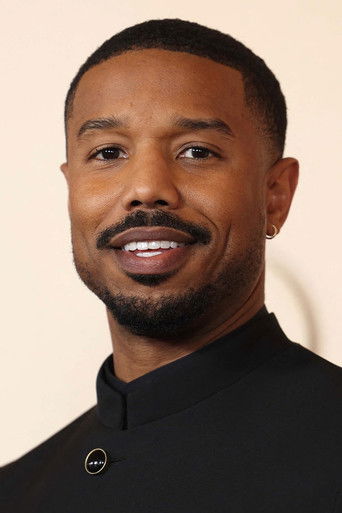
Which is telling, because there’s no shortage of scene-stealers here who could command the film on their own. Michael B. Jordan is impeccable as always, playing both of the Smokestack twins, giving each a distinctive personality, and selling the hell out of emotional moments where, by definition, he had no scene partner. Jordan is Coogler’s cheat code, and when he’s acting for two and still knocking it out of the park in every scene, you quickly realize that you’d push that anytime you could too.
But he’s matched in energy and presence by Wunmi Mosaku, who plays Annie, Smoke’s estranged wife. She is both the most astute and sharp-witted character in the film, and also its heart. That is a tough line to walk, and one Mosaku pulls off in ways that make you cheer for her and your heart break for her, and hers may stealthily be the best performance in the film. Even so stellar a performance has to compete with Delroy Lindo’s kind-hearted, hard-living, Delta Slim. His character is possessed by a hard-won wisdom, representing both the dangers that the young protagonist is warned of repeatedly, but also the heart of gold and intergenerational compassion that holds communities together.
And that's just scratching the surface. Hailee Steinfeld’s Mary, who’s Stack’s ex, manages the transition between human and vampire better than anyone. Jack O’Connell’s head vampire, Remmick, is the definition of unnerving but genteel menace. Li Jun Li’s Grace Chow, the savvy wife of Bo, pulls off a fury and determination that takes your breath away. And Miles Caton plays our passenger protagonist, Sammie “Preacherboy” Moore, with a voice and a passion for his musical art that belies his years.
That is yet another boon of *Sinners* -- it is as moving and splendor-filled tribute to the power of music as you're likely to find on the silver screen. In a movie with countless gorgeous images, impressive shots, and glorious bloody combat, the peak of the movie very well may be its midpoint paean to the unifying power of melodic sound.
My goodness, the way Coogler and company link present and past, with sumptuous figures in the historical record linked with those who are yet to come, bound together in one glorious symphony, blending together musical influences that harken from the cradle of civilization to the thumping rhythms of modern sound, enmeshed into one singular whole that captures hearts and minds across cultures and generations, is nothing short of a revelation. It would be worth watching *Sinners* for that superlative scene alone.
But it also speaks to the film’s themes: that there is a transcendent force which, when channeled correctly, creates an almost magnetic pull, both for the people who are its practitioners, those who wish to drink from that well and be filled by its communal power, and those who covet it and wish to either claim it for themselves and stamp it out in a fit of envy.
It is that pull toward something that gives *Sinners*’ characters life and depth. Sammie is drawn to the life of a musician, his unique ability to find the purest plucks of that sound, despite the disapproval of his pastor father. Stack and Smoke want to make their fortune, on their terms, to find the freedom that's denied them by an unjust society.
But Stack is still drawn to Mary, despite his efforts to scare her away toward a better life than she could have with him thanks to the fairer shade of her skin, even if she won't be denied. Smoke is still drawn to Annie, despite the shared trauma of a lost child that haunts them both. And both still crave to build something for their communities, despite the forces dead set on tearing them down. Whether it’s love, liquor, or lyricism, all of the characters are drawn to something they can't resist, whether it’s good or bad for them, or both in equal measure.
Those ideas dovetail neatly with the vampiric tropes that Coogler and his team use to great success. The Vampire’s need to feed spurs a different sort of drive that matches the more personal ones the characters experience. But in a way that fits as well with films like *Night of the Living Dead*, the presence of some ghastly other at the door or in your midst also brings challenges to the fabric that binds these people, testing who they are and what they mean to one another.
As much fun as it is to see our heroes slay baddies with action movie bona fides in a symphony of stylized violence, the most gripping moments are rooted in the way the film’s horror rests on character. Smoke tears himself apart honoring his promise to his wife to spare her an undead fate once bitten, to the chagrin of his now-vampiric brother who envisioned a life of freedom for them as creatures of the night.
In a scene that calls to mind *The Thing*, the group eats cloves of garlic to prove their human bonafides, deriving great tension in fraught moments with Pearline and Slim play at the audience’s fears, but also the other characters’ affections for those in their circle. And in the most bold and breathtaking choice of the film, Grace lets the barbarians through the gate rather than wait out ‘til sunrise, because her husband is gone and her daughter’s life is at stake, and she cannot bear to endure passivity given what she has on the line.
In a film full of bloody spectacle, it’s these moments founded on who the characters are and what they mean to one another that elevate *Sinners* into something special. From the reveal that Smoke couldn't bring himself to slay his brother, to Slim offering himself up as bait to let his brethren escape, the bonds between our players are tested, their reactions to a demon in their loved one’s form measured, and the decisions they make in the face of such galling horrors tell the story of who they are and the price of their desire for community and freedom in lyric tones.
That latter point drives the film’s most devilish temptation. When Remmick tries to lure his prey into their circle, he doesn’t simply offer power or lucre. He offers fellowship and community, apart from the confining limitations and wanton injustice that infected the delta in the 1930s and beyond. It is telling that Remmick is presented as an Irish folk singer, a choice that makes him a funhouse mirror version of Sammie, whose musical talents make him the vamps’ choicest prey.
The decision calls to mind movies like [*The Nightingale*](https://trakt.tv/comments/294442), which draw links between the oppression of peoples across cultures and communities. Remmick speaks of having the Lord’s Prayer forced on his people much the way that Delta Slim speaks of the same for his, each finding refuge in the music as something pure and unconstrained by their oppressors’ trespasses. Remmick’s desire is the dark-tinged obverse of the twins’: to forge a community in places where those oppressors cannot get to them, something purer and more permanent than the bastards would let them have in the daylight.
It is, as all great villain offers are, hard to deny the temptation of that. What Remmick says has the ring of truth. The Klan descending on Smoke and Stack’s one-night juke after taking their money confirms it. The pull of the life Remmick promises, one of blood but also of freedom, is understandably hard to resist, and some succumb to it on those terms. And yet, there is power in each character choosing their own path.
The most moving of those is Smoke, who guns down the bigots who’d brutalize his people for daring to make a place for themselves, but who is reunited in paradisic tones with his wife and child. If you can remain unpierced when he holds his lost, infant daughter, and tells her “Papa’s here,” much as he did over her grave, you are made of sterner stuff than I.
The most profound is Sammie, who lives through all this horror, comes close to his death, and still chooses the life of the musician that sees him turned away from his pastoral roots and still finding the purest of notes sixty years later. There is something perilous, even deadly, in the life that Smoke and Stack warn his young cousin from following. But there is also something exhilarating about it, a pull toward the transcendent that attracts friend and foe alike, that Sammie cannot deny himself, even seeing its risks and its costs.
And the most surprising is Stack, who escapes the bloody encounter and gets to live the life with Mary as creatures of the night that he denied himself when they were alive. For them, the freedom, the desire, the chance to have something that's theirs, comes with a preciousness untainted by their hunger. They, more than anyone, seemed to accept Remmick’s view of the world, and yet find a common cause with Sammie in his old age.
There is a thrill in those moments, of being with your people, of having the right and the ability to choose your own path, that abides even when your roads diverge. Sammie, Smoke, and Stack would never be together after that pivotal night at the juke joint. They were each pulled by different things: the people they loved, the music they made, the chance to live life on their own terms, that were fated to separate them. But even as those temptations each damned them in part, each also gave them what they truly wanted. And in the bloody wake of that fateful evening, their kingdoms come.

 Plex
Plex  Kodi
Kodi  Stremio
  Jellyfin
  Netflix
  Disney+
  Prime Video
  HBO Max
  Trakt
Trakt  TMDB
TMDB  Letterboxd
  IMDb
IMDb  Simkl
Simkl  TVTime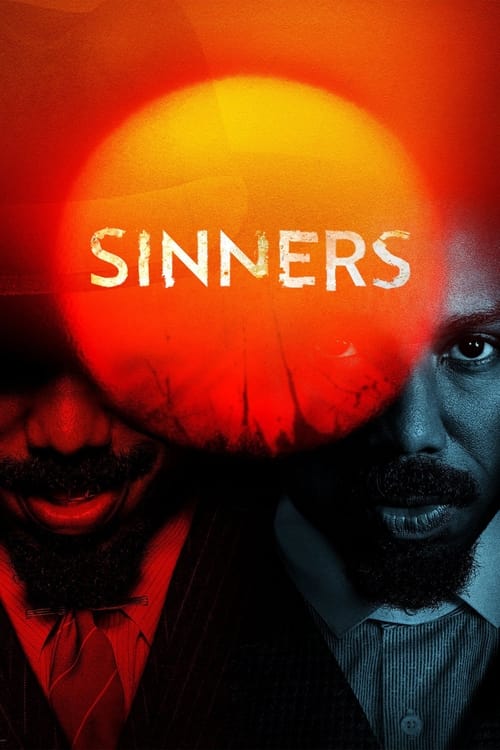
 United States