[7.7/10] *Conclave* is stately, hopeful, and a little bit dusty. At its best, it is an elegant-yet-humanizing look at the soul of an institution, and the men and women in a soft but fierce tug of war for it. At its worst, it is an idealized, twisty melodrama that's not nearly as serious as it pretends to be.
The story of a conclave of cardinals confabbing and scheming and cajoling one another to select the next Pope works as a canvas for both palace intrigue and human drama. The former keeps your attention throughout the film. In its wind-up, *Conclave* threatens to be stodgy. It has the rhythms of the typical prestige picture, with severe looks in elegant rooms. But soon, it shifts into a series of ploys and reveals, toying with audience’s expectations of who’s playing the game, and who will ultimately end up in the big chair.
The twistiness of it all is to the film’s benefit and a bit of its downfall. On the one hand, despite a certain pretentiousness to the tone, and stuffiness to the presentation, *Conclave* proceeds with an ever-present element of suspense. Secret love children, greased palms, backroom deals, and hidden papers in secret compartments all add a certain soapiness to the proceedings that keep them lively.
But at the same time, *Conclave* wants to be a serious meditation on the direction of the Catholic Church and similar institutions, and on the type of person fit to lead them into the next era. The pulpy turns and reveals in the narrative, and the fascinating-yet-cheesy *Survivor*-style alliances and sabotage, detract from that larger project. One part of the film is an awards season drama with Something To Say™. Another part is a bout of dramatic-but-cheap entertainment, dressed up in an ornate shell.
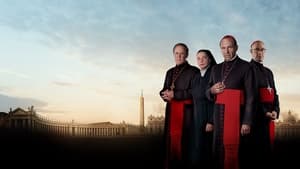
Two things elevate the film above its surprisingly basic, soap opera-style theatrics, though. One is that the shell is genuinely ornate in the best ways. Cinematographer Stéphane Fontaine and his team present a series of elegantly-crafted images to add a sense of sheer artistry in nearly every frame.
Sometimes the choices in lighting and composition add to the meaning of the film. The numerous shots of characters looking small in cavernous spaces adds to the sense of the protagonist in particular as a mortal man tasked with enormous responsibility, and the dusty hues when the light pours in after an explosion create a Renaissance-like framing that put the dean of the College of Cardinals in the same posture as the idealized souls he gazes at on the painted walls.
Sometimes they’re just nice to look at. You can certainly derive meaning from a sweep of umbrella-covered religious potentates or symmetrical framings in regal settings. But at worst, you can randomly hit pause and see a lovely image, which adds to the sense of pure visual craft on display. And sometimes, the choices are functional. Fontaine and director Edward Berger favor supreme, often starkly-lit close-ups for important moments, allowing the film’s sterling set of performers to carry the day.
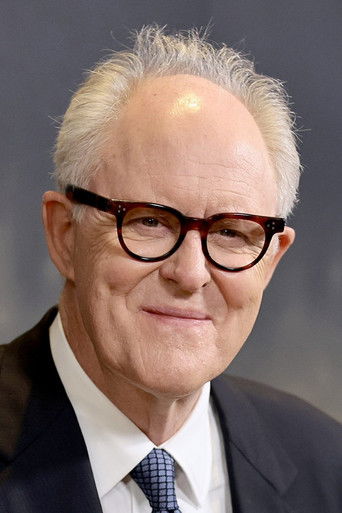
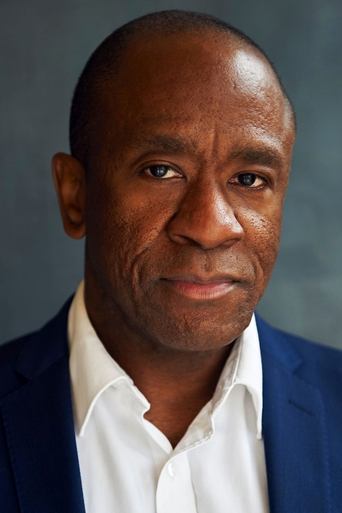
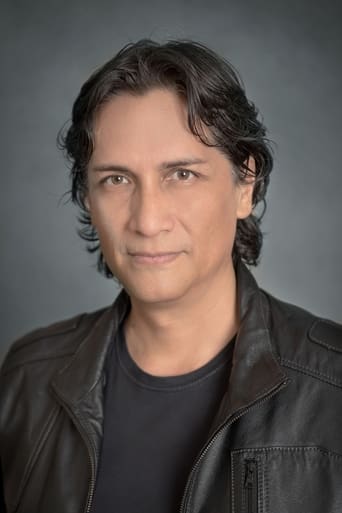
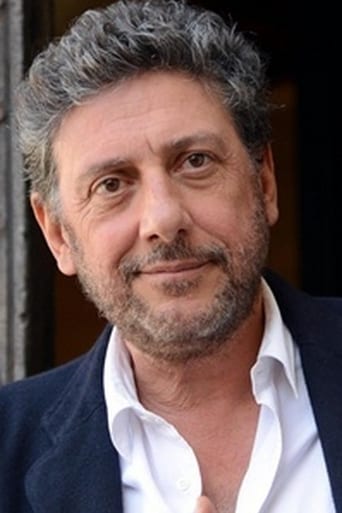
Therein lies the other aspect of *Conclave* that elevates the film. This is an absolute murderer’s row of great actors. From John Lithgow’s faux-genteel schemer, to Stanley Tucci’s soft-hearted but hard-nosed reformer, to Isabella Rossellini’s quiet but bold protector of her own flock, there’s naught but stellar performances to be had. Talents unknown to me, or given smaller parts, still absolutely flourish in the movie, including Sergio Castellitto’s prejudiced reactionary, Lucian Msamati’s undercut candidate, and Carlos Diehz’s aspirational savior all fit into the film’s milieu wonderfully.
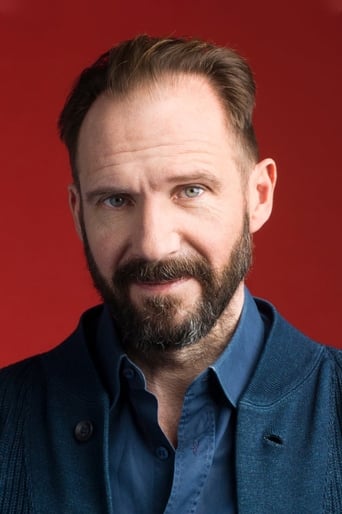
But the peak of the film’s performances is Ralph Fiennes as Thomas Lawrence, the ranking Cardinal with the unenviable task of trying to fairly and dispassionately manage this gargantuan task, while also preserving his sacred principles and the honor of what he serves. Fiennes is out on a wire much of the time, tasked to convey a man who’s proper and reserved with a roil of emotions bubbling underneath the surface. He expertly communicates the quiet strength of the man, the conflict at war within him, and a sense of duty and decency within him that might come off hokey or, worse yet, boring, in less deft hands. Fiennes shines in every scene, and despite a supporting cast with more treasures in tow than the Vatican itself, he can be said to carry the film.
The film needs carrying though. Despite the quality visuals and outstanding performances, *Conclave* comes off basic and even cheesy in places. The film tackles interesting themes, with debates over the balance of institutional stability in the face of societal change, and examinations of principles colliding with practicality in the name of preservation. It delves into more human questions of ambition and righteousness, eternally asking the question: what is the right kind of person to lead this institution, but also, what is the right kind of person to guide a diverse set of colleagues in making that decision.
And yet, its rendition of them is often blunt and facile. The plot twists and turns, and those grand ideas are marbled in, replete with hints of divine intervention. But there’s rarely any mystery or nuance to them. Characters go back and forth in big speeches a la Aaron Sorkin that play as much like spoken essays on the subject du jour as they do genuine interactions. You’d have to be nodding off like Cardinal Tremblay to miss the thrust of that soaring oratory, which is frequently too didactic and too plain, but for the strength of the performances.
To the point of the Sorkin comparison, as much as *Conclave* revels in the seedy backroom dealings of a purportedly upstanding enclave, it is an almost naively aspirational film. And look, things aren’t great right now. Maybe people need some hope. Maybe people need to see the idea that someone with ideas of charity and acceptance, who’s done the work, and is as God made them, can rise to the highest office. We’re in a time when it feels like fiction is the only refuge that can offer us such visions, and I wouldn’t deign to deny the world that comfort or aspiration.
But at the risk of sounding like Cardinal Bellini, at the moment it feels painfully naive. And worse yet, the sense of a random, unknown cardinal, being a few good speeches away from rising to the papacy, plays as unearned. Cardinal Benitez is a nice mascot for the film’s ideas, but oddly enough, his election seems to happen by fiat, which takes away from the sense of catharsis and inspiration of his success.
Despite all that, the film presents Cardinal Lawrence as struggling with his place in the church, before realizing that he is, in fact, the man for the job, and Fiennes is the man for his. The slate of tremendous actors, a stirring selection of imagery, and a heap of compelling ideas and back-stabbing intrigue keep the film worthwhile. But as soulful and serious as *Conclave* seems to want to be, its dimestore twists and all-too-easy solutions to thorny problems ultimately render it something well short of divine.

 Plex
Plex  Kodi
Kodi  Stremio
  Jellyfin
  Netflix
  Disney+
  Prime Video
  HBO Max
  Trakt
Trakt  TMDB
TMDB  Letterboxd
  IMDb
IMDb  Simkl
Simkl  TVTime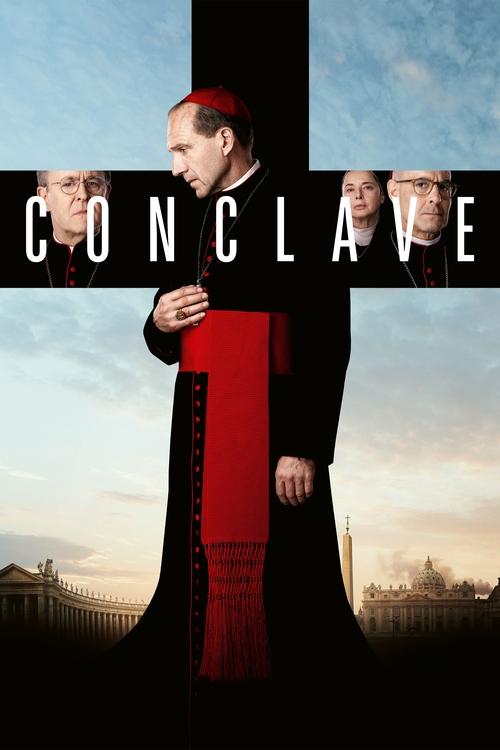
 United Kingdom
 United States