[8.6/10] Selflessness is the overriding theme of the holiday season, to the point of being trite. Not since the days of Charlie Brown have the vaunted notions of peace on earth and goodwill toward men been translated into a yuletide special in a way that doesn’t feel at least a little overfamiliar and even saccharine. The beats of these stories are familiar, their messages simple, however sweet or pleasant they may be.
And yet, that’s the soft brilliance of *Klaus*. It gives that timeless idea -- that one good deed spurs more and eventually prompts a better community with better people -- new life amid a gorgeous realization.
That realization takes root in the story of Jesper, the layabout spoiled kid of an apparent postal delivery magnate. As punishment for his indolence, and as a final ultimatum to shape up or be cut off, Jesper’s father ships him off to Smeerensburg, a grim town north of the Arctic Circle that he has one year to turn into a postal success without going postal himself.
The setup is familiar. A grumbling kid from the big city is sent to a podunk area and has a stirring realization about life and love. But *Klaus* has a few wrinkles in store. For one, Smeerensberg is the charming vision of quaintness. Instead, it is a grim, rundown village, divided into a Hatfields vs. McCoys-like feud between a pair of opposing clans called the Krums and the Ellingboes, led by grizzled mater and paterfamilias who like things the way they are.
For another, while Jesper undergoes the expected growth and maturation into becoming a better, kinder person here, it emerges organically out of a combination of happenstance and self-interest. Jesper’s father demands that he process six thousand letters within a year to escape this frozen hole and return home to his warm bed with silk sheets. After having no luck, Jesper accidentally leaves an enclosed children’s drawing to the reclusive old toymaker in the cold recesses of the town and then finds himself cajoled into delivering a small toy in return.
That’s right, *Klaus* isn’t just the story of one hapless mailman who ends up finding his better self in the chill of the frozen tundra. It’s a low-key *Santa Begins*-style origin story. Jesper’s scheme is a mercenary one -- he convinces local kids to send letters to the benevolent badass of a toymaker in the hopes of receiving playthings in return, and convinces the carpenter to give away his collection of dolls and wind-ups for the good of the children, thereby working to fulfill his quota and get the hell out of there.
And yet, in the process, a funny thing happens. For one thing, the myth of santa emerges. Jesper has to sneak into people’s homes to deliver the presents so as to avoid the booby traps and angry residents who assume any intruder must be a member of the rival clan up to no good. From there, the game of telephone of local children takes over from there and rumors and speculation turn into a full-fledged mythology.
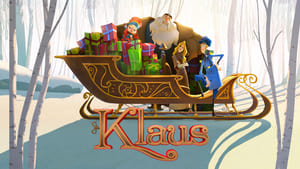
The magic, the chimney drops, the “ho ho ho,” and even the flying reindeer are given a mundane but adorable exploration from the eyes of kids. Most importantly, Jesper leaves a lump of coal for a local brat who was rude to him, and when the grumpy moppet complains that his letter didn’t result in a toy, the mailman comes up with a self-serving tale about the toymaker watching the town’s kids and only rewarding the ones who are good and noble.
What follows lives up to the mantra that the titular bearded old gentleman tells Jesper -- that one selfless act begets another. The children seek to do good deeds in order to win their unseen, seemingly magical gift-provider’s favor. Their kindness cuts across the centuries-long bitterness that’s long divided the town. Warring neighbors turn into caring friends. Walls are literally torn down. Discord becomes harmony. Anger becomes joy. Antagonism becomes altruism.
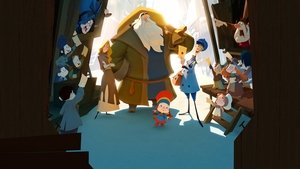
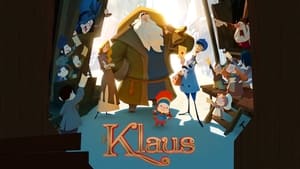
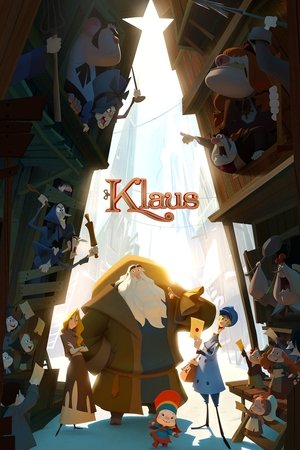
This town-wide transformation is done up in wondrous tones. Even if it didn’t have such a heartening story at its core, *Klaus* would be worth watching for the extraordinary animation alone. Writer-director Sergio Pablos and his team create the best blend of 3D and 2D animation styles I’ve ever seen. There’s such an expressiveness to the characters’ gesture, such character in the look and feel of the town, and such sharp visual choices in how scenes are blocked and framed, that you could pause at any moment and still be left with a stunning image.
The aesthetics blend beautifully with the larger tale of revitalization and, in a way, rebirth that characterizes the film. When Jesper arrives in Smeerensburg, it is a gray, bleak vista of rundown desolation. The only pop of color comes in the form of Klaus’s little toy frog, the first small gift that starts something much larger. Slowly but surely, as Jesper and Klaus’s plan comes to fruition and the town erupts in kindness and consideration, the color returns to the place, soon rife with warm lights and lifting hues. The film is a visual triumph, particularly for how those aesthetic choices compliment the type of changes this place and its denizens experience over the course of the film.
Those changes are the cinch of *Klaus*. The central, animating message of the film is that acts of kindness, the steps we take to brighten other people’s days and lives, can be the thing that turns a vicious cycle into a virtuous one. The simple act of giving toys to children slowly but surely reverses generations of enmity among neighbors and transfigures the town into a vibrant, caring place that anyone would want to call home, even Santa Claus himself.
The film’s best achievement may be making the famed Father Christmas feel like a real person, one worthy of the adulation and imagination he receives from children around the world, but also like a flesh and blood human being rather than just a holly jolly icon in a red hat. This Klaus has experienced loss. He’s without his wife. He’s without the children he dreamed of raising with her. He’s without purpose, self-admittedly lost, in a house full of toys meant for a family he’ll never see.
And yet, he too is transformed by this accidental revolution of the heart. Despite his initially taciturn nature, he eventually opens up to Jesper. He becomes the beneficent, steady yin to Jesper’s frantic, selfish yang, in a dynamic reminiscent of *The Emperor’s New Groove*. Eventually, he finds renewed purpose in the good that his emotionally difficult toy-making can do. He discovers a new family, finding fulfillment in spreading joy to more children than he’d ever thought possible.
*Klaus* doesn't just give Santa’s origin story as a series of explainers on how nighttime snacks and twilight gift deliveries came to be. It crafts a tale of a broken but compassionate man finding himself again through his acts of kindness.
That’s the spirit of the film. Despite opposition from local leaders invested in the way things have been, Jesper and Klaus’s efforts do more than make Smeerensburg a brighter place; they allow the people within it to flourish individually.
Alva, a local school teacher-turned-fishmonger who just wants to get out of this icy dump, changes her mind when scores of kids come to her schoolhouse looking for instruction on how to write, so as to be able to send letters to the kind man up north. Her amiable concordance with Jesper is a little easy, but the movie finds an organic way for her to discover her passion and belief in what her work could be.
That work helps educate these kids and bring them together. Alva helps translate the speech of a local Sami girl named Margu so that she too can take part in this budding tradition, something that forges a bond between her, Margu, and Jesper. Even the dim-witted, brutish offspring of the heads of the feuding clans find common ground with one another in the rush of all this kindness and understanding.
*Klaus* does have its flaws. However pleasant the execution, there’s something mildly uncomfortable about the foreign language-speaking Sami becoming Klaus’s “elves” and the way it leans into stereotypes about docile simplicity in those outside our usual spheres. Norm MacDonald feels a little miscast as a needling sea captain. And the beats are predictable to anyone who’s seen a good Xmas movie before.
But it's the execution of those familiar rhythms that puts *Klaus* a cut above. It’s not hard to guess that by the end of the movie, Jesper will have learned the spirit of giving and grow from these experiences. Despite that, the movie earns his change of heart, letting it happen slowly and almost accidentally.
The film’s third act features the inevitable near-miss, where Jepser is given the chance to return to his old life and it’s revealed to his new friends that all of this arose from his self-serving effort to get out of there. Instead, of course, he chooses to stay in this town he’s made into a better place, earns his father’s respect and, more importantly, vindicates and affirms his friendship with Klaus and Alva and Margu, while proving his altruistic bona fides in a thrilling action climax.
It’s all founded on that one deceptively simple but beautiful idea. Jesper’s metamorphosis is an inadvertent one. He stumbles into betterment, for Smeerensburg and for himself. And yet, it speaks to the transformational power of that idea -- that doing good for others, in ways big and small, can reshape a community at the same time it renews our souls. As many times as that lesson has been delivered amid falling snow and jingle bells, it’s rarely been as inspiring, as brilliant, or as an endearing, as this story of a mailman, a toymaker, and the selfless acts that spur them both toward something that heals this ailing place, and each other.

 Plex
Plex  Kodi
Kodi  Stremio
  Jellyfin
  Netflix
  Disney+
  Prime Video
  HBO Max
  Trakt
Trakt  TMDB
TMDB  Letterboxd
  IMDb
IMDb  Simkl
Simkl  TVTime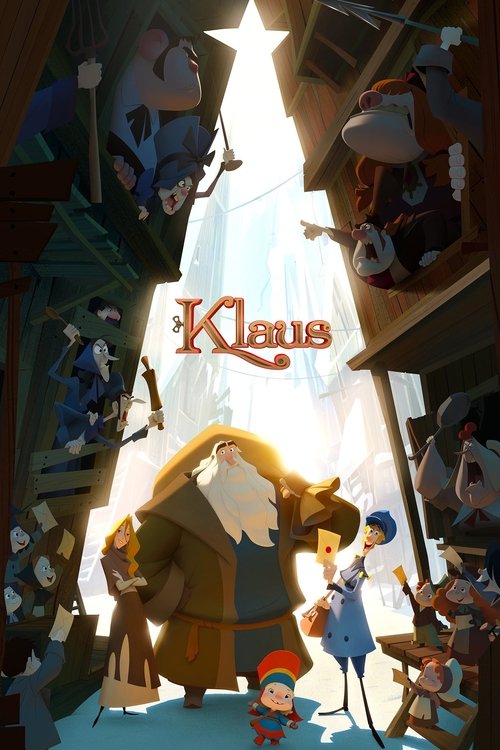
 Spain
Spain