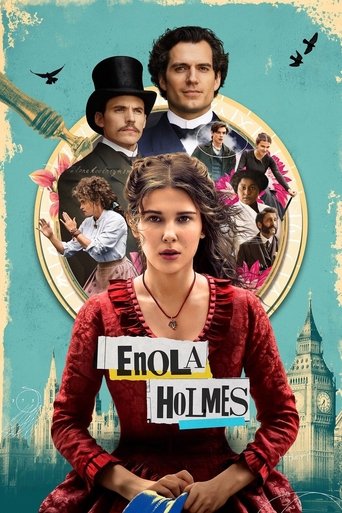
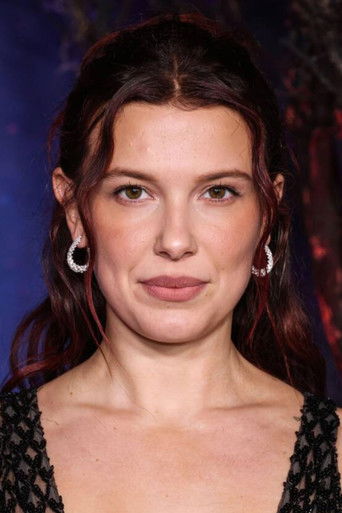
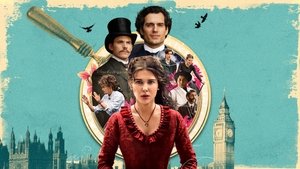
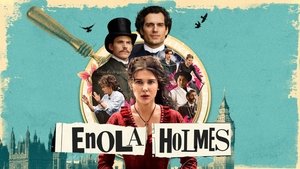
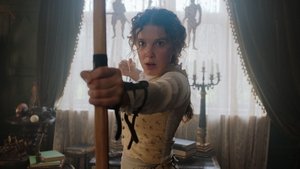
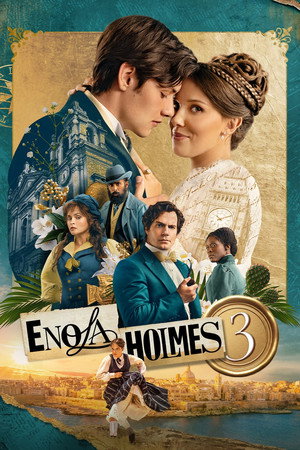
[82/100] The least compelling part of *Enola Holmes* is...well...Enola Holmes. This Ferris Bueller by way of Victorian England is a fairly stock YA protagonist. She’s plucky, resourceful, and just a touch clumsy for that vague sense of faux-humility. Millie Bobbi Brown does fine enough in the role, occasionally overdoing it or mugging at the camera, but is seemingly doing what’s asked of her. And yet, despite the constant quips and ironically standard refusal to conform, the title character never feels like more than a typical collection of kid hero tropes with a few paint-by-numbers quirks thrown in.
And yet, maybe I’d feel different about that if I were a twelve-year-old girl. Crusty old grown-ups are probably not the target audience for this kid adventure film. While the character doesn’t particularly resonate with me, I can imagine Enola being a dose of aspirational wish fulfillment for the younger set, getting to imagine themselves in her shoes and succeeding on her cheesy but intended-to-be-inspiring terms.
To the point, Enola is Not Like The Other Girls™. Her mother taught her differently, and she bucks against the expectations of society, her headmistress, and her backwards older brother Mycroft. Given her idiosyncratic education, she’s adept at just about everything, from cyphers to mysteries to disguises to fighting to deception and witty repartee. I hate this term, but in the film adaptation at least, she gives off the sense of being a Mary Sue.
But then again, so is Sherlock himself in many an adaptation, so it’s hard to slate the film too much for that, especially in a movie ostensibly aimed at a younger audience who’ll be happy to go along for the ride with an idealized kid detective. The script does depict her as sharp and canny, but naive and unworldly, so she’s not completely perfect. And as a cinematic bonbon for kids, I can't reasonably criticize a film for not having much depth to its protagonist when it’s largely meant to be accessible and entertaining for viewers closer to Enola’s age, and rarely seems to be going for more than that,
The same goes for its spate of go-girl feminism. At times, the film pushes the envelope a little, particularly when Edith, an ally of the Holmes matriarch, dresses down Sherlock for his complacent disinterest in dismantling a system that suits him. But for the most part, the movie is content to rest on the laurels of shallow, “I want to go on adventures and take on the world rather than be forced to stay at home and learn to be proper!” versions on these ideas that translate to t-shirt ready bromides instead of offering any more incisive takes or dramatizations. Only, once again, it’s churlish to criticize a film for doing “Baby’s First Feminism” when it’s legitimately meant for kids, which is another reminder that I’m probably just not the viewer the creative team had in mind for *Enola Holmes*.
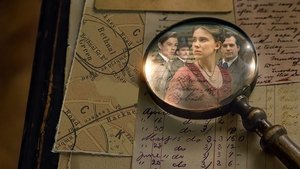
The same goes for the puzzles to unravel in the movie, which feel like something akin to “Baby’s First Da Vinci code. (Which, incidentally, is really just *The Da Vinci Code* itself.) The anagrams are mild and the clues Enola unravels are nothing to write home about if you’ve graduated from middle school. That said, there’s enough feints and ploys from Enola to make up for the simplicity of the ciphers and such in front of her, that show her cleverness in other ways, even if the breadcrumbs are some combination of simple and convenient.
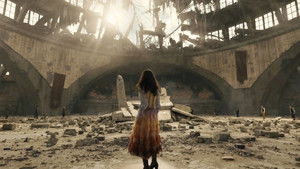
This all makes me sound harsher on the movie than I intend. *Enola Holmes* is solid enough and accomplishes exactly what it sets out to achieve. The film lacks much in the way of visual verve, with flat cinematography and a bit of dodgy CGI. But otherwise, it’s a perfectly amiable young adult adventure that doesn’t aspire to be much more than that, but rarely falters in its chosen aims. While not entirely airtight, the performances, story, and production are all sound and sturdy enough to meet the audience’s needs for a light adventure and loose romp.
Only, occasionally, the film gestures toward bigger ideas and tougher concepts that make me wish the script leaned more into those tantalizing morsels. Sherlock himself recognizing a kindred spirit in his little sister, and feeling remorse and regret that his unemotional bent and tough memories of home left him neglecting a like-minded soul who could use his kindness and care is the sweetest thing in the movie. Enola’s mother pleading that she never stopped loving her daughter, but felt that she had to leave to fight for a better world for her, is a hard, complicated conversation filled with the mixed emotions of reuniting with someone who abandoned you.
Even the antagonists get some interesting shading. The out-and-out villain of the piece, a wealthy dowager, seems like a kindly figure to Enola, talking about the responsibility of preservation as landed gentry. The turn and the film shows the cost of that seemingly noble attitude taken to extremes, to where she’s regretfully willing to murder her own son and grandson to preserve the status quo. There’s a strange comprehensibility and complexity to her, one missing elsewhere in the film.
But it’s a kind of grace granted to the other malign force in the film -- Miss Harrison, the headmistress enlisted to mold Enola into a proper lady whether she likes it or not. It would be easy to turn her into a one-dimensional taskmaster. But even she seems to be earnestly doing what she believes is best for these girls, to prepare them for society as it is. There’s a kindness shown to her in the film, despite physical violence and her representing the antithesis of the film’s values, which belies the sort of whizbang adventure that's the focus of most of that movie.
I’ll admit to finding much of that whizbang adventure a bit tiresome from my aged vantage point. Enola’s snarky, fourth-wall breaking pluck; her literally off-the-shelf love interest, and her glossy story of colorful ruses and ploys that all seem to work out by fiat if not by deductive reasoning provoke more eye-rolls from me than rousing cheers. But throw me back in time to an age where I’d look up to someone like Enola, and I might easily be singing a different tune (albeit in a higher pitch).
That's the funny thing about watching a film like *Enola Holmes* as one of those ruddy adults who’s meant to learn that kids are capable of more than we narrow-minded grown-ups think. You find yourself relating less to the preternaturally talented young hero who wins the day with a rebellious air and a smart remark. And you find yourself drawn more to the big brother who realizes he wasn’t there when his sister needed him, or the mother who felt she had to leave her child behind to try to forge a better world for her, or even ossified old guard who earnestly think they’re doing what’s best by holding stability and order in place at the cost of change and progress.
When Enola tells the audience, “the future is up to us,” she’s not really talking to me. And despite my half-hearted critiques of a film not really built to withstand them, the best thing those of us lucky enough to grow older can do is to help build a bridge to that future, or at a minimum, for the causes, and even the movies, of the next generation, to not stand in their way.

 Plex
Plex  Kodi
Kodi  Stremio
  Jellyfin
  Netflix
  Disney+
  Prime Video
  HBO Max
  Trakt
Trakt  TMDB
TMDB  Letterboxd
  IMDb
IMDb  Simkl
Simkl  TVTime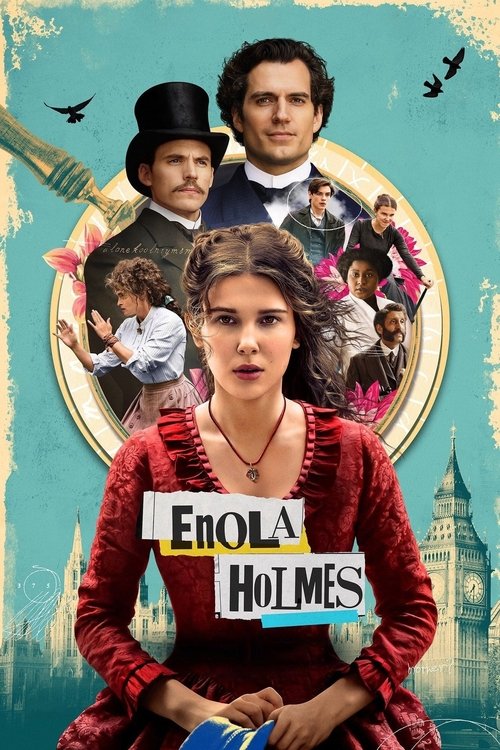
 United States