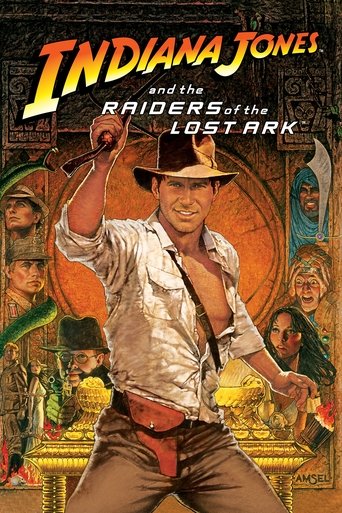
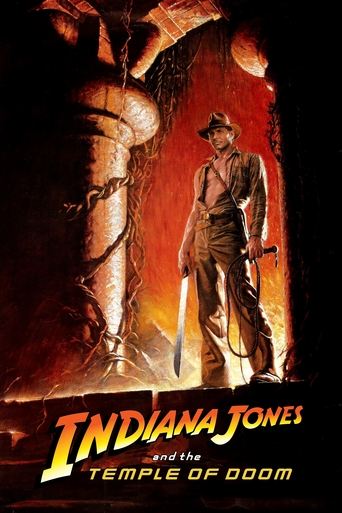
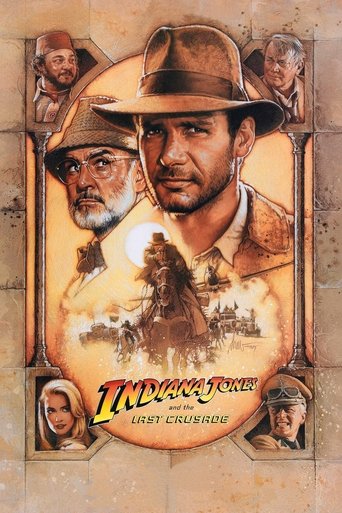
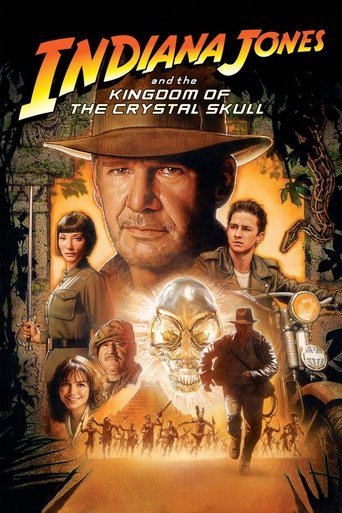
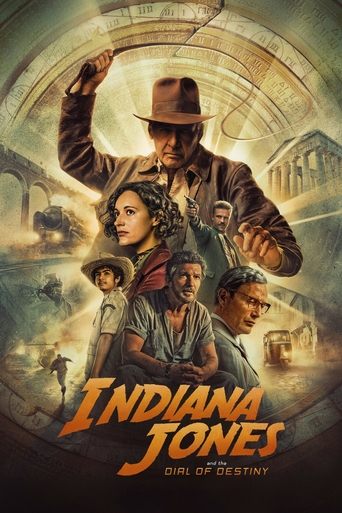
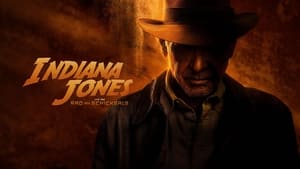
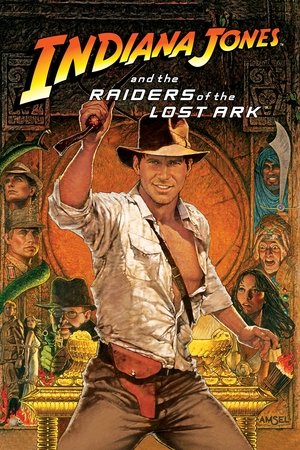
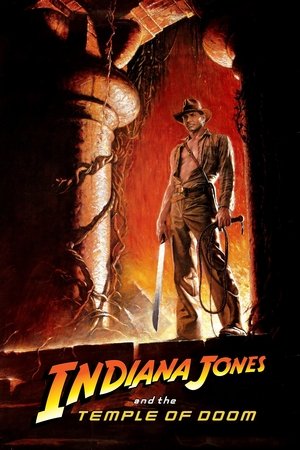
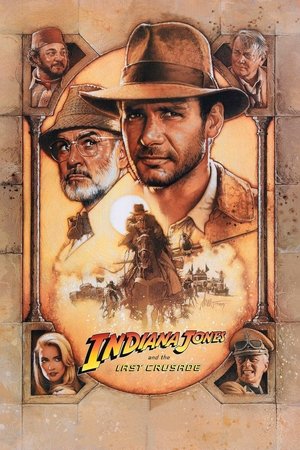
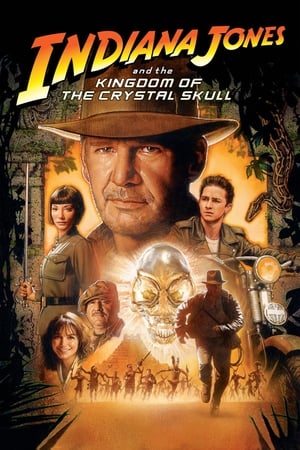
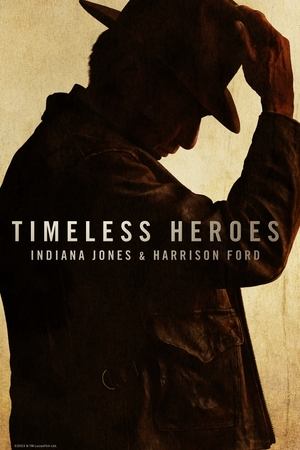
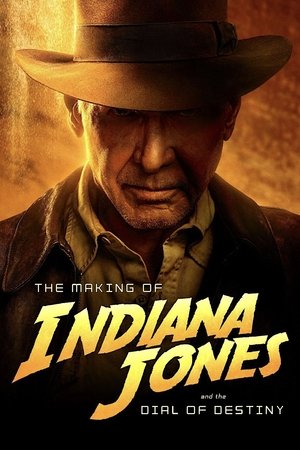
[7.8/10] The first four Indiana Jones aren’t really *about* anything. They’re fun but not particularly deep adventure films. That's not to say that there aren’t striking moments where a [skeptic witnesses the supernatural](https://trakt.tv/comments/686979), or a [father reconciles with his son](https://trakt.tv/comments/696103). (Twice!) But for the most part, theme isn’t really the point of an Indiana Jones flick. It’s texture, character, excitement, adventure. There’s nothing wrong with that.
But if you’re going to deliver another movie in the franchise, one released a decade and a half after your last legacy sequel and thirty-four years after the character’s heyday, you need a reason for it. (Other than, you know, money.) You can't just trot out eighty-year-old Harrison Ford to do the same old stunts, with the same old tricks, and not expect the same diminishing returns. Frankly, that's one of the problems with the “not awful, but definitely pointless” outing that was [*The Kingdom of the Crystal Skull*](https://trakt.tv/comments/698932). If you just like Indiana Jones and want to see him ride again, fair enough. But for my money, if you’re going to revive a franchise after a long absence, there ought to be some purpose to bring something back beyond cashing in on cheap nostalgia.
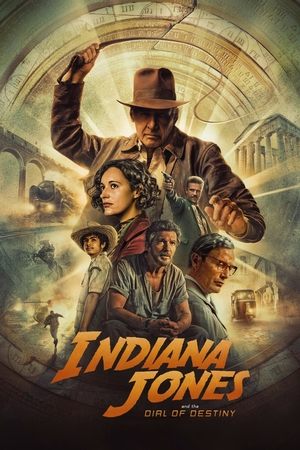
Against all odds, *Indiana Jones and the Dial of Destiny* achieves that and more. Coming from James Mangold, director of [*Logan*](https://trakt.tv/comments/128587), the fifth film in this franchise is essentially “Old Man Indy.” The comparison to the famed Wolverine comic and adaptation is not just in the surface level similarity of presenting an iconic character in his grizzled, golden years. It comes, instead, at a deeper level, through the sense of a weary man who’s embittered and lost and feels that his time is over, suddenly finding solace and hope and an unexpected bridge to the future.
It’s startling. It’s more than a little sad. It’s different. *Dial of Destiny* delivers the expected fireworks and horseplay with a side of banter, as Mangold and company prove able successors to the hallowed creative team that preceded them. But they also delivered something that Steven Spielberg and George Lucas never really did for Indy; they give him grief, and pain, and, well, depth.
I didn’t expect it, but I liked it. Harrison Ford has the chops to shop a different side of Dr. Jones. And if you’re going to pick up with a character more than thirty years after they started, by god, they should be different. Seeing a version of Indy who is not the confident master of his domain, but a grouchy old man who thinks all that's behind him, shows that the intervening years have meant something. There’s something new to do with Indiana Jones, new places to take him, a goddamn arc for him to go through, in a way there’s never been before. That's worth something, and manages to justify a revival no one really needed beyond washing the taste of *Crystal Skull* vodka out of fans’ mouths.
So do Indy’s foils, chief among them Phoebe Waller-Bridge as Helena Shaw, Indy’s goddaughter. At a basic level, Waller-Bridge not only crackles on screen in her own right, but has great chemistry with Ford. The roguish charm she displayed in *Fleabag* translates surprisingly well to the four-color world of Indiana Jones, and makes her an unexpectedly convincing successor to fedora-adorned hero.
That's part of the idea here. Indy’s relationship with Helena is, in many ways, the better version of what *Crystal Skull* tried to accomplish with him and Mutt. The idea of Dr. Jones dealing with a member of the younger generation, one he’s obliquely responsible for, who bristles and bucks against him the way he did with his own dad, is rich territory to explore. Indy seeing a younger version of himself, but one who, in the absence of his guidance and care, is greedy and amoral and without scruples, gives both characters someone to have friction with and somewhere to go.
In many ways, this version of Indy is pulled between the future and the past. Helena represents the future, along with her young sidekick, Teddy, whose mere [Short Round-esque presence](https://trakt.tv/comments/691787) suggests Ms. Shaw is more like her godfather than she likes to think. But the past is represented by the film’s villain, Dr. Voller, a paperclipped Nazi-turned-space race scientist for the Americans who Indy tangled with during World War II.
Again, Indy’s antagonist thrives on charm and presence alone. Mikkelson’s subtle but sparkling performance provides Dr. Jones with his best and most intriguing opponent since Belloq in *Raiders*. He too is a scientist, and archeologist, a man with the resources and ingenuity to stay neck-and-neck with Indy in the search for the titular MacGuffin.
More than that, though, he is a counterpoint and a cautionary tale. Dr. Voller is a Nazi, genre films’ convenient shorthand for “bad guy” since ages ago. And a great scene where interrogates the history and heritage of his room service attendant underscores the insidiousness of his ideology. But more than that, he wants to take things back to the past. His aim is to restore the old days, reverse his losses and return to a time when the world made sense to men like him. His whole motivation is to give up on the present, where things are different and harder for him, and try to invoke a past he idolizes and wants to preserve for a thousand years.
There’s genuine power in that idea. Indy never quite takes the bait, but as is the case for many good villains, Voller is a reflection of the hero’s worst impulses. Indy finds the present no less bitter and unsatisfying than his enemy, and while what he’d fix is different, his gripes with a world that seems to have passed him by are much the same.
For all of that highfalutin theming, *Indy 5* is still a rollicking adventure. Indy punches any number of goons with great glee. In a superb opening sequence, he bluffs his way through a train full of Nazis in classic style. Trains race motorcycles that race horses that race cars that race tuktuks that race airplanes that race more motorcycles. Plenty of things explore, or are leapt off of, or otherwise provide the usual dose of enjoyable high octane fun.
Despite his own action (and train-based) bona fides, Mangold and company never quite reach the level of verve of an inventiveness of Spielberg and his team in the action department. And in places, the same greenscreen, CGI sheen that all but sunk *Crystal Skull*’s visuals rears its ugly head. But for the most part, *Dial of Destiny* delivers on the promised excitement the franchise is known for, with plenty of neat sequences, and the kind of Nazi-bashing thrills that Indy made famous.
Likewise, *Dial of Destiny* is pleasantly reverent of Dr. Jones’ cinematic past without being beholden to it. There are plenty of echoes of past setups. To the point, the whole film fits into the rough mold of *Raiders*. Indy and his compatriots decode ancient messages and make their way through riddles and traps, and chase the shiny objects of great mystic power du jour. Best of all, John Rhys-Davies’ Sallah returns with his usual flair to bring some welcome sentimentality from the old days.
But whether it’s something as simple as replacing snakes with eels for Indy to overcome, or subverting the famous gun vs. sword moment, or prompting Indy to spark off of his young surrogate daughter than his young love interest, Mangold and his team manage to bring Indiana Jones and his tropes into the modern era, without losing their gusto or making them rote recapitulations of things the audience has already seen.
At base, the film simply manages its tone well. It is hard to make a movie centered on a broken man amusing and exciting, but *Dial of Destiny* pulls it off. There’s just enough reminders of what Indy’s lost to give the film weight, with just enough banter and bombast to remind you that, headier or not, this is still a series of movies inspired by old adventure serials that can boast character out the wazoo. The script has plenty of clever setups and payoffs, and the playful and pointed dynamics among the characters -- from enemies to allies to one-scene-wonders -- livens the material in the same way they did for Indy’s first silver screen outing.
He’s fallen a long way since then though, and we get to see why. It’s no shock that *Indy 5* did not bring back Mutt after issues on and off the screen. But I didn’t expect the film to kill him off in Vietnam. Forcing Indiana to deal with the loss of a child, one born of a rebellion he knows all too well, and having it break up his marriage is heavy stuff. The man goes from being the adored professor in a lavish home on campus to being a lonely old man, who can't keep his class’s attention, subsisting in a dingy New York apartment. The mighty have fallen. You too might wonder what today has to offer.
Ultimately, though, Indy finds what he needs to revive himself. He brings out an altruism in Helena, a willingness to act for nobility and goodness, not just lucre and notoriety. He turns a card shark into a roguish hero much like himself, with an example of what decency looks like that inspires the same in her. And she returns the favor. When the time-traveling MacGuffin cleverly leads the assembled back to the time of Archimedes, she won’t let him retreat to the past and give up on the future as he knows it the way Voller wants to. It’s one thing to ride off into the sunset; it’s another to tap out and die amid the idealized glories of yesteryear.
Her kindness, and true to the franchise’s spirit, a swift punch to the face, brings him back to the here and now. Seeing that there’s something there for him -- in Helena, in Teddy, in Sallah, and most of all in Marion -- is heartening as all get out. More than three decades later, Harrison Ford and Karen Allen are still endearing and low-key adorable together on screen, and their chemistry does a lot of the heavy lifting to show how there’s a light at the end of the tunnel for him in 1969 rather than a dead end from two-thousand years ago.
That is more than I ever expected from an Indiana Jones film. *Dial of Destiny* doesn’t skimp on the fun or the excitement or the four-color spectacle that Spielberg and Lucas and their collaborators made famous. But it also takes the title character, his plight, and his journey seriously in a way that the past four films never really did.
That may not be everyone’s cup of tea. If all you want is for Indy to knock around bad guys and one-liner his way through set pieces, I get it. This franchise has been good at that. But there’s something to be said for a new creative team, willing to bring the film series to different places, and to use its octogenarian star to say something about aging and wistfulness and an abiding legacy that's worth inheriting for another generation of young, brash adventurers. If you’re going to revive Indy after so long, it’s worth trying to do a little more, and this movie does.
*Indiana Jones and the Dial of Destiny* is more than an empty cash-grab of a late sequel and more than a last hurrah for an iconic character. It is, instead, true to its hero, a film that's willing to dig deep to find hallowed treasures in places nobody expected.

 Plex
Plex  Kodi
Kodi  Stremio
  Jellyfin
  Netflix
  Disney+
  Prime Video
  HBO Max
  Trakt
Trakt  TMDB
TMDB  Letterboxd
  IMDb
IMDb  Simkl
Simkl  TVTime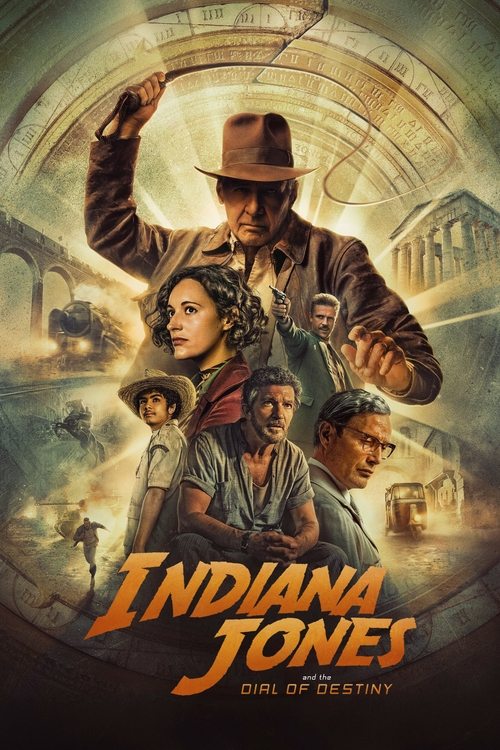
 United States