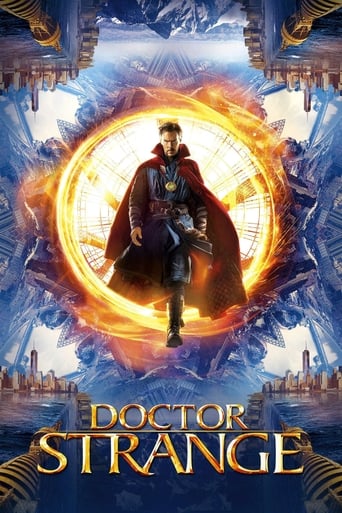
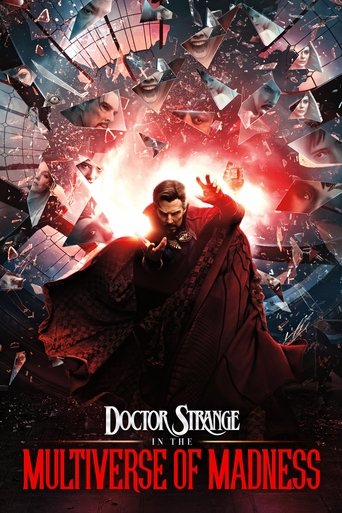
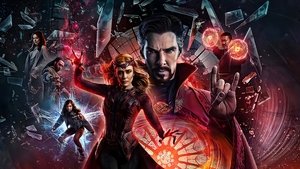
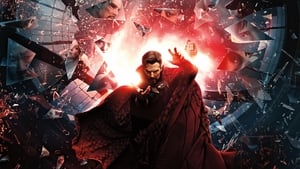
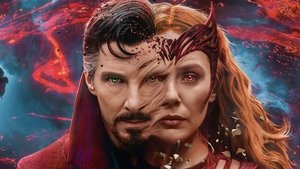
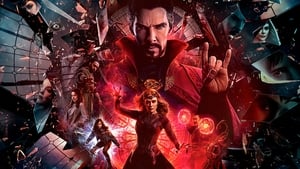
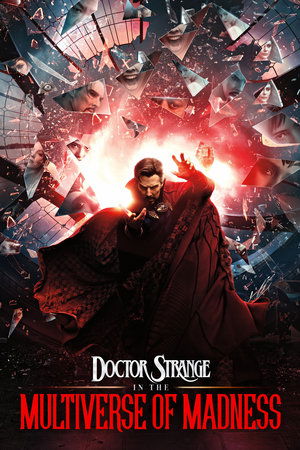
[7.4/10] *Doctor Strange in the Multiverse of Madness* is effectively two movies. One is what the title promises. The titular Master of the Mystic Arts goes on a dimension-hopping adventure with America Chavez, a young girl with potent but variable universe-jumping powers. And that part of the movie is...fine.
The narrative is fine, with the latest threat to all of creation requiring the former Sorcerer Supreme to amass as many magical allies as possible wherever he can find them. Stock themes about not needing to be “the one holding the knife” for the doctor and learning to believe in yourself for his young ward are slight, but arguably in line with the moral of humility and magnanimity from the first *Doctor Strange* film. The plot is flimsy, but the various new realities and magic powers involved give director Sam Raimi the canvas to deliver the horror he crafts like no other, even if, at times, this half of the film feels like an array of creatively bonkers set pieces in search of a story.
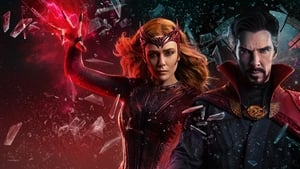
The other half is the seeming conclusion to the superlative story told in *WandaVision*. That television series, in which Wanda Maximoff explored her grief over losing the man she loved, found success by being one part classic sitcom tribute, one part *Twilight Zone*-style horror show, and one part movingly real exploration of grief. *Multiverse of Madness* extends that excellence, with Wanda herself pursuing Chavez in the hopes of finding a universe where she can be with her lost sons, at any cost.
Where the Dr. Strange sections are creditable and competent, the Wanda sections are downright transcendent. Leaping from reality to reality in order to save the multiverse and learn when to let go is standard stuff by now. It can’t hold a magically-lit candle to the story of a mother suffering a cascade of tragedies, seeking to escape this reality for one that can fill that aching hole, turning into a monster through a combination of pain and anger, and only realizing and rectifying that through the eyes of the young children she’s striving so desperately to return to. There is a poetry in her portion of the film that the title character’s portion can’t remotely compare to.
Some of that's the pure narrative. Writer Michael Waldron finds a strong progression for Wanda, with turns in her emotional affect and tactics that simultaneously humanize her desires while showing how far gone he is. There’s no such clarity of purpose in Strange’s plot. He just wanders from big sequence to big sequence -- some of which are great and some of which are forgettable -- with little in the way of connective tissue or narrative momentum.
But much of it comes down to the performances. Benedict Cumberbatch does plenty of conspicuous ack-ting, but never finds the human center of Steven Strange. Xochitl Gomez is overmatched as Miss America, his temporary and reluctant partner, coming off generic and unable to find the emotional core of her character. Rachel Adams has little that's clear or important to do as Christine, Strange’s ex-fiancee, and never rises above “perfectly acceptable” in doing it.
The other half of the movie, though, benefits from one strong supporting actor and one incredible performance. Benedict Wong carries himself with a conviction and heart all but missing from the film’s protagonist. Like Christine, he’s mostly a carry-on bag of a character, but unlike Adams, Wong makes a meal out of the scraps the film gives him.
Elizabeth Olsen, though, has much meatier material to work with and gives a virtuoso performance of the grieving parent turned single-minded villain. Her ability to convey utter menace through calm but seething speech and unnerving body language stuns you. And at the same time, she’ll break your heart with authentic expressions of mourning and desperation for what’s been taken from her and what she’d give anything to regain. There’s a complexity to her character and circumstances that far surpass anything else in the film, and as much of that owes to the layers in Olsen’s stand out performance as it does to what’s on the page.
Still, credit must also be paid for what ends up on the screen, of course. Raimi remains a master of horror and of maximalist set pieces that deliver a nearly Looney Tunes level of flair. The one time *Evil Dead* maestro returns to his bone-chilling roots with an expert’s assurance. Wanda’s pursuit of Chavez through reflections and blank spaces, her ability to creep into the minds of enemies as varied as a nameless recruit and Professor X himself, and her merciless decimation of some of the biggest figures in the Marvel multiverse writ large makes her an utterly terrifying figure and renews Raimi’s stomach-churning bona fides.
At the same time, though, Raimi and his collaborators carry over Scott Derrickson’s surrealist visual panache from Strange’s first cinematic outing. While occasionally carrying some of that antiseptic CGI sheen, the movie still features cool visuals in mystical in-between stations, artistic renderings of ventures from one dimension to the next, and other liminal moments that give certain scenes an almost Lynchian quality. Throw in a musical stand-off that feels pure Raimi (and the spiritual successor to Peter and Harry’s jazz battle in *Spider-Man 3*), and you can at least appreciate the director’s famed approach to aesthetics and movement individually, even if they don’t always add up to a greater whole.
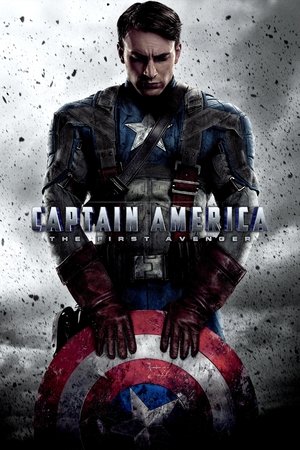
The same goes for the film’s roundly enjoyable fan service. Is there a point to seeing Patrick Stewart reprise the role of Professor X from Fox’s X-Men series? Or in bringing back Anson Mount as Black Bolt from little-seen and even less-loved *Inhumans* show? Or in giving us tantalizing glimpses of alternate Captains of both the America or Marvel variety? Not really, beyond the fact that you can kill them off without taking any of the oomph away from other characters in the main timeline. Yet, it remains a thrill to see these familiar faces taken to new places, and even previews of characters poised to make a bigger splash down the line. It’s pure cheese, but if it doesn’t jazz you at least a little, then I question why you’d bother with a movie with multiverse in the title.
That's the thing about *Doctor Strange and the Multiverse of Madness*. It works fine enough as a threadbare but entertaining jaunt through the standard alternate dimension block and tackle that's become the standard for comic book stories. This is *a lot* of movie for two hours, and the plotting becomes a complete mess rather quickly. It requires a level of investment in both Dr. Strange himself and his relationship with Christine that neither this film nor its predecessor manage to earn. Still, taken as a series of loosely connected, one-off doses of spectacle strung together, Raimi and his team more than accomplish what they need to for this roundly comic book-y adventure.
Unfortunately, they’re also doomed by their own success elsewhere. I don’t just mean the expectations that come with having directed one of the greatest superhero films of all time in *Spider-Man 2*, but also in crafting this harrowing, heartfelt, low-key devastating alternate story of Wanda’s grief nearly consuming her until she regains a shred of herself back through the children she’d give anything to reunite with. It is almost a separate movie, a better, more frightening, and more poignant reason to venture across worlds in search of something dear and devastating now lost forever. The greatest sin and greatest triumph of the film is giving audiences a reasonably diverting multiverse, and pairing it with a transcendent dose of madness.

 Plex
Plex  Kodi
Kodi  Stremio
  Jellyfin
  Netflix
  Disney+
  Prime Video
  HBO Max
  Trakt
Trakt  TMDB
TMDB  Letterboxd
  IMDb
IMDb  Simkl
Simkl  TVTime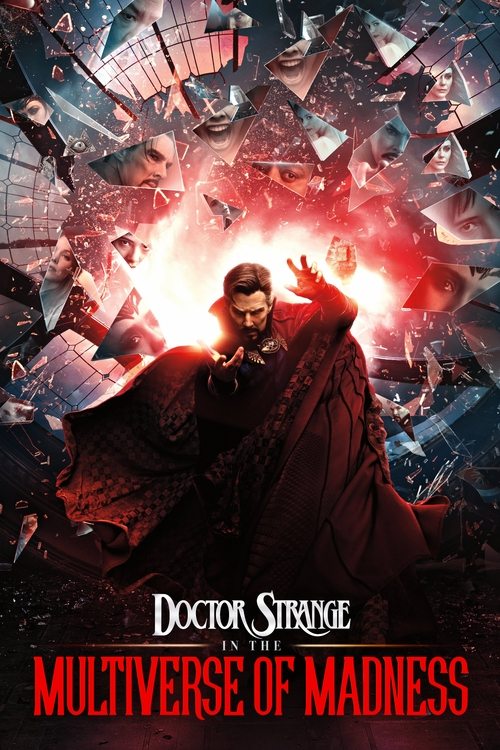
 United States