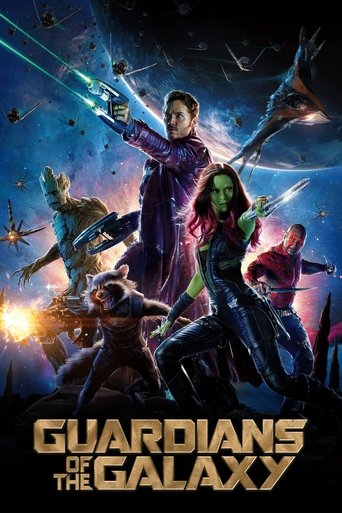
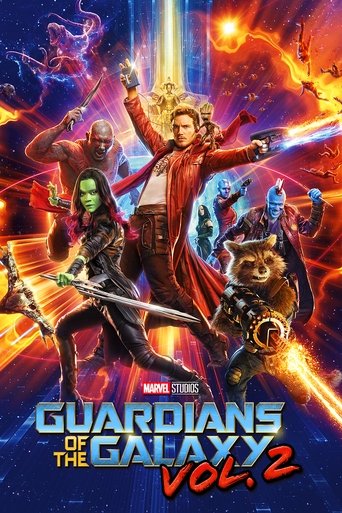
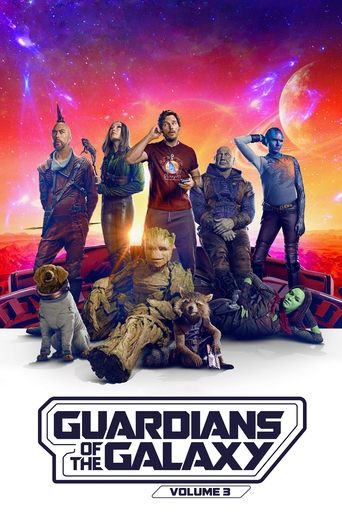
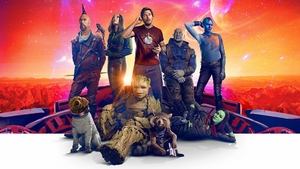
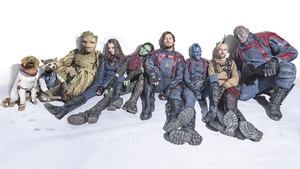
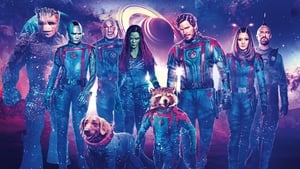
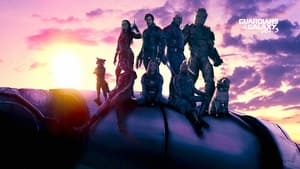
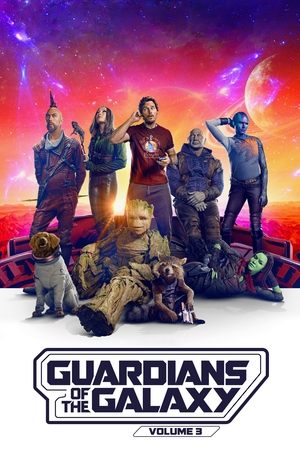
[7.7/10] In a way, the *Guardians of the Galaxy* films have always been about acceptance. Far from the Captain Americas and Iron Men of the world, the Guardians are not noble champions or playboy geniuses. They’re rough-edged miscreants stuck to the boot of society. To suggest, in the first place, that they too have value, that they too could be heroes despite their flaws and foibles, is its own sort of radical message these movies are built around.
In this third (and seemingly final) at-bat, *Guardians of the Galaxy Vol. 3* brings that idea to the fore and takes it even further. The latest installment is a wide-ranging, occasionally overstuffed, and committedly dark film in its structure and subject matter. But it is also a story founded on the idea of acceptance: of those in need, of your fellow man, and most of all of yourself, no matter the quirks or traumas that have shaped us along the way. In that, as appropriately shaggy though the film may be at times, it is the apotheosis of the welcoming, accepting ideals that have animated this series from the beginning.
*Guardians 3*’s plot centers on combating the machinations of someone who represents the opposite of those ideals. The High Evolutionary is Rocket’s creator and abuser, and the film’s villain. He harbors an obsession with “perfecting” the universe by “correcting”, razing, and even genociding anything that doesn’t fit his vision. The High Evolutionary wants Rocket back, to examine his unique brain and capacity for independent thought, and the dastard is not above sending all manner of goons, setting various traps, or withholding the key information necessary to treat Rocket’s grievous injuries in order to achieve his aims.
I don’t want to say that the ensuing plot points here are pointless. Boiled down to, “The Guardians race to find the means to save Rocket’s life after a serious attack” and “They infiltrate and fight their way through various ploys from the High Evolutionary to do so,” there’s plenty of thematic resonance and fireworks-filled exploits to fill up the movie’s runtime. But trying to trace all the narrative threads -- of who’s partnering with who to save whom and then coordinating with someone else to trade spaceships/locations/planets on a whim -- is a fool’s errand. As is often the case with the Guardians, it’s more about the excitement and the hijinks than about clockwork plotting.
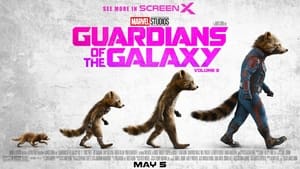
And yet, amid such byzantine narrative architecture lies a heartbreaking series of vignettes that finally reveal Rocket’s backstory. It turns out that he, alongside many other poor souls, was a disposable experiment born of a harsh madman.
The audience witnesses a tiny terrified raccoon, shaking in fear after receiving the gift of speech and abstract thought with a concomitant amount of pain. We see the solace he finds in a friendship with Lillah, Teefs, and Floor, a collection of similarly “enhanced” animals who form bonds within bondage and give Rocket his first real family. Later, the film unveils Rocket’s grim realization that the paradise their creator has promised isn’t meant for them, but rather that they’re intended as mere stepping stones along the way to his perfect society. And in the movie’s most hard-to-take scene, we watch Rocket’s attempt to free himself and his brethren end in brutal bloodshed at the hands of their craven and jealous benefactor, something Rocket is still riddled with guilt over all these years later.
It is, in a word, harrowing. Despite the death and destruction that are the stock and trade of superhero films, *Vol. 3* mostly plays around with a tone that keeps the proceedings thrilling enough without putting your heart in your throat. Despite an amusing “No killing anybody!” bit of banter in the early going, *Guardians 3*’s signature sequence comes in an elaborate oner where our heroes slaughter a room full of bad guys with the balletic silliness of a blood-soaked Looney Tunes cartoon. A whole planet’s worth of families are destroyed, and it largely comes off like more blockbuster fodder. The good and bad alike get knocked around like ping pong balls, and for the most part, it’s all in good fun.
Nevertheless, writer-director James Gunn and company play the Rocket flashbacks as serious as a heart attack. In the throes of this otherwise loony, if characteristically warm-hearted film, is a series of *Watership Down*-esque interludes that drive you to ruin with animal cruelty, psychological abuse, and a craven treatment of the helpless and dependent as disposable with gut wrenching force. Skeptics tend to write off the Marvel movies as kids stuff, but I’d have serious qualms about taking younger fans to see *Vol. 3* given how heavy this material comes off.
Despite that, there remains a decent helping of the Guardians’ usual mirth and merriment. One-liners and snark fly freely across the interstellar landscape. The production design and costuming shines in the first act climax set aboard a flesh-grown, candy-colored corporate HQ, which carries the series’ dark-but-goofy vibe. A running gag involving Kraglin calling Cosmo a “bad dog” tickles the funny bone until it lands in a predictably but no less effectively heartwarming place. Fans of the humor and slanted perspective that have defined this sub-franchise to date will be pleased to see Gunn’s unique sensibilities still reign.
So too does the more political bent that popped up in *The Suicide Squad*. For the second film in a row, Gunn highlights the ultimate villainy of the bad guy by showing how they keep kids in cages. Rocket’s story comes with a clear statement against animal testing and experimentation. The metaphor of communities of acceptance in the face of rejection and desires to “fix” what is rather than embrace it has a particular resonance in a time of a rise in laws and hatred meant to cabin the lives of LGBTQ+ individuals. And the stirring climax of the film comes in the rescue and welcoming of refugees. Again, for all those who churlishly write off these films as “for babies”, Gunn’s superhero flicks in particular haven't been afraid to bake in some potent and timely bits of commentary.
For all the darker concepts Gunn and company tackle in the film, *Guardians 3* is, ultimately, a heartening story about collections of misfits finding their better angels, overcoming those hardships, and coming together to accept themselves and one another.
“Starlord” Peter Quill is still in mourning over Gamora’s death in *Infinity War*, a grief complicated by the *Endgame* arrival of a version of her from the past who doesn’t share the experiences or memories of the woman who became a Guardian. For her part, Gamora is understandably resistant to “Quinn” trying to jam her into another person’s mold, one that doesn’t fit her harder-edged personality. Gunn and his collaborators find a nice middle ground for the pair and this conflict. The 2014 Gamora eventually sees the nobility of the Guardians’ cause, and is willing to put her neck out to fight alongside them, if not adopt their viewpoint wholesale. She returns to the Ravagers, having found a home and acceptance apart from Thanos. And Peter comes to be okay with that, recognizing that this is a different, no less valid Gamora than the one he loved, and that he too needs to take her as she is, not the someone else he wants her to be.
It’s an unexpectedly mature take on the inevitable superhero resurrections that are the stock and trade of the genre. Bringing the character back in another guise, one that makes our Gamora’s death at Thanos’ hands still meaningful, while showing that there were other, equally valid paths for her, with or without the Guardians, is a bold spin on the usual kill-and-bring-back cycle that otherwise neuters dramatic character deaths in speculative fiction.
Peter gets a different happy ending, choosing to embrace the life on Earth he’s been running from since his mother died. It requires accepting his grandfather, a harder man who presumably suffered his daughter’s loss as much as Peter did. The reunion between them is the most touching moment in the film, and another tribute to the animating notion of accepting one’s full self and life, and understanding the people who make it up.
The same idea permeates the rest of the film too. Nebula is harsh with Drax and Mantis, who often play the Tweedle Dum and Tweede Dee of the group, to hilarious effect. But after being read the riot act by Mantis, who commendably stands up for them, she sees what they bring to the table, as allies and as people. Drax speaks the language of the refugee children, something Nebula never considered because she only sees him within a narrow box. Rather than fend off the snarling beast the Guardians neutralized at the beginning of *Guardians 2*, Mantis has the courage and the compassion to realize *they’re* the ones who are afraid, and tame them instead.
It ties into that broader idea, of seeing things that seem frightening, or foolish, or simply different, and seeing the value in them for what they are, rather than discarding or dismissing them for what they aren’t. Drax may be a destroyer, but contrary to his hulking physique, he is also the perfect father figure. And as hard-nosed as Nebula has been and remains, she is the one who chooses to build something new within Knowhere, to make the kind of home she wanted when she was ripped away from her family, for all the people who need such a place.
This is, after all, a film whose stirring climax rests on heroes both ordinary and extraordinary working to save scads of people scooped up only to be “improved” and giving them a new home where they can be and flourish as they are. It’s a film where even Adam Warlock, the supe with the body of a bruiser and the mind of a child, is given a second chance after dealing the blow that nearly felled Rocket in the first place, and pays back that faith by saving Quill. It’s a film where the greatest sin is to treat others as disposable objects to either be fixed or thrown away, rather than taken in with open arms for who they already are and can be.
No one embodies that ideal better than Rocket himself. He spends much of the present in a coma. But the flashbacks tell the story of someone who suffered incredible abuse, internalized a sense of abuse and worthlessness instilled by his surrogate father, and then lost his found family in a bout of brutality he blames himself for. These are tremendous things to overcome.
But through a bout of spiritual forgiveness from Lylla on death’s door, from awaking to his new family embracing him and having gone to the ends off the galaxy to save him, and from having the chance to confront his abuser and realize how small and ugly this horrid man truly is, Rocket is able to move forward.
He doesn't want revenge. He just wants peace. After instinctively snapping at people for calling him a racoon, a sign of his bleak and, to Rocket's mind, shameful origins, he sees the name on the cage of a group of tiny baby animals in need of care and rescue like he once was, and finally adopts it as his own. When confronting his abuser, he firmly takaakes the name “Rocket Racoon” and his worthiness to be at the center of the story, a sign of the self-acceptance he is able to achieve.
And he is also able to extend it. This is not a narrow or myopic form of acceptance, where Rocket forgives himself and takes himself as he is but denies the same privilege for others. He insists on rescuing the other animals and bringing them into the same space for refugees and lost souls on Knowhere. In a moving moment, he accepts leadership of the Guardians from Peter, and fills it with a new crop of misfits who need a home and someone to see their value.
At the beginning of the film, he finds comfort and misery in equal measure in Radiohead’s “Creep”, a song of alienation and self-loathing. In the end, he finds the spirit to dance to Florence + the Machine’s “Dog Days Are Over” with his best friend and an entire community of people who accept one another as they are. It becomes an anthem of moving past those traumas, an exultant moment of kinship and self-worth for someone who never thought he deserved either, and a tribute to three films’ worth of a simple but powerful message. There is greatness in places unseen and people unbidden, and great humanity in accepting one another, and ourselves, for who and what we are.

 Plex
Plex  Kodi
Kodi  Stremio
  Jellyfin
  Netflix
  Disney+
  Prime Video
  HBO Max
  Trakt
Trakt  TMDB
TMDB  Letterboxd
  IMDb
IMDb  Simkl
Simkl  TVTime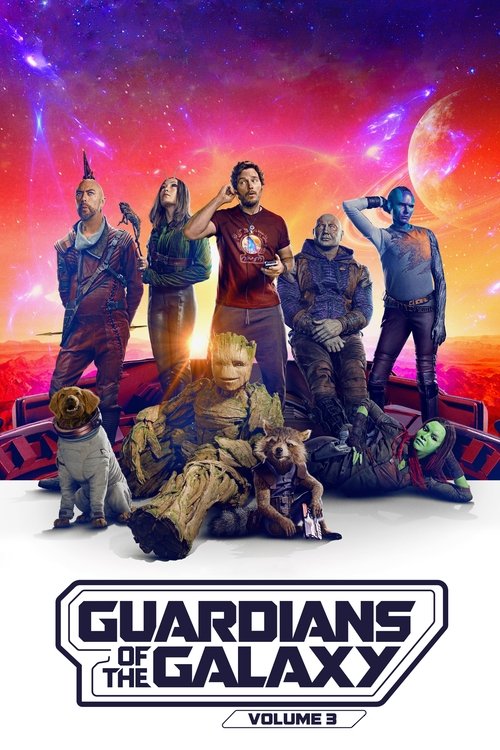
 United States