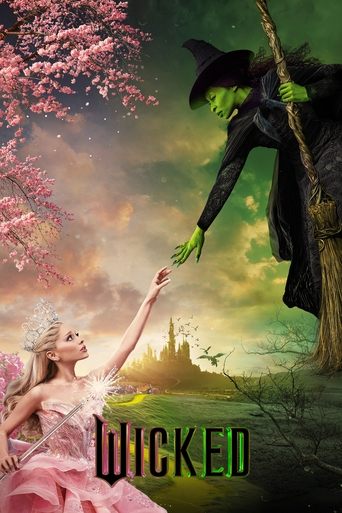
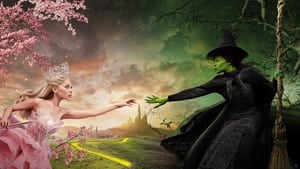
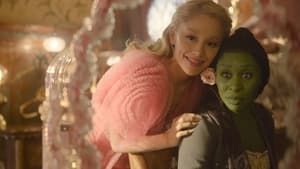
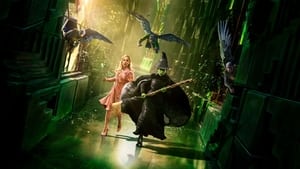
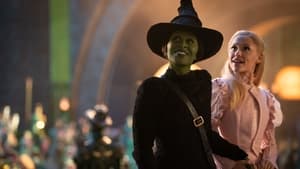
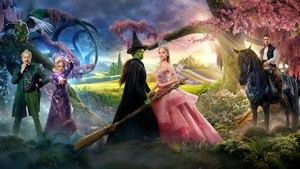
[7.1/10] *Wicked* succeeds where it matters most. The tension between prim and perfect Galinda, and grim and green Elphaba, gives way to a beautiful friendship. That is the heart of the movie: an unexpected bond between two unlikely friends, that sees them through both good times and bad, and complicates the choices that lead them in different directions. The characters are fully-realized; the performances are impeccable, and you absolutely feel that essential connection between them that undergirds the entire film. Without it, the whole of *Wicked* would fall apart, and thankfully, it’s sterling.
That's good, because nearly everything else here is middling or outright bad.
Much of that is not the fault of director Jon M. Chu or the rest of the movie’s creative team. The indifferent collection of songs, the tinman-eared dialogue, and the hamfisted approach to the story’s themes are largely taken wholesale from the stage musical. You can slate Chu and company for not daring to attempt a more radical cinematic reimagining in the vein of Bob Fosse’s [*Cabaret*](https://trakt.tv/comments/69263). But these are issues that stem from the original production, and the worst you can accuse the filmmakers of is failing to correct for them when translating *Wicked* for the silver screen.
Suffice it to say, Stephen Schwartz’s score and songs largely veer between “overblown” and “forgettable”, and despite some updates to the instrumentation and few tweaks here and there, that remains a central problem for the movie musical. When the numbers get a little cheeky, in tunes like “Loathing” and “Popular”, the film’s musical output is at its best, both in terms of witty lyrics and catchy melodies. But elsewhere (including in the iconic, climactic “Defying Gravity” number), characters either just belt out their exact feelings or awkwardly talk-sing through rambling songs with amorphous melodies. The “musical” part of this musical is tepid, and that doesn’t help matters.
Neither does the awkward dialogue or on-the-nose approach to the story’s ideas. Nothing in *Wicked* comes with the subtlety. Few conversations or personal reflections come with a sense of something real or true because in lieu of genuine interactions, the show practically has its major players read through their D&D character sheets. And while the themes of the film -- demagogues using an ill-defined enemy to gin up public support and distract from their own failings, the distance between performing “good” and actually doing good, and the multiple avenues of prejudice -- are as timely as ever, they’re also practically shouted at the audience. The core ideas here are good, but their presentation is facile and graceless at every turn.
Here’s where the film deserves credit for breaking with the original production, though. The choice to Cynthia Erivo, a woman of color, as Elphaba, adds extra resonance to the story of a bright soul suffering prejudice because of the color of her skin. The subtext was always there, the casting accentuates the sense of an outsider inhabiting spaces where she’s not welcomed or expected, and heightens the differences between her and Galinda that much more acutely.
Even as the film adaptation punches above its source material in some places, it makes its own mistakes in others. Chief among them, for a production founded on splendor and spectacle, *Wicked* is often a remarkably ugly film.
That's not always the case. The costuming is exquisite. The steampunk-meets-Seussian designs catch the eye. And in scenes and settings that seem more practical, particularly at The Shiz, you get a sense of the wonders *Wicked* could conjure if it stuck to that approach. Even the little silhouette dance number for the infamous Wizard sparks with visual panache that's scant elsewhere.
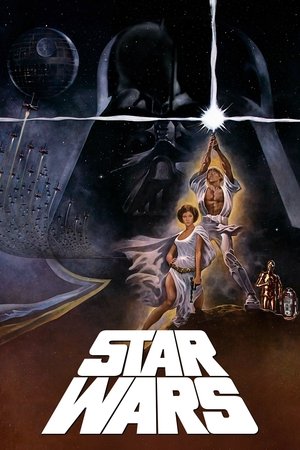
And yet, as may be oddly appropriate for a precursor to [*The Wizard of Oz*](https://trakt.tv/comments/207049), there is a Star Wars prequel-esque overconcentration of sterile CGI that practically infects *Wicked*’s visuals. A bit of unreality is eminently forgivable, even desirable, in a movie taking place in an imaginative fantasy world. But the attempts at photorealistic talking animals quickly fall into the realm of the unconvincing and uncanny. Too many set pieces come with a CGI sheen that belies the ability to light the characters well or create a sense of place between the figures and the setting. And despite some solid framings, more often than not, the main players seem awkwardly composited into the various backdrops.
This is a story about the Land of Oz. Things don’t need to look real. But they do need to feel convincing. (And hey, maybe even visually pleasing, while we’re at it.) *Wicked* fails on both fronts, with conspicuous green-screening that breaks the immersion of the movie’s spell, and otherwise muddy or downright unsightly visuals that make the movie unpleasant to look at for long stretches.
Throw in a dopey plot, some superfluous love interests, and runtime that feels both too long and too short for what the movie wants to accomplish, and you have a film that fails on any number of basic measures.
Yet, it succeeds in the most important one. *Wicked* is, at heart, a character story. As theoretically important (and sadly salient) its points about hollow authority and blind prejudice and societal myopia may be, this is ultimately a tale of two friends finding one another, growing from their unexpected bond, and coming into their own. And that's the place where the movie succeeds the most.
Some of that is the casting. Erivo conjures up Elphaba’s cynical-yet-hopeful affect with aplomb and finds layers in her performance that add complexity to superficial lines and lyrics. In places, she resorts to the same hangdog expression or slight smirk, but in the film’s key moments, she conveys a complicated set of internal emotions that communicate resignation, bitterness, solace, enthusiasm, and resolve, and each blended together, as her fortunes change.
Somehow, though, she’s not quite as perfect casting as Ariana Grande taking up the mantle of Galinda. I’ll confess, I walked into this one a skeptic. Talent can come from anywhere, but bringing in a pop star played like stunt casting and involving someone whose most notable acting credits are on Nickelodeon sitcoms did not inspire me with confidence.
Good lord was I wrong. Grande pitch perfect as the supercilious queen bee of The Shiz whose faux-magnanimity masks her status as a shallow (if spritely) social climber. She captures the surface-level quirks of the role with her comic, hair-flipping vibe and flitting physicality. But she too brings an extra layer to Galinda, with a legitimate good-heartedness that belies her superficiality, and a genuine softness and affection for Elphaba that brings out the person beneath the tics and affectations. I don’t know if Grande could play every role, but damn if she isn’t just right for this one.
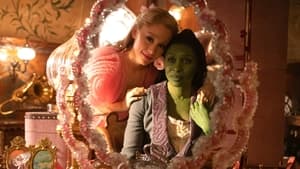
Some of that is in the chemistry. Erivo and Grande sparkle on screen together, to the point where you wish the film would just ditch Fiyero and stop pretending that any other relationship in the film comes with actual force. That is, in many ways, the most challenging thing to accomplish, and the most impressive. You get a sense of genuine playfulness and camaraderie in their dorm room palling around in “Popular”. You see each touched by kind gestures that turn them from enemies into bosom chums. Despite their differences, they stand across from one another with genuine care and support, and you buy it. That's not easy, and not to be taken for granted, especially in a movie that depends on that connection.
And some of that is in the way the film chooses to present their friendship, that often differs from the rest of the movie. If there’s a major pathology in *Wicked*, it’s in the disease of “more.” Everything here is over-the-top. The songs are blasted out at full bore. The score is omnipresent and distracting. The visuals are garish and overly busy. The editing is frantic, with constant cuts that dizzy you, even in calmer scenes. Almost everything here is excessively showy and overdone, to where you sometimes wonder if the Wizard himself produced the film.
And yet, Chu and company seem to know to pull that back for Galinda and Elphaba together. Their awkward dance turned empowering mutual expression of care and connection at the ball is starker and quieter than the rest of the film. The softer moments of “Popular” get time to breathe and even let Grande show off her pop music dance moves without the constant cuts. Their scenes get a chance to breathe, to be smaller and more intimate, than basically anything else in the film, and it’s no coincidence that it becomes *Wicked*’s strongest material.
Despite that, the film has its ups and downs across the board. Other sharp casting like Jeff Goldblum as the Wizard and clever choices to obscure the identity of Elphaba’s father must be balanced against the cheesy invocations of elements from *The Wizard of Oz* and unnecessary injection of action scenes into the proceedings.
But on the whole, *Wicked* is a tough movie to judge, and one that results in a profoundly mixed experience. Because not only does the creative team get the most essential element of the movie right; the friendship between Elphaba and Galinda outright soars. It is the shining achievement of the film, and one that ought to be duly lauded by dint of performance, chemistry, and craft for achieving what the movie needed to achieve most.
Except that almost everything built around that superb central element is disappointing at best and downright bad at worst. Much of that comes ready-baked from the stage version, but some of it stumbles in the movie’s lackluster visuals and maximalist approach to...well...everything. *Wicked*’s winning, central friendship is worth walking down the yellow brick road for, but somehow, the movie still makes you wish you could drop a house on everything else.

 Plex
Plex  Kodi
Kodi  Stremio
  Jellyfin
  Netflix
  Disney+
  Prime Video
  HBO Max
  Trakt
Trakt  TMDB
TMDB  Letterboxd
  IMDb
IMDb  Simkl
Simkl  TVTime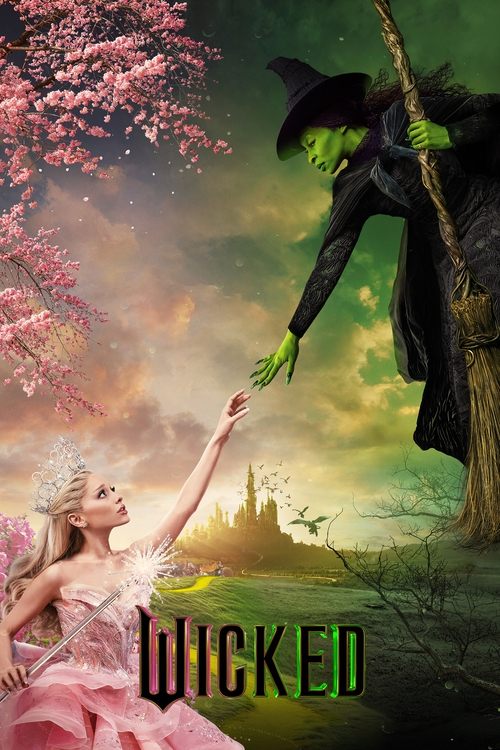
 United States