**Original Review, 9/4/2016**: It's hard to know how much to fault a film directed at kids for a lack of subtlety. While any art should have a point of view, a lighter touch when it comes to driving that point home is almost always a greater-making quality for works aimed at more mature audiences. But while kids tend to be brighter and more perceptive than many shows and films aimed at them give them credit for, they're still typically less sophisticated than their adult counterparts. That warrants a certain amount of hand-holding, a certain degree of signposting, and a certain amount of directness that might not be so easily excused in art that is intended for adults.
Which is to say that I was disappointed at how *Zootopia*'s complex, nuanced exploration of issues of race, sex, and prejudices of all stripes was hindered by the film's propensity to spell out all of its themes and points in blunt and obvious terms. The result is a film that takes a very interesting look at how people face discouragement because of how they were born or who they are, and saddles it with a parental figure specifically recommending that the protagonist "give up on her dreams and settle." It cannily explores the ways in which the "you can be whatever you want to be" mantra of the day is more aspirational than realistic but mires the point in a trite closing voice over. It takes a multifaceted view on race and other facets of identity but often examines that through on-the-nose dialogue.
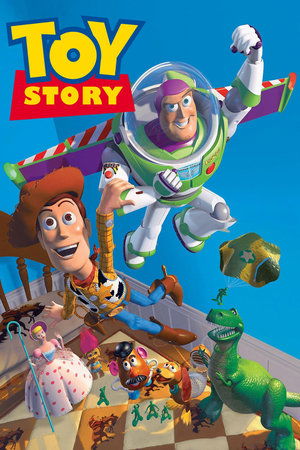
In most films, that would be the pits, but there's a sense in which these messages are important enough that it feels more okay for the film to turn subtext into text when delivering it to kids. The catch is that *Zootopia* is a Disney film, which means it's a corporate cousin with the collective works of Pixar, which in everything from the original *Toy Story* to *Inside Out* manage to convey these sorts of big, if generally less politically-charged ideas without being so overt or didactic about it. It can be done, and for all of *Zootopia*'s successes, its failure to match its fellow Disney Corporate Umbrella brethren in terms of the deftness with which it communicates its ideas keeps it a cut below.
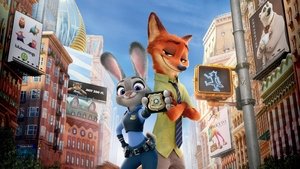
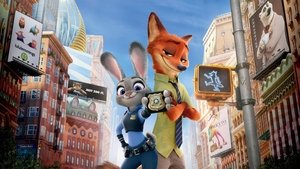
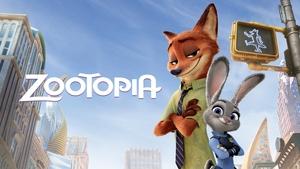
That's a shame, because there's a lot to like about *Zootopia*. Its story of a barrier-breaking young rabbit named Judy Hops who wants to be a police officer, in a world where "predators" and "prey" are limited by those designations and the cultural baggage that comes with them, had the potential to be a bog-standard lesson about how bigots are bad and overcoming adversity is good. Instead, the film has the gumption to explore how prejudice is not some abject boogeyman that can be solved by locking away the bad guys, but is, rather, a subtler, more widespread and pernicious ill that even our fearless, put-upon hero has to combat within herself. The plot, which involves Judy teaming up with a con-artist fox to solve a missing persons case that reveals a deeper conspiracy, is enough to move the film along while providing enough space for it to dig into its themes and let its colorful characters loose.
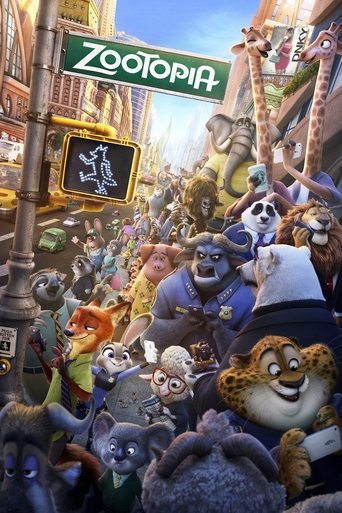
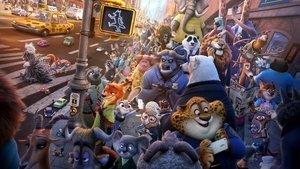
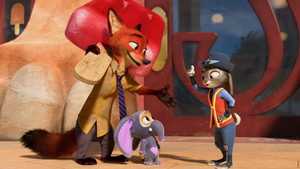
Those characters help to distract from the somewhat clunky dialogue and less-than-gentle reminders as to What The Lesson Is. Hops herself is Leslie Knope made lapine, and her boundless energy, optimism, and enthusiasm keeps the tempo of the film up. Her foil and eventual brother-in-arms, Nick Wilde, works as a cynical counterpart, with his dry realism and slick take on Zootopia running counter to Judy's chipper, law and order mentality. Of course, the two end up finding common ground, and after a few minor adventures and tearful backstories later, realizes the ways in which they've wronged and care for one another. But while their road to that point is predictable, the personality of the characters and the performances makes it enjoyable. And the rest of the city, whether it's rural rabbits voiced by comic pros or a maned mayor given the bombast of J.K. Simmons or the inimitable Idris Elba as a steely buffalo police chief, feels alive with distinct characters that make the universe of the film feel appropriately diverse and well-populated.
It's also a film that gets a lot of the little details right. These range from world-building elements, like the Zootopia trains having multiple compartments that vary by size which works as a nice salve to the general implausibility how this city and society would work, to smaller thematic notes, like Nick wanting to feel the sheep assistant mayor's hair, which works as a quiet nod to real life cross-racial interactions. For as heavy-handed as the film can get, those moments create a lived-in feel for Zootopia and help explain the film's setting and the in-group/out-group dynamics at the core of the film better than any exposition or grand statement could.
That world, and that premise, are *Zootopia*'s greatest asset. While making a film for children can lead to spoon-feeding the point to them, it can also allow for a sense of whimsy and imagination in exploring complicated ideas that grown ups tend to bristle that. Filtering the experience of sexism, racism, and other types of bias great and small through the lens of the animal kingdom not only serves to make the film's themes more attractive to a young audience, but it creates a certain distance between the viewer and their preconceived notions about the issue that, like the best speculative fiction, help to lay bare the assumptions and absurdity that undergird the real life issues at play. Making a movie about institutional prejudices through talking, funny animals is disarming, in a way that helps those themes land with all audiences.
That's why the lack of subtlety in the dialogue and the point behind the film are so disappointing the final tally. *Zootopia* is a movie with so much going for it. It's lovely to have a film that tackles the issues of bias in such a novel and complex way. It's great to a see another colorful world given life under the auspices of Disney's animation and design teams. And it's wonderful to welcome another collection of bright, fun characters into the pantheon with enough depth to make them more than just fodder for lunchboxes. It's just unfortunate that all of those great qualities get subsumed in the rote, occasionally even ham-fisted way in which *Zootopia* delivers them and its important message.
**EDIT, 12/22/2025**: On rewatch, nearly a decade later, I would probably bump this up to a [7.7/10]. It’s funny, on a second go-’round, all the directness and didacticness that bothered me on my first watch barely even registered. Yes, *Zootopia* is not a subtle film, and the message it’s trying to send is not particularly opaque. But whether it’s the added urgency of that message in the years since the film premiered, or my simply being a little more charmed this time, the bluntness didn’t register or repel me in the same way.
If anything, I walked away impressed at the multifaceted exploration of prejudice at the heart of the film. I remember some backlash to the film’s treatment of bigotry, and how if you try to map it onto a real world group, it either doesn’t fit and/or comes with unfortunate impl;ications. The malleability of the concept is a feature, not a bug, in my book. (If you’ll pardon the expression.)
As I noted in my original review, filtering prejudice the lens of abstraction allows *Zootopia* to come at the concept in a different way, and prompt audiences to think about it differently. It’s easier to get your guard up when a concept maps neatly 1:1 onto a real life community. Filtering that through the animal kingdom allows the filmmakers to explore racism, sexism, ableism, and other forms of bigotry with a universal lens that gives them the flexibility to both disarm audiences and say more by coming at the idea sideways.
To the point, I truly appreciate the fact that everyone in *Zootopia*, even our hero, Judy Hops, comes with their own biases to overcome. I love the idea that the titular metropolis is neither the perfect kumbaya utopia that Judy imagined, nor the self-centered slophouse that Nick initially paints it as. Instead, this city, like the people within it, is more complicated than that, full of conditioned fears and rank injustices, but also unexpected bonds and people trying their best. For however blunt the moral may be communicated, there’s real nuance in what the movie actually depicts in its characters and setting, and that counts for a lot.
I also saw complaints about *Zootopia* as copaganda, and to some degree I get it. Judy is a preternaturally good cop who manages to make incredible progress in reforming the whole department in what feels like, at most, a few months. That is certainly a pollyanna story of policing.
Yet, if you're willing to make some concessions for oversimplification for an all-audiences film, there’s a certain sense in which *Zootopia* plays like Baby’s First *The Wire*. (As Idris Elba’s involvement portends.) Most of what Judy experiences on the force is bias, marginalization, lack of accommodation, a dismissal of her aptitude and abilities, and an ossified system that ignores the real people who are hurting in Zootopia. Even when she exposes a grand conspiracy, she’s turned into a mascot and a token, to where she resigns from the police over it. Even a bright, optimistic new recruit is limited and worn down by a fractured, if not outright broken system that fails to recognize what it was in her for most of the film’s runtime.
Things end on a note of hope, of course. This is still a Disney movie after all. But that's a remarkably cynical depiction of things from the House of Mouse. It’s in keeping with the way the movie shows well-meaning people still perpetuating harmful stereotypes and fear of the other driving hurtful and harmful decisions all around. Judy’s determination and goodness win the way, naturally. But it doesn’t come easy, and takes swaying her parents to get over their own biases to spur her to try to do the same.
Apart from all of the interesting things going on under the hood, *Zootopia* is just a good time. The titular city itself is a stupendous playground. The multi-biomed berg makes for a great backdrop for Judy and Nick’s misadventures. The setting lends itself to tons of imaginative gags. And it’s also just a place that spurs the imagination, prompting the viewer to wonder about how all of this works and enjoy the fun of a town populated entirely by sentient animals.
Of course, a couple animals shine in particular. What makes the movie succeed more than anything is the great chemistry between Judy and Nick. A shaky partnership between a by-the-book do-gooder and a literal sly fox could have been hokey as hell. Instead, the sparkling banter, expressive animation, and winning dynamic between Ginnifer Goodwin and Jason Bateman makes the film purely enjoyable on a scene-to-scene basis. Even if you're not crazy about the film’s big metaphors or the takeaways it intends (and doesn't), *Zootopia* makes for a superb double act, which bolsters the picture at every turn.
Overall, this one definitely rose in my esteem on rewatch. The script is surprisingly tight and clever when you know what’s coming and can see what’s being set up and paid off. The characters are memorable and fun within an inspired setting. And most of all, despite how direct *Zootopia*’s messaging is, the thought, depictions, and touches big and small behind that message reveal a complexity worthy of the big topics this ambitious film tries to tackle and translate for general audiences.

 Plex
Plex  Kodi
Kodi  Stremio
  Jellyfin
  Netflix
  Disney+
  Prime Video
  HBO Max
  Trakt
Trakt  TMDB
TMDB  Letterboxd
  IMDb
IMDb  Simkl
Simkl  TVTime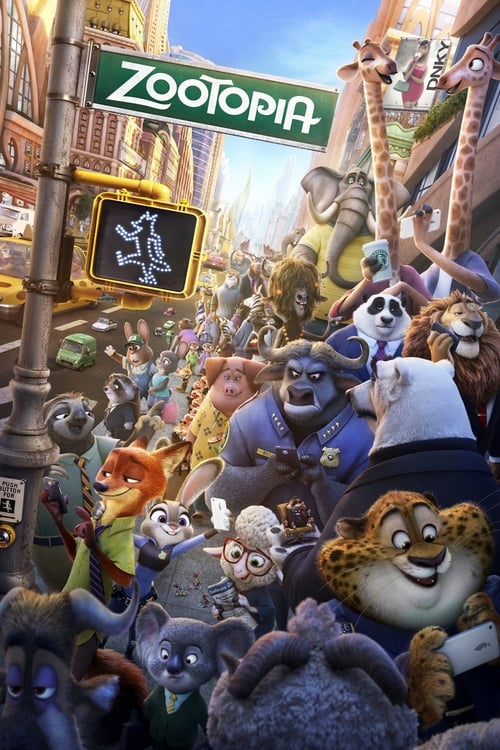
 United States