[8.6/10] There’s an old post from the *Buffy the Vampire Slayer* subreddit that's stuck with me for a long time. A poster asked if anyone else felt like Buffy, Willow, and Xander were their real life friends. Did anyone else talk to them, as if they knew what these characters would say back? Did anyone else feel like they knew these three fictional teens, like they were closer to them than the people they knew in real life?
It felt so sad. I was weaned on television growing up. I know what it’s like to feel the vividness of a piece of art and feel as though your young existence is colorless by comparison. I have felt the pangs of loneliness, and I have been drawn in by the allure of escapism. So seeing a fellow traveler, lost in that thicket, giving into the comforts of fiction over the truth of real life, is a melancholy thing.
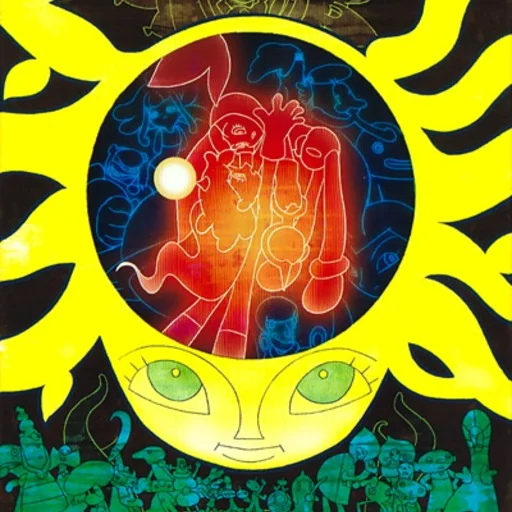
That melancholy hangs over *I Saw the TV Glow*. The film offers its own ersatz take on *Buffy* with a magical girl drama on the “Young Adult Network” called *The Pink Opaque*. (Replete with a character on the show named Tara and a cameo from Amber Benson to seal the deal.) And like the show that once graced the teen-focused airwaves of the WB network, *The Pink Opaque* has its share of understandably obsessive misfits.
That's the first thing that stands out in *I Saw the TV Glow*. Writer-director Jane Schoenbrun is of the same vintage as me, and they so faithfully represent the era both on and off the screen. The film’s rendition of *The Pink Opaque* brilliantly recreates the rhythms and aesthetic of the 1990s supernatural teen subgenre, and the pockets of fan culture around it.
The low budget, but high concept trappings; the friend-to-friend chats and scribbles over the monsters-of-the-week versus mythology and the complexity of series lore; and more to the point, the bonding over these unexpected curios penetrating the mainstream and sending up a signal to oddballs and outcasts in suburban enclaves that made people feel seen and understood in a way little did -- it’s all there.
But so is the darker side of that. The film’s protagonist is Owen, a young man who seems subdued to the point of submission. *I Saw the TV Glow* is only explicit about it in one bravura, impressionistic set piece, but the context heavily implies that Owen faces abuse and repression at home. And we see the literal and figurative distance between him and his father, the instinctive aversion Owen has to his dad, and even the walls between him and a mom who cares for him. There is a profound sense of alienation, of inability to connect, of the idea that there is something wrong or missing within him that abounds and leads him to seek some kind of camaraderie or mutual understanding with Maddie.
She is the other half of the equation. Maddie is Owen’s counterpart and gateway into *Pink Opaque*. She is the expert, the one who smuggles him tapes and gives him the details. But she is also the one whose mom doesn’t care about what she does; whose stepfather has broken her nose, who feels like she’ll die if she doesn’t get out of this town somehow. And she, more than anyone, feels the reality of this young adult program. She yearns for it. She needs it. They both do.
That's what’s hard. The world of ,I>THe Pink Opaque* where two young women have a special bond that allows them to fight the forces of evil, isn’t just a balm for gloomy oddballs. For Owne and Maddie; it represents something to escape to, a respite from the numbing hardships of their day-to-day lives. The world of the show feels realer than real to them. The characters represent their idealized alter egos. And even as they bond over their shared fandom, they’re also united in the sense that they’d rather live in, as Homer Simpson once put it, “television’s warm glowing warming glow,” than in the cold light of reality.
*I Saw the TV Glow* toys with the possibility of that idea. It is easy to read Maddie and Owen’s desire to exempt themselves from reality and actualize their true selves in their favorite TV show as a shared response to raw longing and abundant trauma. But there are hints along the way of the world of television bleeding into the real world: snippets of blue static, “downed power lines” with snippets about seasons that never were. The prospect that they could really escape into *The Pink Opaque* is made more than a delusion, in the visual grammar of the film.
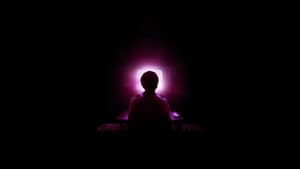
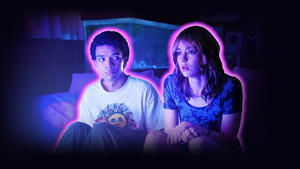
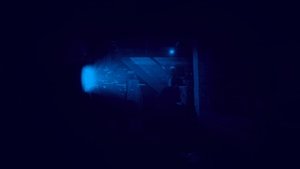
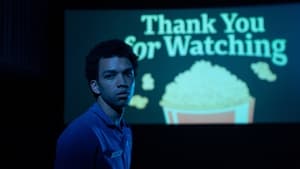
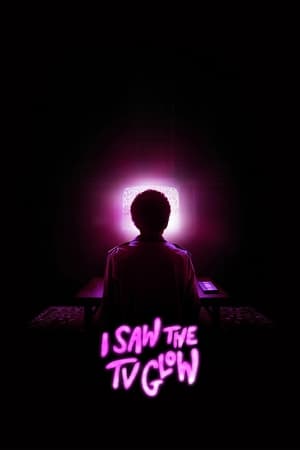
That imagery is one of the show’s best selling points. True to the title, the movie is awash in a series of haunting but inviting neon hues washing over the characters. Pinks and blues pervade the picture, with light sources representing that multiversal allure and sometimes the destabilizing uncertainty of present circumstances. The movie drops in musical performances a la *Buffy*, using the same striking color palette. And the way the film gives us repeated motifs of dark rooms light up in the comfort of those colors, tinged with the hope that those fictional escapes represent, make it a feast for the eyes.
Despite that, *I Saw the TV Glow* is a measured, slack-paced film. In truth, sometimes it’s a little too slow, even for viewers who enjoy an unhurried tempo. But Schoenbrun, cinematographer Eric K. Yue, and editor Sofi Marshall use those rhythms to emphasize the inner lives of their characters and the talents of their performers. The production team favors long close-ups on the faces of the actors in those soft-lit framing.
In a laconic film, it creates space for the audience to connect with the pushed down but present reactions of the characters that come through in their subtle changes in expressions and long, hollowing looks. The tone for Owen in particular is one of a flat affect, which dovetails with the sense of true selves repressed. But those choices in pacing and composition let their sentiments still emerge in a palpable, sometimes piercing fashion.
And as with another film that blurs the lines between what is supernatural and what is a trauma response, *I Saw the TV Glow* often follows a style from [*The Shining*](https://trakt.tv/comments/724766). Tracking shots see the characters moving through spaces while never making progress in the frame. As with Stanley Kubrick’s classic, it’s an approach that creates the sense of a spectator to the proceedings, tying into Owne and Maddie’s sense that they’re watching their own lives from the outside distance. And it accentuates those eerie moments, where reality cracks or breaks and the fantasy bleeds in.
The film’s most virtuoso, and scariest sequence, comes when Owen watches “the final episode” of *The Pink Opaque*. As with kindred spirit projects like *Don’t Hug Me I’m Scared*, the movie finds an unnerving blend of matching a 1990s shoestring television aesthetic with grim or galling events. The hokeyness of the network television costumes and toybox aesthetic are belied by the soft brutality of being dragged away against your will, force fed poison, and buried alive.
The imagery of the constant facial metamorphosis of Mr. Melancholy, and Isabel spitting up his “Luna Juice” is disturbing. The psychological horror of this malign force compelling you to forget your true self and cram you into a living lie is unnerving. And the horror that follows -- of Owen desperately trying to return to that world, until his father forcibly drags him away, and technostatic bursts erupt over a poor lost soul pleading that this is not his life -- is gutting and garish, in the best way.
Regardless of the in-universe “reality” of these events, there is an abiding sense that something is wrong in this world for Owen, something wrong in his life. Maddie herself articulates it in the idea that even when she ran away from her town, something was still missing, something that couldn't be cured until she left this plane of existence and found the one she felt and *knew* on an instinctive level.
It is telling that *I Saw the TV Glow* shares that sense, and the reality-traversing quest for freedom, of [*The Matrix*](https://trakt.tv/comments/222154), another film crafted by trans writer-directors. This film plays even more heavily as a trans allegory. Certain scenes suggest Owen viewing Isabel of the show as his real self, and while I can't speak to others’ lived experiences, details like the subdued demeanor, the lost time, the Owen presents himself, all track with personal accounts of gender dysphoria I’ve seen.
That motif makes the film that much more triumphant and tragic. It’s triumphant because despite her hardships, Maddie does break away. She does become her power fantasy, freed of the strictures that held her back and made her less than she ought to be. There’s a marked contrast between Maddie’s diminished disposition when discussing the confining environment of this hardscrabble world versus the animation that erupts over her when she speaks of the luminous one she’s inhabited for eight years.
But it’s tragic because Owen can't break free. He tries. He comes close, on the brink twice with Maddie’s help. But each time, he pulls back, unable to make that step. The sense of breakdown at the end of the film, of acknowledging that something is wrong but not being able to confront it, is heartbreaking. While comparatively staid, after a movie’s worth of quiet reservation, seeing Owen scream in anguish to a motionless room of people is bracing, upsetting even, in a way that has tremendous power.
This is someone who desperately needs whatever’s on the other side of that screen, whether you want to take it literally or figuratively, and instead they suffer in silence without it.
To the extent there’s any glory, any hope in Owen’s story, it’s in the idea that even though it takes years, he does the thing he told Maddie he was afraid of back on the bleachers all those years later. He’s afraid of an emptiness inside him in this tarnished world, and instead, when he finds the courage to cut himself open and see what’s inside, he discovers the luminous flash of that vaunted glow. Maybe it’s a sign that what he craves is still there; still possible. Maybe the static means the emptiness remains. Maybe the quiet apologies to disinterested onlookers mean that he’s no closer to letting himself reach for it, even if he can finally acknowledge it.
But that is the upside to those pieces of art we connect with in ways that can feel scary or overwhelming. At their worst, they can create a connection that is unhealthy. Parasocial relationships delude people into ignoring the real world and giving themselves over to figures who will never love them back, sometimes because they have nowhere else to turn. It’s heartbreaking when someone feels like they have no one else to turn to but the faces on their television screen.
At the same time, though, that art can awaken something in us. It can help us to see versions of who we could be that we’re scared to face, or forbidden to countenance in staid corners of the world that don’t tolerate, let alone embrace certain things. At their best, and most moving, they can strip away the stunting fictions we build to protect ourselves in the real world, and allow us to see a vision of ourselves -- as we truly are.

 Plex
Plex  Kodi
Kodi  Stremio
  Jellyfin
  Netflix
  Disney+
  Prime Video
  HBO Max
  Trakt
Trakt  TMDB
TMDB  Letterboxd
  IMDb
IMDb  Simkl
Simkl  TVTime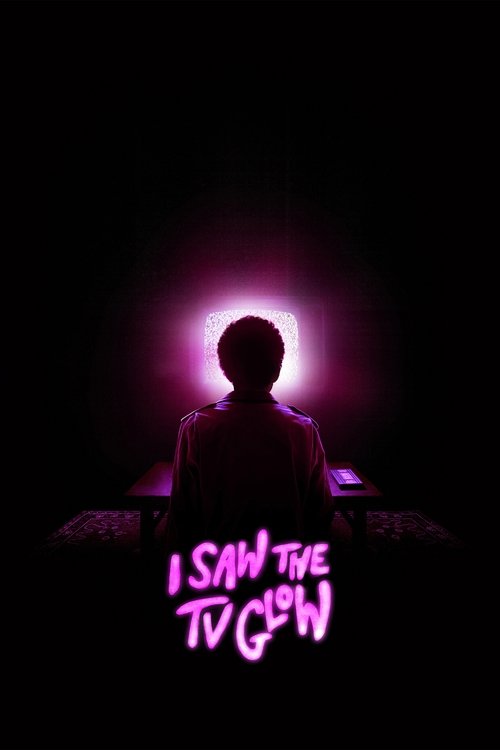
 United States