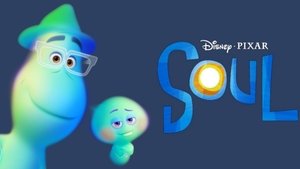
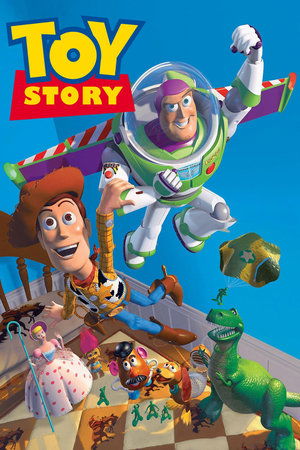
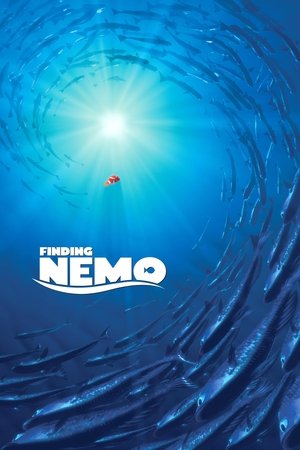
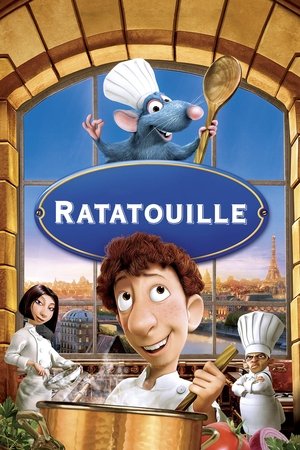
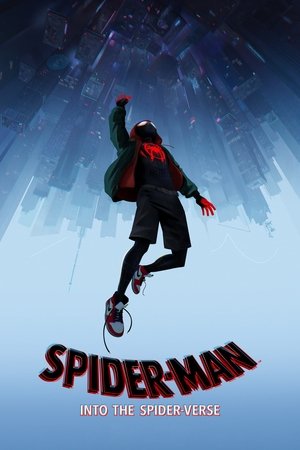
[7.8/10] *Soul* isn’t an entirely new thought for co-director Pete Docter. It is, in many ways, it’s a counterpoint to the message from Docter’s *Up* -- if you spend so much time lamenting the adventure you never had, you’ll miss the great adventure that was your life. In *Soul*, Doctor, co-writer/director Kemp Powers suggest that the heart of life is simply *living*, to take in the moments grand and small that give your existence meaning, separate and apart from much-ballyhooed but slippery notions like “purpose.”
It’s true to form for Docter’s oeuvre which, alongside other Pixar classics like *Inside Out*, often praise the notion of stopping to smell the roses and appreciating the beauty of what you have, rather than constantly reaching for fulfillment through some external goal or alternate state of being one strains to achieve. What distinguishes *Soul* is the way it puts two opposing forces and perspectives on opposite sides of that ability to enjoy life and appreciate living it for what it is: obsession and insecurity.
Docter, Powers, and fellow writer Mike Jones represent the notion of obsession through the film’s protagonist, Joe Gardner, a middle school band teacher with aspirations of being a great Jazz musician. The plot of the film centers on Joe dying just before he gets what he believes will be his big break and trying to finagle his way back to this mortal coil and his Earthly body so that he can get it.
That path allows Doctor, Powers, and company to invent a new world to explore and rules to discover, much as in *Inside Out*. This film’s conception of the afterlife includes a conveyor belt to The Great Beyond, whatever comes after our existence; the You Seminar, a place where not-yet-born souls are molded and prepared for life; a series quantum entangled guides with 2D frames and Picasso-like designs who all go by “Jerry”; a plane of lost souls too obsessed with some quest and another of artists and other creatives “in the zone,” with the divisions between the two being not so deep; and Terry, a persnickety accountant who means to keep everything in order and is the closest this spiritually-focused film has to an antagonist.
This universe may not be as outright fun and exciting as the realms conjured in *Inside Out* and *Monsters Inc.* were, but it’s just as creative, finding avenues for our heroes to make mischief, rules to be bent and broken, and an open canvas upon which *Soul* can paint its themes in whatever fantastical ways the film’s team wishes.
It also gives them a setting to introduce the personification of the other half of the film’s central theme, the one centered on self-doubt and hesitation -- Number 22. She’s a not-yet-born soul who’s been mentored by a who’s who of famous faces, managed to fill out the rest of her pre-birth personality punch card, but hasn’t found the last “spark” necessary to earn her Earth pass.
The twist is that she doesn’t *want* to earn it, content with her routines and comfortable existence in this ethereal plane, and resistant to any effort to prompt her to discover that spark and move on. Late in the film, *Soul* reveals that the source of Number 22’s resistance isn’t simple stubbornness or orneriness, but rather a fog of insecurity and the sense that she’s not good enough. Her hesitance to go down to Earth provides fodder for a buddy comedy, where Joe will help her gain her Earth pass so that he can use it to go back and get his big break, and she can stay there without having to be born.
Frankly, it’s the least successful part of the film, which given Docter’s standards, isn’t so bad. There’s a lot of standard body switching, odd couple zaniness when by accident, Number 22 ends up in Joe’s body and Joe ends up inhabiting a cat. There’s slapstick gags about each learning to walk and operate their new meatsuits, freaking out normals who don’t know what’s going on, and some observational humor about New York City in the particular.
It’s all perfectly fine, but not as spritely or invigorating as the adventures of Mike and Sully, or Carl and Russel, or Joy and Sadness -- which really just means the film’s more kid-friendly antics only suffer for the sterling company they keep.
It’s visuals, on the other hand, are fantastic. The ethereal blue hue of the afterlife and cartoony caricatures of various souls are a little more uniform, but still can boast a slick but welcoming aesthetic. The representations of artists lost “in the zone” is impressionistic and beautiful. And montages of the important moments in these characters’ life have the feeling of a Terrence Mallick film.
The only complaint to register on that front is that sometimes the animation is, frankly, too good. In the scenes set on Earth, the characters move with such recognizable weight and distinctive gestures that at some points, it creates a dissonance with the exaggerated facial features and other physical design choices for the major players. At times, the balance between realism and cartooniness veers a little too close to the former for comfort.
But amid all that zaniness and computer-animation wonder, the cinch that emerges so often in buddy comedies peeks out once more between Joe and Number 22 -- that each had something the other needed to see and hear. For Number 22, it’s the chance to walk a mile in Joe’s shoes, in this case literally.
She harbored such fear and self-doubt over what living would mean in the abstract, whether she would measure up in theory, until she actually had the chance to experience life , and saw that, in practice, it means a cornucopia of invigorating sights and sounds and tastes and experiences that made her ready to take the leap. What she needed to punch her ticket was not a purpose, it was just a readiness to live, one she was able to achieve by getting to try it out through Joe’s eyes. His scolding later reinstills the self-doubt she’d been harboring, but his reassurances give her the inspiration and strength she needs to shed those hang-ups and dive in.
For Joe, the experience ironically allows him to see his life through Number 22’s eyes, to see the connections both big and small that he’s been compartmentalizing in favor of his single-minded pursuit of a jazz career. He realizes the little things in life -- the fall of a leaf, the sound of a musician in the subway, the conversation about life with his barber that he never had that give it meaning apart from any grand goal-based measuring stick. He and 22 have open-hearted conversations with his student, his barber, and even his mother, that unlock a world of connection and fulfillment he’d missed up until that point.
In essence, his epiphany is much like Carl’s in *Up*, namely that his life was already rich and full of things that made and make it worthwhile; he was just so fixated on his goal that he’d been missing them all this time. In the film’s most beautiful and heart-rending moment, he recalls all those little wisps of his life that were not flashy, but which filled his heart with joy, and realize that they’re the things that animate his existence, that are truly necessary for it feel fulfilling, not the chance to play jazz with one of his idols.
He tells that idol that his big professional triumph didn’t feel the way he thought it would, and she replies with a parable about a fish in search of the ocean who can only see water. The world doesn’t change for Joe, either our world or the next; it’s his perspective that does. The moral of seeing the beauty in everyday life and interactions, beyond just our grand projects, is not a novel one in Docter’s filmography. But *Soul* is another thoughtful, spirited, moving rendition, made no less poignant or beautiful for being a variation on one of its composers’ favorite melodies.

 Plex
Plex  Kodi
Kodi  Stremio
  Jellyfin
  Netflix
  Disney+
  Prime Video
  HBO Max
  Trakt
Trakt  TMDB
TMDB  Letterboxd
  IMDb
IMDb  Simkl
Simkl  TVTime
 United States