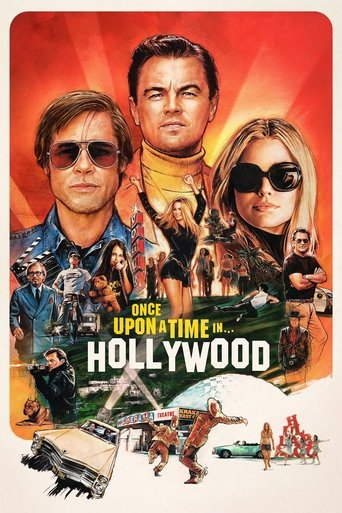
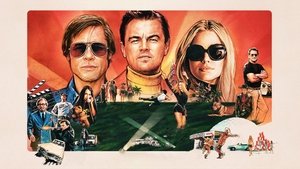
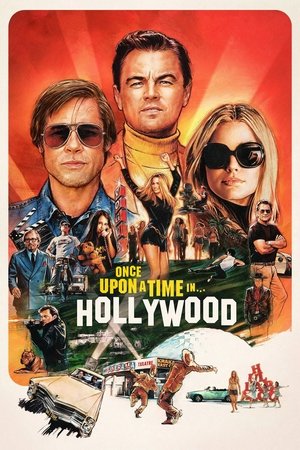
[7.5/10] I should have known. The original title for Quentin Tarantino’s alternate universe World War II story was “Once Upon a Time in Nazi-Occupied France”. The recycling of the title should have prepared me for the fact that this was not just going to be the story a few composite characters made disturbingly adjacent to the Tate Murders. Instead, it is another alternate history tale, where the Manson Family decides to go after a neighboring character actor, only to be stopped in their tracks by his trusty stunt double and a conveniently-placed flame thrower.
What I can’t tell you is why. The cinch of “What If?” stories is examining the import of the differences between one timeline and another. There is catharsis, and also indictment on both sides of the screen, to see the Basterds wipe out the Nazi brass. And I suppose, in a similar way, there is relief in seeing Tarantino steer his film so close to the grisly deeds that shocked a nation’s conscience, only to show our would-be heroes preventing it. But *Once Upon a Time... in Hollywood* doesn't feel like it’s making the same sort of point.
Instead, it’s a character story. The Tate Murders, the atmosphere of famous people around and averting disaster, feels in service of the two made-up protagonists than the other way around. It’s a story about a solid actor, pushing through his fuck-upery and potentially stumbling onto his big break. And it’s also about his best friend -- put upon but uncomplaining and possessing more sense and ability than his benefactor -- keeping the aspiring thespian out of trouble.
But it’s also just a slice of life movie. *Once Upon a Time...* is more a collection of loosely connected vignettes set around a particular time and place than it is a narrative. There’s nothing wrong with that. Say what you will about Tarantino, but the man knows how to write a scene. The sixties texture is superb. The needle drops are outstanding. The interactions are compelling if a touch rudderless. For a nearly three hour movie where not much of consequence happens until the final reel, it’s never boring, which is no small feat.
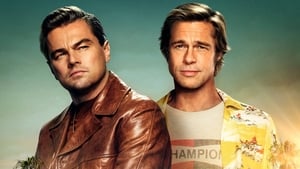
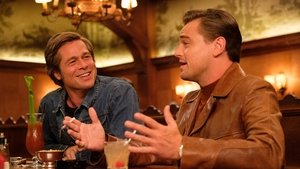
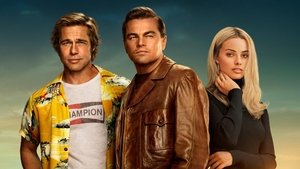
In its best mode, the film works as a character study for its three (well, two and a half) main characters. Rick Dalton’s ride as a struggling actor is compelling. The notion of a man who feels like he’s on the verge of being a has-been, finding his light and, through the most bizarre of circumstances, maybe catching his big break, is an engaging one. Tarantino himself has rescued the careers of more than one talented character actor all but forgotten by the Hollywood machine. There’s something about Dalton’s story that is, if nothing else, true to Tarantino’s brand in that the big upshot of the Tate Murders being largely averted is that a solid performer gets his unexpected chance to shine.
Along the way, the film wrings the pathos from a fuck-up thinking that he’s at the end of his rope, finding a performance he wasn’t sure he had in him, and proving to himself that he can do this before his prayers are answered. Leonardo DiCaprio occasionally veers into his “more acting, not better acting” mode, but he delivers the performance called for in his and Dalton’s key scene, and finds the wounded heart of a well-to-do manchild.
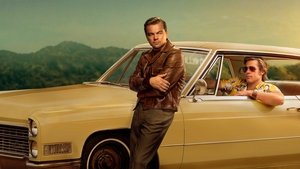
Brad Pitt is also a joy to watch as Dalton’s stunt double, Cliff Booth. There’s a cool-under-pressure matter of factness to the character, cutting the figure of someone who takes all the ridiculous or insane things he confronts on a daily basis in stride. It’s hard to say what the point of Cliff is, beyond being a sort of underappreciated guardian angel, whose seemingly done some bad shit but who seems to look out for people when he doesn't necessarily have to. He’s an engaging presence, perhaps there to show how people whose names you’ve never heard of end up having outsized, essential roles in the lives of the people whose names you do. Dalton seems to recognize that in the end, vindicating a camaraderie that he didn’t quite appreciate until it saved his life.
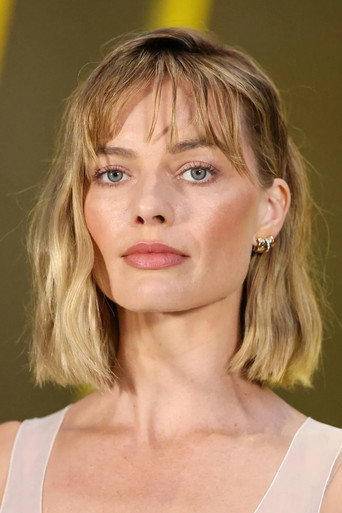
And then there’s Sharon Tate. For all the controversy around Margot Robbie’s screen time and number of lines in this movie, it’s fair to question what purpose her and Tarantino’s realization of Tate serves. As the only real person to have a major presence in the film, hers comes the closest to the “for want of a nail” theme in a typical alternate history story. You get the sense of someone excited about her work, ready for and worthy of more, making her an almost angelic presence in the film. If there’s anything that sells the tragedy of what happened in real life, the pleasing joy of wondering of what preventing it would mean, it comes in the form of saving someone who, in the film at least, is so pure.
That said, this is a film that shows some blind spots. There’s a lot of male gaze here, not just on Robbie -- who mostly dances and smiles through the feature -- but also on the female members of the Manson family who, like Robbie, are conspicuously panned and shot and framed with certain features emphasized for little-to-no narrative reason. This is also still a Tarantino film, so you’re going to have multiple prominent shots of bare feet, and for a writer who’s created some outstanding female characters, they largely get the short shrift here.
You’re also going to get the things Tarantino does well here. He creates one-scene (technically two-scene) wonders like a little girl who is a committed and sensitive thespian. You get tense scene construction when Cliff visits the Spahn Ranch or the Manson Family invades Dalton’s home. You get bright primary colors and creative shots while period-appropriate tunes play in the background. You get the combination of the funny and the gory in the way that’s becoming a calling card for the director, from an attacker amusingly getting subdued with a big can of dog food, to a disquieting sequence where another’s skull is smashed in by the fireplace. If your goal is to just hang out with Tarantino’s usual trappings for 2+ hours, *Once Upon a Time...* is the movie for you.
But if you want more than a mostly low key day in the life of some nicely-sketched but not overly memorable characters, you should probably look elsewhere. There’s nothing wrong with crafting a world, a set of personalities, that it’s just enjoyable to spend time with. But with *Once Upon a Time... in Hollywood*, Tarantino seems to want to make some grander statement with his break from real life events and focus on a pair of relative nobodies who stumble into snuffing out a tragedy, but unlike his protagonist, he never quite gets there.

 Plex
Plex  Kodi
Kodi  Stremio
  Jellyfin
  Netflix
  Disney+
  Prime Video
  HBO Max
  Trakt
Trakt  TMDB
TMDB  Letterboxd
  IMDb
IMDb  Simkl
Simkl  TVTime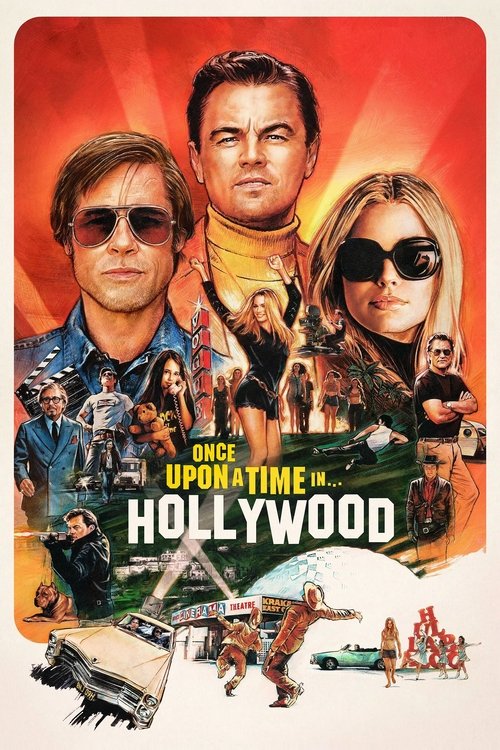
 China
China United Kingdom
 United States