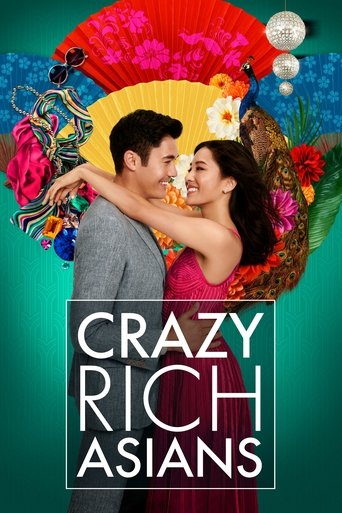
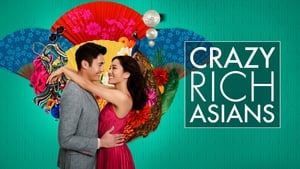
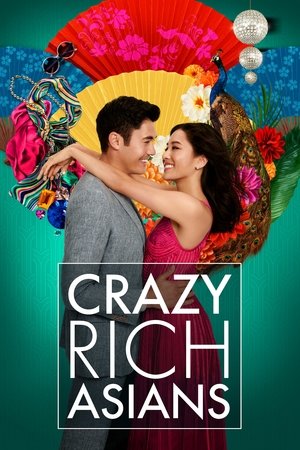
[5.4/10] At some point, a stock romcom is a stock romcom. *Crazy Rich Asians* is suffused with things that set it apart from the usual romantic comedy, from its all-Asian cast, to the cultural specificity of its settings and challenges, to the generational and geographic disconnects that define its family conflicts. But at the end of the day, the laudable distinction of those things is drowned in the tired familiarity of blandly-sketched characters, annoyingly broad comedy, and thin explorations of those intriguing idea in glitzy-to-the-nines environment.
At one point in the movie, one character asks the male lead, “what do you think this is, some kind of fairytale?” And the answer is yes, yes it is. The film is the story of a perfect, beautiful protagonist who goes and visits a fairytale world of flash and luxury with her handsome, perfect boyfriend. She faces what should be genuine but ultimately perfunctory challenges which she, being perfect, overcomes with only the most minor of setbacks before earning her skeptical mother-in-law’s acceptance and getting her inevitable happy ending.
All the while, *Crazy Rich Asians* gives itself over to a host of standard romcom tropes. There are countless broadly-sketched, irritating-as-hell side characters in this movie. They are intended largely to be comic relief, but are all so over-the-top cartoony that they all come off like filler at best and albatrosses at worst. There is the instant best friend who becomes the source of strength and commiseration without it ever being earned. And there’s the fantasy of all-conquering love that is given by fiat rather than ever really established between the protagonist and her beau.
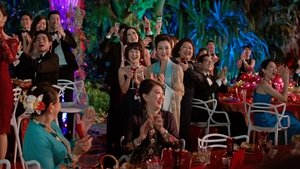
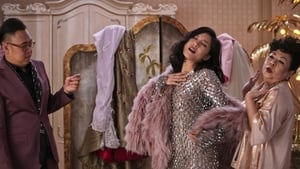
And that’s all before you get to the unmitigated luxury porn of *Crazy Rich Asians*. For a film that wants to pretend it’s asking hard questions about wealth and class, it is not shy about bombarding the viewer with glitz and glamour. There are umpteen food montages. There is a miniature fashion show and dozens of scenes where folks are dressed to the nines. There are elaborate bachelor/bachelorette parties, and tons of grand, panning shots of the Singapore landscape, and any number of parties or other fancy gatherings for the viewer to mentally insert themselves. There’s a *Wolf of Wall Street* quality to the film, where it’s implicitly trying to cast some judgment on the type of lifestyle it depicts, while also clearly trying to make that lifestyle look as cool and enviable and escapist as possible.
What kills me about all of this is that *Crazy Rich Asians* has a story worth telling. The core of the film’s conflict comes down to different expectations of culture and family obligation between people of Chinese heritage who grew up in the United States, and people of Chinese heritage who still live in Asia. There is an intriguing story of generational expectations and personal sacrifices expected and inherited in distinct cultures and communities. And while it’s contradicted by the film’s presentation, there’s even a solid theme of the impact of wealth on who we become and how it affects the people we care about.
But the film never goes particularly deep into any of these topics. It’s mostly content to pay them lip service, while tossing off another glamorous montage or deploying another standard romcom trope. Told in a different way, this movie could have been something genuinely worthwhile; it’s subject matter certainly is. Left with tin-eared dialogue, fairytale romance logic, and snootfuls of tepid humor, however, *Crazy Rich Asians* is, instead, maddening in its missed potential.
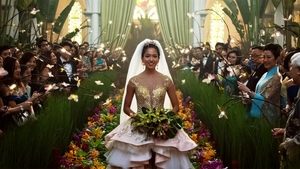
The best you can say for it is that it is nice to look at. As shallow as the film is, and as gratuitous as many of its sequences are, it’s hard not to watch a montage of a food market, or a drink shared on still waters, or silent proclamations of love in a slow-motion, dream-like wedding, and not be lured in, just a little. *Crazy Rich Asians* knows how to push its audiences buttons, which is partly how it gets away with offering so little of substance in the guise of making grand statements in dramatic tones.
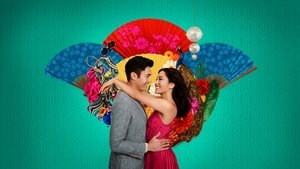
It also gets by on the charm of its cast. Rachel Chu and Nick Young are barely-there audience insert characters, whose personalities can roughly be summed up as “they’re pretty and they like each other.” But what the film lacks in substance to their romance, it makes up for in texture, with their playfulness and general cuteness together papering over a fair bit of how stock their relationship is. And Michelle Yeoh stands out as the Emily Gilmore-esque grand dame who is, like everyone in the film, saddled with the script’s painfully on-the-nose dialogue, but whose ability to convey nuance and emotion in her character’s nonverbal cues manages to not only rescue her character, but make her one of the film’s anchors.
The other major anchor is supposed to be Nick’s cousin Astrid, who is Rachel’s insta-bestie and the lead of the movie’s B-story. It sees her confronting the fact that her husband is having an affair, and comes out with a really confusing message. Ostensibly Astrid’s arc is that she feels guilty about the effect her wealth and her family’s expectation has on her husband, blames herself for his dalliance, but then sees how Rachel is able handle it and realizes that her husband is just a jerk. But being relegated to the B-story, there’s barely enough moments for the story to breathe, with far more telling than showing about who these people are and what they’re about. And while I doubt it’s the film’s intention, the final moral to this segment seems to be “if people are uncomfortable with you buying million-dollar earrings, that’s on them!”
Rachel’s arc is, thankfully, less discomfiting, albeit still fairly stock. She meets her boyfriend’s family; the family doesn't like her, but she proves her ability to stand up for herself and eventually earns their respect and acceptance after some minor personal trials. That standard story is livened and made more interesting by it being steeped in two very different stories of Chinese emigration, but at the end of the day, *Crazy Rich Asians* can’t escape the hoariness of its tropes, even when it grazes something far deeper and more unique in the specific cultural mores it’s trying to unpack.
Its characters are just too lightly-defined, its conflicts too stock and obvious, its comedy too loud and grating, and its messages and declarations too blunt and obvious. As a feature-length tourism video, *Crazy Rich Asians* is inviting as all hell. As a feel-good bit of warm fuzzy escapism, its shallow romance is charming enough to pass muster. But an incisive drama, with something meaningful to say about the worthy ideas it fleetingly toys with, it falls woefully short. Instead, it gives itself over the usual romcom beats and cheap seats humor, draping them both in cultural explorations that deserve better than to be examined through such a superficial, fairytale lens.

 Plex
Plex  Kodi
Kodi  Stremio
  Jellyfin
  Netflix
  Disney+
  Prime Video
  HBO Max
  Trakt
Trakt  TMDB
TMDB  Letterboxd
  IMDb
IMDb  Simkl
Simkl  TVTime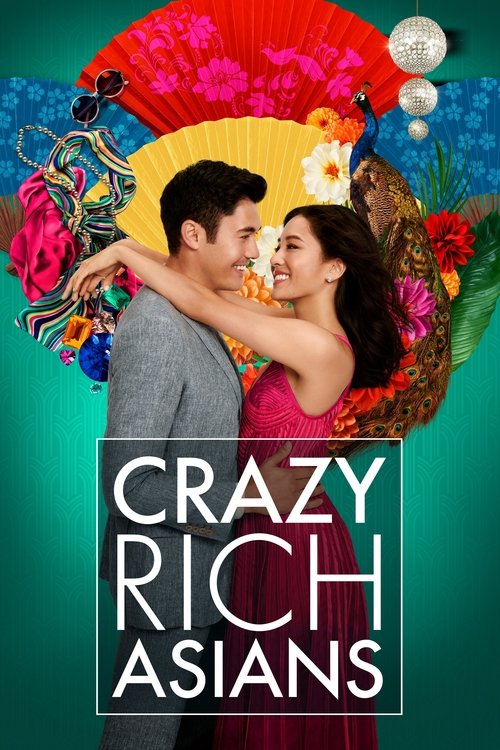
 United States
 Hong Kong SAR China