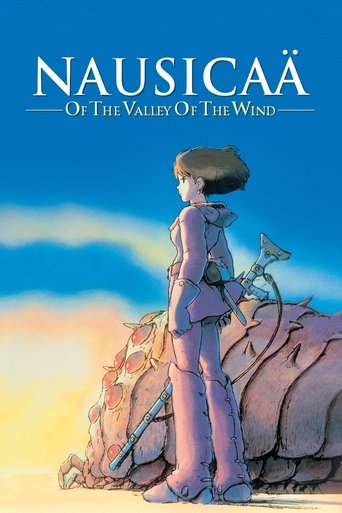
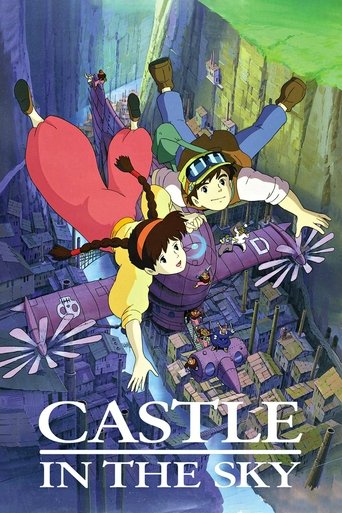
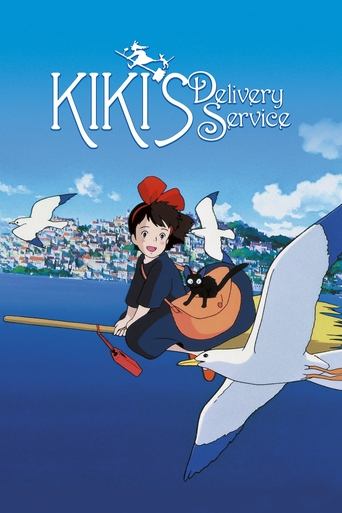
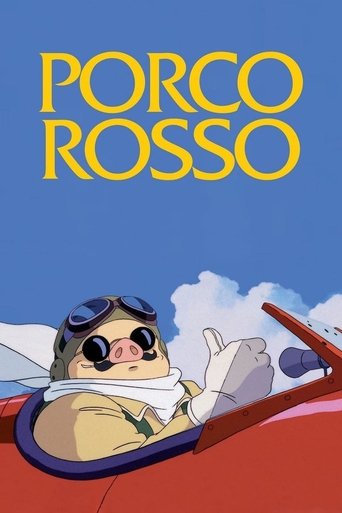
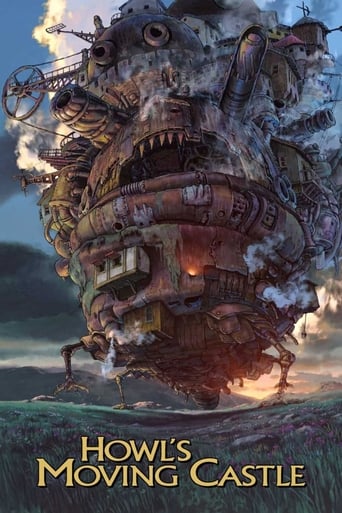
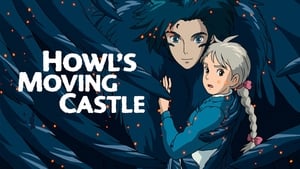
[7.8/10] At best, much of the story of *Howl’s Moving Castle* goes unexplained. At worst, it outright makes no sense. Characters wander in and out of new places and are accepted without a second thought. Protagonists travel through time and figure out how to solve seemingly unsolvable problems without much indication as to why. People fall in love by fiat. Erstwhile villains turn (mostly) nice on a dime. Wars just kind of end. If you come to the film for narrative consistency, you’ll be sorely disappointed.
But if you come to it for, as the kids say, “the vibes”, you are in for a marvelous treat.
Hayao Miyazaki is, in many ways, less a filmmaker than he is a creator of worlds. I say that not in terms of “lore” or “worldbuilding” as we traditionally think of it. The rules and contours of *Howl’s Moving Castle* are both delightfully and maddeningly opaque. You can perceive the intersection of World War II era technologically and folks magic at the core of the film’s setting, but once that foundation is established, anything goes.
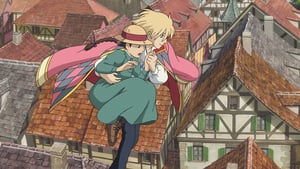
I mean it, instead, in the sense that all of his films -- from the most moving to the most random -- come with an incredible sense of place. The detail in the backgrounds, the lived-in qualities of his cities and towns, the stunning landscapes that his characters gaze upon, the whimsical creatures he and his collaborators conjure, the deathly war machines fluttering through the sky, the herky-jerky movements of the titular mobile tower house, the way the wind and water and tiny sparks of light flow and flit and dance past our heroes -- they all make you feel like you're *there* in a way that few, if any other filmmakers’ output can match.
In the same way, Miyazaki and company don’t do a ton of establishing of these characters and their relationships. Sophie helps a humble scarecrow, and he’s bonded to her for life. Markl, the wizard’s young apprentice, is annoyed at her until he begs her not to go. The Witch of the Waste goes from being Sophie’s tormentor to having Sophie become her caretaker. There’s not much there on the page, so to speak, about how this all happens.
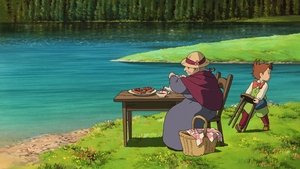
But the dynamic of this little makeshift family bears out and feels welcoming regardless. Yes, if you stop and pick apart the cause and effect here, not much of the character dynamics make sense. But when you see Markl hug Sophie and plead with her not to leave, or a little wheezing dog throw in his lot with this misfits, or Calcifer speak with fondness about Sophie leaving little rods of firewood to sustain him, or her spoon-feeding the Witch of the Waste, you get the plain sense of a found family built around compassion and kindness.
That's the heart of the film. Sophie is not the most well-developed character in all of cinema, but what she is, is kind. That kindness begets more kindness. And more to the point, it attracts a unique community of oddballs and misfits -- witches and wunderkinds, turnips and terriers, sparks and sparrows -- that seem warm and inviting even if they gather together more on the basis of “the feels” than anything else.
Because *Howl’s Moving Castle* is a movie that runs on feeling and sentiment, rather than logic. The broad themes are not hard to detect. That embrace of compassion, the horrors of war, the contrasting limitations and freedoms of age are all worn right on the sleeve. But MIyazaki and his collaborators are content to convey them through collections of vignettes built around a particular sensation or emotion, rather than through a pure or propulsive plot. And when that's not enough, they’re happy to do the same with a never-ending stream of stunning images.
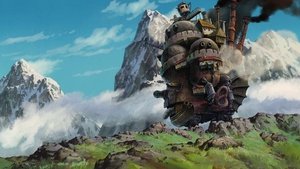
The art and animation of *Howl’s Moving Castle* are self-justifying. Not every piece of it contributes to the theme, but all of it contributes to the sense of wonder and artistic virtuosity that pervade the movie. There has never been a more strained, jowly climb than when the Witch of the Wastes makes her way to the palace. The circular dance of the shooting stars and their shadows creates a brilliant sense of the ethereal. The house itself heaves and swells and rambles its way across the horizon with a ramshackle glory. The clash of steampunk vessels and magical creatures in the skies above this land entrance.
And the swirls of smoke and steam and fire and light and, of course, goop, give the movie that fluid, elemental quality that so many Miyazaki films possess. Even as standalone clips, conveying movement, color, and stylistic brilliance, each and all of these moments could validate the movie’s existence on their own.
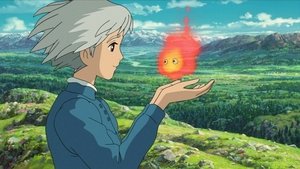
That extends to the work on the characters as well. You wouldn’t know a flame could be so cute, or awing, or expressive, but the way Calcifer gobbles up eggshells or bursts when channeled, or clings to a piece of firewood all makes him the standout figure in a movie not short of memorable ones. (And hey, having Billy Crystal’s snarky but lovable comic charms doesn’t hurt either.)
Markl is a sweet kid whose miniature movements and exaltations are heartening. Turniphead the Scarecrow hops and emotes despite being a dressed up piece of wood. The Witch of the Wastes goes from a walking caricature of privilege to a wrinkly cube of smiles. Heen the pup wanders and scampers and emotes with the best of animation’s animal sidekicks.
The only weak point on that front is Howl himself, who is a standard anime pretty boy without much to recommend him. But even there, his various avian transformations give the underdeveloped love interest some visual verve. And likewise, while Sophie is made deliberately plain, her various metamorphoses between age and youth, eventually settling on a middle ground, give her a similar distinctiveness.
That is the cinch of *Howl’s Moving Castle*. Beyond a broad sense that war is horrible and senseless, it’s not clear to me what exactly Miyazaki is trying to say on the topic. But the images of beautiful cities being destroyed in a rain of fire, globulous monsters lurking through cities, horrible mechanical nightmares screeching across the sky, convey a more visceral misery than any of the film’s more explicit statements ever could.
The kind of radical compassion Sophie shows to her comrades is a lot, and yet the warm and inviting nature when Howl “remodels” the house, and suddenly this scattered and dingy old hut is reimagined as a vibrant and bustling home says everything we need to know about what has been forged in this space. And the characters’ wide-eyed reactions tell the rest of the story.
I cannot tell you what the end of the movie truly means or the mechanics of how it all happens. Yet, when Sophie drifts across the ages and sees Howl consume a shooting star, when she witnesses a seemingly neverending bombardment of color and light, when plummets back to the usual spot and turns fire and sacrifice into luminous second chances and a found family, I felt it. I couldn't explain it; but I felt it.
That is what Miyazaki and films like *Howl’s Moving Castle* do at their best. They work at a different level, forge a liminal connection, instead of a more literal one. And if you're open to it, willing to let that artistry wash over you rather than rush to analyze every facet, then the experience can be a joyous one, and no less moving.

 Plex
Plex  Kodi
Kodi  Stremio
  Jellyfin
  Netflix
  Disney+
  Prime Video
  HBO Max
  Trakt
Trakt  TMDB
TMDB  Letterboxd
  IMDb
IMDb  Simkl
Simkl  TVTime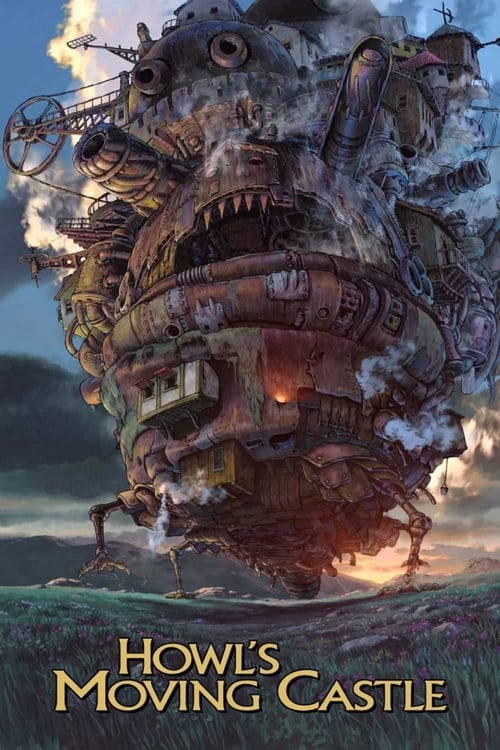
 Japan
Japan