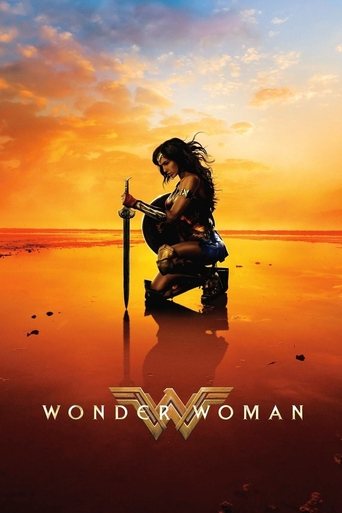
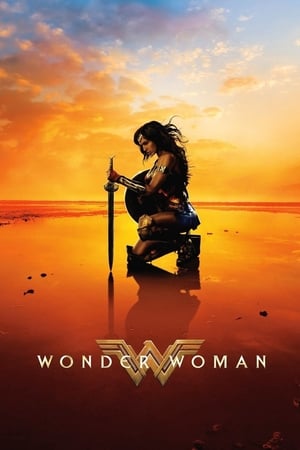
[7.2/10] To call *Wonder Woman* the best DCEU film is to damn it with faint praise. It’s true, but limiting its quality to those terms does a disservice not only to how the film stands on its own, but how it represents a notable achievement (and hopefully turning point) for the representation of women in superhero cinema. But even on its own merits, Wonder Woman succeeds when it breaks away from the conventions of the cinematic universe cemented by its Bat- and Super-brethren, and stumbles when it gets caught in the same muck that has hobbled the movies of Wonder Woman’s D.C. stablemates. The end result is this cinematic universe’s first legitimately good film, but one still weighed down by the cinematic baggage of its predecessors.
It’s notable then, that *Wonder Woman*’s closest analogue on the silver screen would seem to be an amalgamation of the first *Thor* movie and *Captain America: The First Avenger*. It captures the latter’s sense of throwback adventure, inserting a superpowered individual into a world war and fighting the supernatural threats with a ragtag team of allies. And it captures the former’s sense of a god come to Earth, with the same sort of mantle-relinquishing, fish out of water comedy, and romance between deity and man that drove Kenneth Branagh’s lone foray into the Marvel Cinematic Universe.
To that end, *Wonder Woman* most succeeds when it leans into those elements that have helped fuel the success of the MCU -- humor and human connections. The middle portion of the film is its best, in no small part due to the fact that it’s where the movie’s commitment to comic relief is strongest. It finds Diana Prince (Wonder Woman’s “world of man” pseudonym) coming to WWI-era London and puzzling over the hypocrisies and odd conventions of this strange new land.
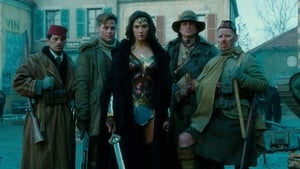
It’s here that star Gal Gadot does her best work in the film, playing the fish out of water with a combination of bemusement, confusion, and disbelief that makes Wonder Woman’s transition from a mythic queendom to scrubby London more than just one big scene change. Chris Pine (playing love interest and British spy Steve Trevor) shows off that fast-talking, aggrandizing-yet-self-deprecating charms that made him a nice fit as the heir to William Shatner in *Star Trek*. And the film has a ringer in Lucy Davis (of the original *The Office* fame) to show off her comic chops, along with assists from Trevor’s ragtag group of buddies. This commitment to humor livens the film and makes it easier to warm to its larger, globe-threatening plots.
But *Wonder Woman* also creates a convincing romance between Diana and Steve. The nature of the plot means it’s inevitably a bit rushed, and the closing portion of the film bogs down in trite ruminations on the power of love, but the heart of the film is founded on the relationship between those two people, and it absolutely works. That starts with Pine, who plays a convincing love interest with just enough guile and guts for a warrior to appreciate but just enough charm and wit to make a worth foil. But it ends with Gadot, who convincingly portrays the determined warrior warming to her guide to the world of man, and being pained by those harrowing moments when he is in danger. That fact alone makes them the two most compelling characters in the DCEU thus far, and the ones with best developed and most engaging inner lives.
That’s an important ingredient in the film, because *Wonder Woman* tends to falter when the two are not together in the story. The opening act of the film largely centers on Themyscira, Diana’s Greek myth-inspired homeland. It’s there that the film barrels through a fairly tedious origin story, mired in the usual clichés of “I want to fight!”/”No, you’re not ready” done with the generic high fantasy stentorian pattern. Visually, the scenes are impressive, with colorful verdant growth all around, the fluid fighting style of the Amazons, and a brief art shift to deliver backstory. But beyond doing the paint-by-numbers work of establishing Diana’s will to war and deliver exposition and cryptic hints, the film ticks up once she makes it off the island.
But similar issues affect the film in the third act and in its action scenes. When sending Diana into combat, *Wonder Woman* defaults to the DCEU house style. That means antiseptic, undifferentiated action, filled with breakneck cuts and a lack of choreographic continuity. The film can’t escape the Snyder visual influences in these scenes, and while Snyder’s *300* is not a bad reference point for the mayhem of a Grecian warrior, the pre-viz backgrounds and the stop, start and slow tack of the fight scenes tend to dull rather than excite. That’s particularly true in the last portion of the film, when *Wonder Woman* meets its quota of CGI-drenched fisticuffs that leave every skirmish feeling like it was plucked out of a video game and deposited into a live action film.
That belies the theme of *Wonder Woman*, and Diana’s arc in the film -- that war is not a glorious or simple thing, but rather a complex source of grief, one not so giving of laurels nor easy to end or comprehend.
** *Caution: The remainder of this review contains major spoilers for Wonder Woman.* **
To that end, the cleverest part of the film is its third-act turn. After Diana kills General Ludendorff, the German commander she believes to be Ares, the god of war, in disguise, having cursed mankind with propensity for violence and conflict, she is shocked that the fighting nevertheless continues. It’s then than Ares emerges, in the form of Sir Patrick Morgan (David Thewlis, best known as Professor Lupin from the *Harry Potter* franchise), a member of England’s Imperial War Cabinet who spoke in favor of an armistice, revealing that it was only to prolong the broader conflict between nations.
It’s here that *Wonder Woman* reveals more complexity under the hood. Diana’s journey, from believing that war and by extension, evil, are a personified force that can be slain and thus defeated in black and white terms, to understanding that Ares had been pulling strings on both sides of this conflict and that the causes of such devastation are more complicated, is a sound one. Ares’s initial taunts and temptations prove the most convincing vehicle for this theme. And it provides an interesting arc for Diana, giving her a genuine coming of age story that helps grow the character.
The problem comes when the inevitable clash of titans arises and Ares words go from sounding like the honey-dripped promises and reassurances of the devil on your shoulder to the generic boasts and declarations of your bog standard movie villain. As soon as *Wonder Woman* embraces the complexity of its theme, it dumbs it down to the usual good and evil aphorisms.
That same issue extends to the film’s contemplation of, and its main character coming to terms with, the nature of humanity. At times, the film uses a light touch. There are hints in the brief stories of prejudice and oppression from Trevor’s friends Sameer (Saïd Taghmaoui) and Chief (Eugene Brave Rock) that the evil that lies in the hearts of men goes far beyond any god of war. And Ares’s own reveal shows the interesting notion that he merely stokes fires already burning in those on both sides of the war, rather than introducing something that wasn’t already there into a pure people.
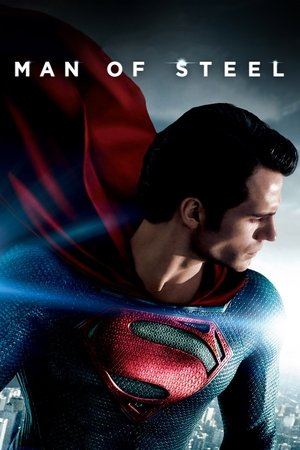
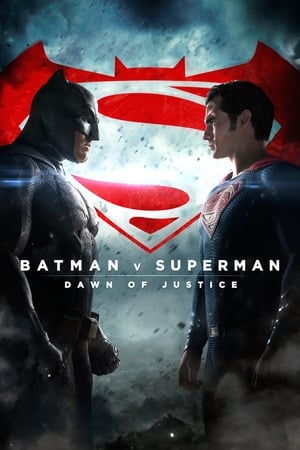
But again, it devolves into standard bad guy clichés and typical voiceover claptrap about love being able to conquer hate. In that, *Wonder Woman* follows the leads of its DCEU predecessors like *Man of Steel* and *Dawn of Justice* which graze legitimately profound ideas but can never quite nail them down, and lose them entirely in the perfunctory climactic maelstrom.
Still, by any measure, *Wonder Woman* is a big step forward, both for D.C.’s efforts to establish a cinematic universe made up of worthwhile films, and for the cause of greater balance in the superhero genre on the silver screen. The movie is far from perfect, suffering from many of the same problems that dulled the impact of its fellow DCEU flicks. But in its humor, its heart, and who it chooses to tell a story about, it breaks away from those limiting issues and charts exciting new territory, both for this series of films and for comic book movies as a whole.

 Plex
Plex  Kodi
Kodi  Stremio
  Jellyfin
  Netflix
  Disney+
  Prime Video
  HBO Max
  Trakt
Trakt  TMDB
TMDB  Letterboxd
  IMDb
IMDb  Simkl
Simkl  TVTime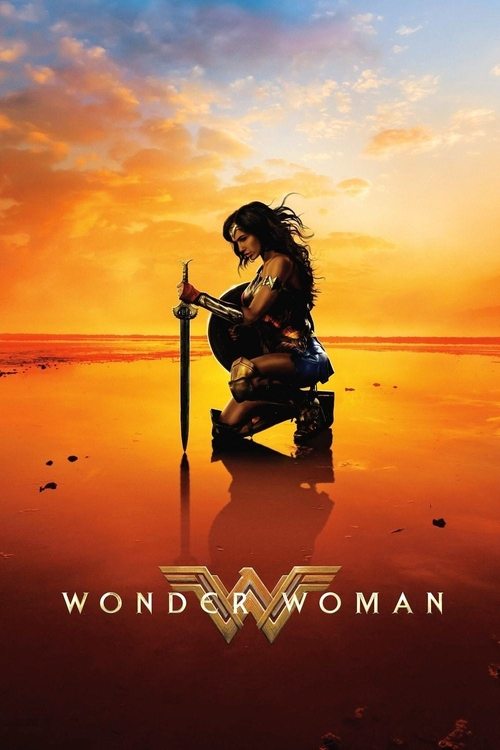
 United States