6.8/10. Can an episode of television get by on one good scene? Maybe one and a half good scenes if we're being generous? Because Frank Castle's monologue about coming home to his daughter, and then losing her, was a magnificent moment, where the show slowed down and let the acting and the dialogue tell the story in human terms. Again, Jon Berenthal is punching above his weight class here, turning a pulpy if occasionally meditative show into a touching, pathos-ridden examination of a soldier coming home, of the way our loved ones become elevated and deified in our memories, of the regret and yes, guilt that drives people to do things great and terrible.
And the idea of guilt as a motivator is one of the many interesting ideas swirling around "Penny and Dime" (a title, incidentally, which nods toward a device that's a little cheesy and convenient for conveying how Frank is haunted by the memory of his daughter, but gets by based on the performance). The problem is that the ideas are executed in a kind of silly or on the nose fashion.
Case in point, the opening scene where Finn returns to the Irish Mob after being out of the game is something ripped out of a third rate action movie. The whole murder to make an entrance and demand vengeance thing is unbelievably played out, and while the actor gave as good a performance as could be expected, the generic mob boss going scorched earth is such a tired trope that the episode has trouble overcoming. There's a kernel of a good idea with contrasting Finn and Punisher as both trying to avenge their children and that being what puts them at odds, but unfortunately it just leads to the usual "we have ways of making you talk" torture scene. I mean he threatened a dog for chrissake! That's the oldest corniest bad guy trick in the book. Finn took up a lot of oxygen in the episode and it wasn't really for the better of things.
Similarly, I just don't care about Karen and Matt. They've never really had chemistry to me, so all of the long, sensual scenes where they share a meaningful look or ask about one another's families or wipe raindrops off each others' skin left me cold. It's nice that they show Foggy smiling at the bar and giving Matt his blessing, because it speaks to a friendship that feels much more natural and organic between Nelson and Murdock that the show's struggled to establish between Matt and Karen, but otherwise the entire romance angle was a whole lot of nothing.
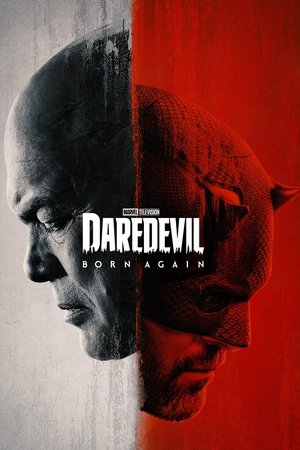
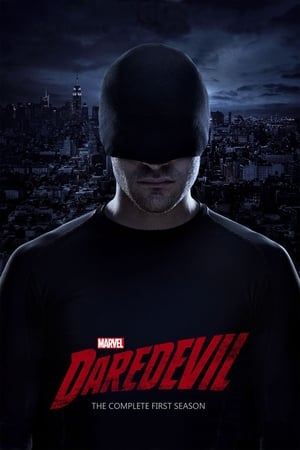
On a different note, it's clear that the shadow of Chris Nolan's *Dark Knight* trilogy looms large over this show. The scene where Daredevil tells Mahoney to take credit for the collar, in order to preserve the ideas of law and order and not encourage more vigilantes to go out in such lethal terms like Punisher did feels like Batman telling Commissioner Gordon to blame him for what happens to Harvey Dent in *The Dark Knight*. As I've said repeatedly, there's a lot of Frank Miller DNA coming through in both characters, whether it be Daredevil disappearing, Batman-style when Mahoney turns his back at a crime scene, or these same sorts of theme about whether the hero is on the side of the law or something apart from it. It's an interesting idea, but the exploration of it here is pretty shallow.
On the other hand, the other "half a good scene" in the episode is Father Lantum's eulogy for Grotto, not mincing words about who or what the deceased was, but maintaining the idea that all life is valuable, because each life is a "world" of connections to other people that would otherwise be severed. Like Castle's dialogue, it's one of the better written speeches in the episode, and there's a poetry to the way Lantum expresses the idea that makes it more moving.
And I like that he doesn't give Daredevil absolution exactly, even if he gives him validation. After being initially dismissive, Daredevil seems to have come around to the idea that he may not only have caused people like The Punsiher, he may be like the Punisher. He feels a guilt for judging his harsher vigilante counterpart, and Lantum describes it as the soul's call to action.
That's the other saving grace (if you'll pardon the expression in a show full of Catholic imagery) -- the scene of Daredevil taking out the Irish mobsters and fighting alongside Punisher while he's preventing him from killing anyone is shot and directed well and creates and exciting sense of kinetic movement without losing the characters and their motivations in all the combat.
In the end, Daredevil feels like he's righted his wrongs. If the season ended here, it wouldn't be the worst thing despite the somewhat underwhelming nature of the episode. He understands Frank even if he doesn't agree with him. He accepts that the two of them are not so different, but takes steps to ensure that they're not glorified in the process. And he allows himself the human pleasures of love and connection that left Punisher so scarred. In the end, he even smiles, and allows himself to be happy. It would be a fitting final image for this little pod of episodes if it weren't capped off with a kind of cheesy teaser for what comes next.
But it's not the only fitting image in "Penny and Dime." It's hard to see a relatively young man watching the carousel in Central Park and not think of *Catcher in the Rye*. There to, the protagonist suffered a loss and found himself scarred by it, watching the carousel and wishing he could turn time back around and go back to when things made more sense. I don't know if the implication is the same here. It's probably just the idea that Frank used to watch his daughter and family on that carousel. Maybe it's even where they were gunned down. But with the way the image is framed, it's hard not to take the same sort of symbolism at play, of a view of the carousel as signifying lost innocence in some sense, an idea that Castle is apart from and can't get back. There's a lot of dumb stuff around it, but Punisher carries this episode on his back here, and it squeaks by on the merits of his part in it.

 Plex
Plex  Kodi
Kodi  Stremio
  Jellyfin
  Netflix
  Disney+
  Prime Video
  HBO Max
  Trakt
Trakt  TMDB
TMDB  Letterboxd
  IMDb
IMDb  Simkl
Simkl  TVTime