[8.4/10] Season finales give shows a chance to go epic, to pull out the stops, to make major changes that might otherwise entirely disrupt the flow of a season or series. But they also come with certain expectations, certain levels of heightened conflict and drama that mean things have to reach a fever pitch regardless of whether there’s anything to be gleaned from it.
“The Venom of the Red Lotus” is the heaven and hell of a finale. It features challenges our heroes have never faced before and dramatic changes in fortune, and it also features some of the generic necessities of a closing parry for a season of television that get in the way of “Venom”’s better elements.
Chief among them is the combat. My compliment for the season’s penultimate episode was that while there was tons of action, every bit of it had a purpose, something that connected the characters using their powers or going toe-to-toe to something more meaningful in terms of their arcs or developments.
Here, it’s pretty much the exact opposite. Bolin fights Ghazan for no other reason than lava-bender on lava-bender combat is cool. Korra fights Zaheer because we need the hero to fight the big bad at the end of the season. And Mako fights Ming-Hua because he needs something to do. Sure, some of the fights are cool, and the show has its creative elemental combat down pat at this point, but there’s little reason for most of it beyond “we need these characters to be doing something action-y right now.”
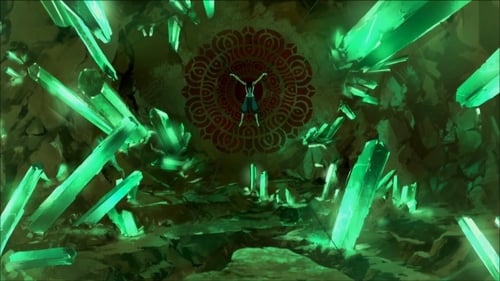
That’s particularly true when the non-combat parts of the conflict between Korra and Zaheer are far more compelling. The Red Lotus has Korra chained up, infecting her with a particular venom so that her body will revert to the Avatar State to protect her, allowing them to kill her and with her death, end the Avatar line once and for all. It’s a premise that works on multiple levels.
For one, it’s actually pretty clever. Far from the Earth Kingdom general in “The Avatar State” from *AtLA*, The Red Lotus have taken precautions to be able to take out Korra even with her uber-powers in effect. For another, it fits thematically with The Red Lotus’s raison detre of toppling any and all leaders. The combination of those two things gives them a purpose, but also makes them worth adversaries.
It also gives Korra a struggle more vital and vivid than any mere bit of hand-to-hand combat. Her straining to fight the Red Lotus’s venom, to avoid going into the avatar state, is much more compelling. I’m a sucker for finales that have the good guys reliving encounters with past foes, and having a poison-addled Korra hallucinate images of Oman, Unalaq, and Vaatu served to give this fight a sense of place and heightened stakes, as well as drive home the depths of her resistance and dwindling grasp on reality as the venom takes hold.
It’s also the one thing that adds stakes to Korra’s fight with Zaheer. She rightly dominates him when the avatar state is in effect, and while the airborne fight gets some juice from its anti-gravity qualities, it mostly feels like a fait accompli. Still, Korra struggling to move and fight as the poison starts to take over levels the playing field and creates enough of a threat to compensate a bit.
That fits nicely with the ultimate conclusion to the battle, where Jinora and the rest of the airbenders create a vortex to bring Zaheer down despite the fact that he’s seemingly bested The Avatar. The contours of the clash of philosophies are pretty well-flattened, but the thematic part works. Zaheer dreams of a world without nations, one where a man’s only allegiance is to himself, but what wins the day for Korra is not simply her own resilience, but rather her efforts to preserve and reestablish a new nation, one that bests this anarchist revolutionary by working together and acting as one. Sure, it’s a bit trite, but the theme isn’t overdone and comes through in the actions of the characters.
Granted, even that development is not without its contrivances. It seems convenient that the Red Lotus uses a metallic poison (again, feels like we need to provide something for the Beifongs to do) and that Jinora just so happens to both see it in her astral projection state and be able to identify it.
Still, what I really appreciate about the close of the episode, and the season, is how it embraces the consequences of these acts. Unlike with the finales for Season 1 and Season 2, Korra isn’t magically better thanks to a demigod emerging from the ether and restoring her powers. Instead she is disabled, and more importantly, despondent. The choice to put Korra in a wheelchair after her encounter with Zaheer and his poison, and to communicate in just a few scenes, the hardship that imposes on a young woman used to being able to dive headfirst into any challenge with confidence, mark “The Venom of the Red Lotus” as Korra’s best finale so far.
And that’s before we even get to the touching final images of the episode. One of the things that makes us care about stories and characters are stakes and consequences. We need to believe that something significant is on the line and our heroes’ actions need to create natural reactions and responses that make it feel like their choices mattered. *TLoK* achieves this by not only showing the effect this encounter had on Korra, but by showing the wonderful things that came about from her sacrifice.
The inevitability of Jinora receiving her tattoos at the end of the season doesn’t take away from the momentousness of the occasion. And Tenzin offering such lionizing words about Korra, commemorating her achievements, crediting her for making this immensely important event – the unveiling of the next generation of airbenders with another adventurous young woman to lead them, brings out the sweetness in this bittersweet moment. Korra sheds a tear, one full of catharsis for the recognition of what she made possible, and for the pain of what she may never be able to do again.
That’s the balance that has truly made Season 3 a cut above. It’s not just about the balance between the spirit world and the human world, or between the anarchic individualism of The Red Lotus versus the selfless collectivism of the Air Nomads. It’s about the balance between threat and victory, between tragedy and triumph. More than any other “book” in this show, Season 3 created compelling challenges for our heroes, in the form of effective antagonists and interpersonal struggles, but also gave them earned victories and moments of understanding, between siblings of all stripes and those that forge legacies.
That is the thrust of this finale. Korra creates her legacy here, one that will echo through the ages via the rebirth of the Air Nation thanks to her sacrifice, whether or not she’s ever able to become the pugnacious Avatar she was before the Red Lotus’s venom. It’s a legacy of self-sacrifice, of putting herself at risk to preserve something greater, and playing out the debilitating effects of that choice, but also the triumphant possibilities it created, Season 3 of *TLoK* achieves the series’ highest, most meaningful heights yet.

 Plex
Plex  Kodi
Kodi  Stremio
  Jellyfin
  Netflix
  Disney+
  Prime Video
  HBO Max
  Trakt
Trakt  TMDB
TMDB  Letterboxd
  IMDb
IMDb  Simkl
Simkl  TVTime