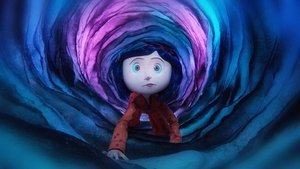
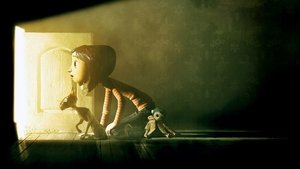
[8.1/10] The films of Henry Sellick and the Laika studios are inviting for reasons beyond their stories. The aesthetic, the atmosphere, the vivid worlds that the director and his talented collaborators conjure out of simple clay and vinyl and other sundry materials is worth the price of admission on its own.
The term “cozycore” has popped up recently, and movies like of *Nightmare Before Christmas* and *James and the Giant Peach* offer a slanted, but not less potent rendition of the idea. The imagery at play, of worlds that are spooky and supernatural, but also represent a certain warmth and seasonal allure, are part of why so many kids and adults alike latched onto these films. At an almost instinctive level, the artistry involved in designing these elegant but fractured habitats, full of so much creativity and character, make it easy for misfits, budding goth kids, and autumnal admirers of all stripes to feel at home in the wondrous spaces Sellick and company craft for their audience.
The brilliance of *Coraline* is that it uses that idea both to connect with the audience and to put it in the place of the film’s title character. The movie is of a piece with other filmic folktales like *My Neighbor Totoro* and *Pan’s Labyrinth* by telling the story of a young girl who moves to a new place and starts discovering a secret, supernatural world in the hidden spaces in and around old, unfamiliar new home.
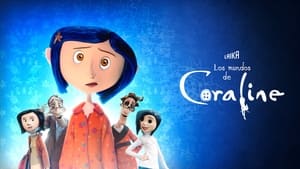
For Coraline, the normal world is dreary and unexceptional. The film uses its color pallet well, with Coraline herself a bright, colorful girl with her cobalt blue hair and sharp yellow raincoat, where her new house, her parents, and the dingy surroundings are all draped in shades of dusky gray. A parent-mandated instructions to explore the new digs only reveals boring old windows, demoralizing school uniforms, and mud she’s not even allowed to play in. (Can you imagine?)
The visual drabness (which still features the impeccable designs of the expert figure, set production, and animations teams) dovetails neatly with Coraline’s dissatisfaction with her situation. She feels neglected and unheard by her parents, who are too wrapped up in their work to notice her or play with her. Her new neighbors -- a drunken former acrobat and magicians and two washed up, sniping former starlet – seem more weird than intriguing, And a local kid her own age, Wybie, and his mangy cat, are too annoying or irksome to be worth her time.
This new place isn’t fun. It doesn’t meet with Coraline’s satisfaction. So there’s a nice synergy when the look of the environment matches Coraline’s emotional reaction to it.
But it makes her that much more susceptible to the world through a mysterious, bricked up door where Coraline’s every whim is catered to and every need is met. There, she finds a much more colorful, magical place, with resplendent gardens in her likeness, friendly flying toys, and a home filled with life and wonder to lure her in. Everyone she meets may have a buttons for eyes, in keeping with the sewn doll iconography that drives the film, but in contrast to the banality of the real world, the land of buttons is as rich in its aesthetic as it is in its impossible joys.
Everything Coraline disdains about the real world is rectified in this land of enchantment. Whereas her own parents ignore her, her “Other Mother” and “Other Father” dote on her. Her real mom and dad make her eat less-than-enticing cuisine and forget to go food shopping, but her Other Parents offer a veritable feast where she can douse her drumstick in gravy and mix up a mango milkshake from the chandelier. Instead of faded has-beens, the Eastern Bloc circus performer earns his “amazing” moniker in this realm, and the retired showgirls unzip their elder forms to reveal the crackshot performers they used to be. Other Wybie is silent and pliant. As much as the images the film presents depict a more vivacious and inviting world, so too do the people and pleasures offer Coraline a more attentive and exciting world to inhabit on the other side of that strange door.
There’s a certain element of magical realism and metaphor at play in all of this. The text of the film suggests firmly enough that this is all “really happening” and not just a delusion. But as with *Pan’s Labyrinth* and similar movies, there’s enough wiggle room to question whether this is all a coping mechanism for Coraline in an unhappy situation. Regardless of whether the button realm is truly there or not, the story embodies the precocious, bored, and dissatisfied children letting their imaginations fill in the gaps, painting over a day-to-day existence they don’t especially like with one that better meets their psychological needs.
In that, there is an elemental quality to *Coraline* that keeps the film grounded despite its off-kilter look and feel and mystical narrative. While the movie goes to some extremes, what kid hasn’t felt like they didn’t get enough of their parents’ attention when they wanted it or resented having to be quiet while mom and dad worked, or hated having to follow the rules? By the same token, what would wouldn’t be enticed by a land where they could do whatever they wanted, find excitement and wonders at every term, and have the whole world be focused on entertaining and affirming you? In a tradition that goes back as far as *Peter Pan*, the dream of a better, more kid-friendly realm is born of relatable sentiments of childhood. And, as in the best works for children, this adventure is outsized, but the feelings are real, which makes *Coraline* that much more potent.
The same goes when the dream turns into a nightmare. Sellick and his team are masterful in how they turn the wonderland of the Button Realm into a garish, grotesque place with legitimate scares and chills. The Other Mother becomes the Belle Dame, transforming from a warmer, Stepford-esque version of Coraline’s real mother, into a skeletal, spider-like creature. The knick-knack filled warmth of the alternate home is out of reach when Coraline’s banished to a cold, barren chamber where the ghosts of the other kids the Belle Dame has lured here appear and warn Coraline not to follow their fates. The switch from what was once alluring and nurturing, to what quickly becomes frightening and disturbing, gives those haunting images extra force.
*Coraline* does a good job of weaving plenty of hints and concerning portents into the story so when the big reveal happens, it’s the culmination of something concerning at the edges of the frame rather than a jarring twist. Grown-ups will quickly recognize the “Be careful what you wish for” elements to the Other Mother’s lures, even before she demands Coraline sew buttons on her eyes. Nonetheless, the cryptic hints from the jumping mice, psychic neighbors, and Wybie himself make Coraline’s turn from being ready to abandon her real life to the epiphany that she needs to find the courage to protect it, more satisfying when it comes with a “Why didn’t I heed those warnings?” chaser.
There too, it’s particularly sad when Coraline escapes back to the real world but finds her actual parents gone. The turn from resenting your mom and dad for neglecting you or punishing you, to wishing with all your heart you had them back, is a pathos-ridden one. It’s easy to put yourself in Coraline’s shoes for the whole film, but none more so, or with more sorrow, than when she constructs pillow replicas of her parents to sleep between as she feels alone and scared after the Belle Dame’s plans, and methods, are in full view.
In truth, *Coraline* loses a bit of its oomph from that point. It turns into a fetch quest and series of action set-pieces. But it still provides Sellick and company the opportunity to provide one more dark, funhouse mirror version of the worlds Coraline sees, with her recognizing the terror and hollowness of that lurks beneath the Button Realm’s enticements and the sad state of its poor, cowed inhabitants. The imagery, including striking white space, black-tinged spiderwebs, and insect iconography that will rouse fans of Oogie Boogie still carry the day. In beating the Belle Dame at her own game, and escaping from the arachnid antagonist with the help of a Keith David-voiced feline friend, Coraline earns her happy ending and the maturity and gratitude that comes with it.
It’s a tricky thing, to realize your parents truly love you even when they’re wrapped up in their jobs, or too worried about family finances to give you what you wants, or simply human beings with the same foibles we all have. By the end of the picture, Coraline rescues her parents (who don’t remember a thing, adding to the “Was it real?” quality of the story), and happily returns to the dulled real world she was once so happy to escape, so long as the two of them are in it. The mother who’s scolded her or ignored her, gifts Coraline the gloves she wanted when their work project works out, a symbolic act of sharing some color and brilliance that befits the young girl who will don those distinctive mitts.
There’s a sense of meeting halfway there, of visions of a brighter world and the less gleaming but all the more potent affections of the real world colliding when it counts. *Coraline* matches its hero’s emotional affect with the worlds it constructs around her, from the dreary, to the dazzling, to the terrifying. Along the way, the film enraptures its audience with more virtuoso artistry and direction in the designs and movements that would captivate any viewer. But it also uses those moods and those visions, to help us feel what Coraline feels, and helps us understand why we, or anyone, would make the same youthful mistakes, and hopefully still find our way back home.

 Plex
Plex  Kodi
Kodi  Stremio
  Jellyfin
  Netflix
  Disney+
  Prime Video
  HBO Max
  Trakt
Trakt  TMDB
TMDB  Letterboxd
  IMDb
IMDb  Simkl
Simkl  TVTime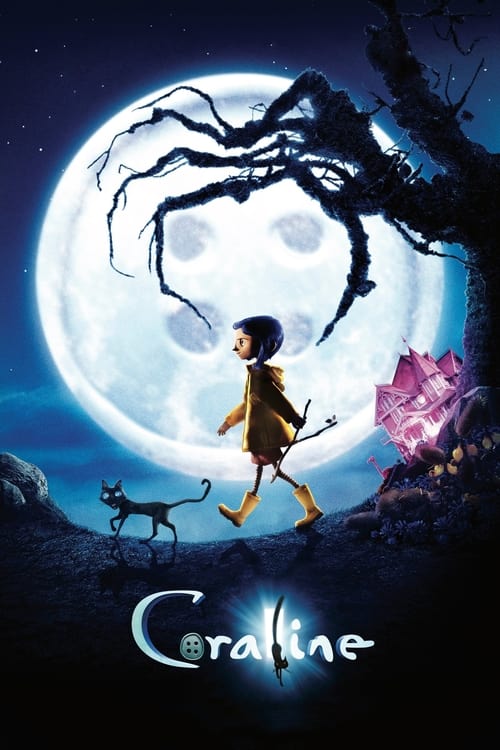
 United States