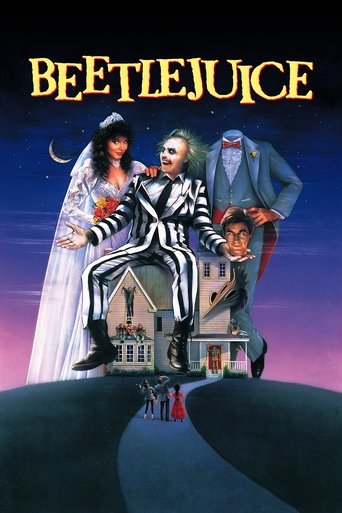
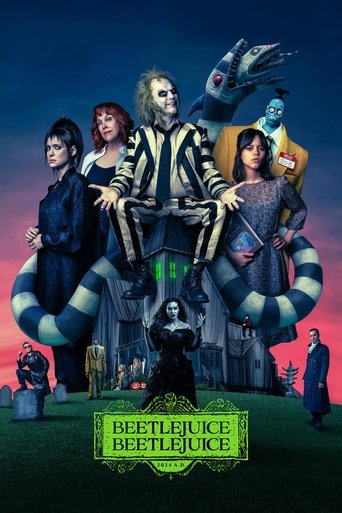
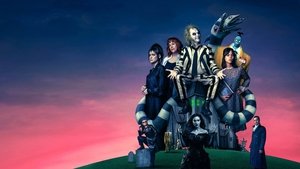
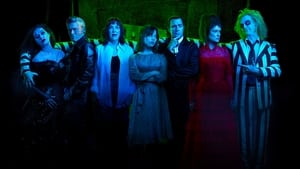
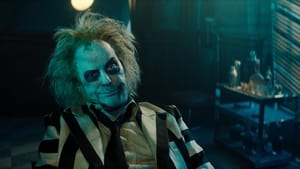
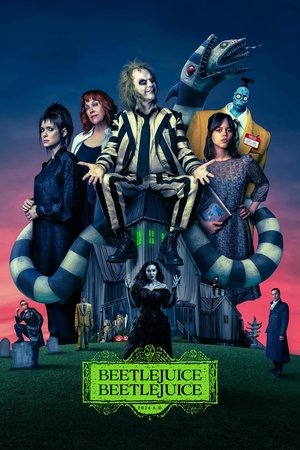
[5.8/10] To quote another 1980s horror movie, sometimes dead is better. *Beetlejuice Beetlejuice* isn’t bad, exactly. The film is watchable, and has a few nice moments here and there. But it decidedly lacks the soul and spark of the original. Instead, the late sequel is an overstuffed follow-up whose tired fanservice is only outweighed by the underwhelming ways in which it departs from what made [Beetlejuice’s first outing](https://trakt.tv/comments/879981) so fun and memorable.
For starters, there’s just too much going on here. The first *Beetlejuice* movie gestures at a wider world, but at base, is a fairly straightforward story. The ghostly Maitlands want the Deetzes out of their house and navigate the afterlife bureaucracy to make it happen. The elder Deetzes want to monetize their haunting inhabitants while young Lydia wants to bond with them. And eventually the Maitlands turn to an agent of chaos to help, and then hurt their cause. That's pretty much it. The fun is in how it’s realized, with quirky characters, an incredible sense of place, and the sense of misfit affection amid unique families that ran through director Tim Burton’s early work.
By contrast, *Beetlejuice 2* has a ten-car pileup of ongoing storylines: Lydia overcoming the estrangement with her daughter; Lydia bonding with her stepmother over the death of her father; Lydia dealing with her sleazy boyfriend’s marriage proposal; Beetlejuice trying to come back and marry Lydia again; Beetlejuice’s ex trying to come back to get revenge on him; an afterlife policeman investigating Beetlejuice’s ex; Charles Deetz dying and making his way through the underworld; Delia Deetz seeking artistic ways to mourn her husband; a local ghost boy trying to trick Lydia’s daughter; and so on and so on.
This knot of plot threads tangles up the film. Major plot points -- like Delia’s death or the ghost boy’s defeat -- seemingly come at random. The movie whipsaws back and forth between them to where no particular storyline has time to generate momentum. It’s almost as though the creators knew they might not have a chance to revisit the world of Beetlejuice ever again, and so crammed in every possible sequel idea they could think of into one film.
It’s a shame because, at base, there’s a solid foundation here. Oddly enough, the premise of three generations of women returning home to grapple with the loss of their family patriarch puts *Beetlejuice 2* in line with the *Gilmore Girls* revival, and it is, unexpectedly, where the film has the most oomph.
Lydia and her stepmom were little more than snippy rivals in the original film. But by god, the notion that over time, they found common round, and bond over Delia’s off-kilter but encouraging insights into reclaiming your life and parenting a moody teen, turns out to be the most heartening part of the movie. Likewise, Lydia’s daughter, Astrid, is a bit underdeveloped as a character, but there’s meat in the idea of Lydia having to deal with a dismissive young adult of her own, and Astrid being the more science-minded antidote to her mother’s macabre mentality as its own form of rebellion. Hell, it’s not executed very well, but rooting Astrid’s paranormal skepticism in the fact that Lydia can't see Astrid’s father’s ghost has some legitimate emotional weight.
Instead, the film is weighed down by an overabundance of narrative bric-a-brac that never allows for the time and space for these solid throughlines to realize their potential. Very little about what’s going on beyond that core is essential. When scenes featuring Willem Dafoe seem like they could be cut without losing anything, you're plainly doing something wrong.
Nowhere is that clearer than in how much powder Burton and company spend on Rory, Lydia’s slimy fiance, versus Jeremy, Astrid’s teenaged love interest. At times, the romance between Astrid and Jeremy feels plucked from another movie entirely. The tone is different, the advent of it seems random, and the beats seem shamelessly calculated to give the young folks unfamiliar with the 1988 original something to latch onto.
Only then, after the usual meetcute, *Beetlejuice 2* reveals that, unbeknownst to Astrid, Jeremy is a ghost, and is ultimately just trying to use his ruffled non-threatening young man routine to try to switch places with her between the realms of the living and the dead. There’s a commendable *Buffy the Vampire Slayer* quality to that choice, taking the idea of the relatable experience of a crush turning out to be toxic and making it larger than life. And using it as the catalyst for Lydia to not only follow her daughter to the underworld, but be forced to turn to Beetlejuice for help, ultimately bringing mother and daughter together, is the kind of decision that blends plot points and emotional connections beautifully.
Only, the movie rushes to set this all up and then dispatches with it just as quickly. Jeremy is disposed of like it’s nothing, neutering the import of the storyline. Lydia agreeing to marry Beetlejuice is handwaved away just as randomly, to where it feels like little more than a narrative means to an end. And a rushed reunion with Astrid’s piranha-bitten dad in the afterlife offers a generic “I want you to be happy together” encouragement that is somehow enough to reseal the bond between Lydia and her child. It is, as with so much in this movie, a good idea done middling-to-poorly because the movie sprints through it.
Instead, we spend countless insufferable minutes with Rory’s tiresome antics. And I get it. Rory is supposed to be annoying, but he crosses over from “It’s fun to see this character pester people” to “It’s not fun to see this character pester me” rapidly. The idea of giving Astrid her own bothersome stepparent like Lydia once had isn’t bad, but their dynamic is undersketched with everything else going on in the movie, and not particularly good to begin with. And Rory is such an obviously shady character, with cartoonish tics and tells, to the point that the reveal of his motivations has no weight, and the fact that Lydia puts up with him for thirty seconds makes no emotional sense.
It’s never a good sign when Beetlejuice himself seems like the better love interest. But Beetlejuice’s return engagement is no great shakes either. As in the [*Pirates of the Caribbean*](https://trakt.tv/comments/309349) trilogy, bad things happen when you take a slippery agent of chaos who’s a spritely side dish in your movie and turn him into a good guy who’s [more of a main course](https://trakt.tv/comments/311207). Gone is the endlessly sleazy, undead Bugs Bunny who popped in for a few memorable scenes halfway through the first movie to add a little spark, and here is a more omnipresent version of the character whose edges are sanded down as he helps our heroes.
Look, Beetlejuice (or Beetleguese, if you're fancy), is by no means a total loss. The undead huckster is one of the few things in the film that manages to conjure at least *some* of the chaotic, quirky spirit of the original. But even though Michael Keaton is far from the problem, he struggles to recapture the manic energy he brought to the role decades earlier. And even creative choices like emulating black-and-white Italian horror films or reframing Beetlejuice’s antics through couple’s counseling are stymied by the decision to give him an unnecessary backstory and replay underwhelming versions of his greatest hits. Seeing Keaton don the scare wig and grease point once more was the biggest selling point of this movie, and it can't quite meet expectations.
But nearly everything else in the film meant to channel the original suffers from the same problem. The returning locales, ghouls, and set pieces call to mind a quote from *The Good Place* on frozen yogurt: “There's something so human about taking something great and ruining it a little so you can have more of it.”
Suffice it to say, it’s still a treat to see Burton’s vision of the afterlife again, or return to the toybox world of the Maitlands’ model of the town, or watch Beetlejuice’s shrunken-headed companion bumble around with a contingent of his like-minded companions. But *Beetlejuice 2* rarely builds on any of this stuff, content to simply show the audience what it’s already seen and call it a day. “Here’s a sandworm! Here’s the underworld’s waiting room! Here’s the uneven checkerboard floors! We’re not doing anything new with them, but sure gives you those nostalgia fuzzies, right?”
Nevermind the fact that the polished production, making regular use of CGI, lacks the tactile, DIY sensibility that helped make the first movie so engaging. Burton at least preserves the underlying grossness of the setup, with spurting goops and neon green dribble. And choices like the visuals of “soul sucking”, the stop-motion interlude for Daddy Deetz, and Dolores’ stitched together look still show some creativity. But all too often, the movie feels much like Dolores’ victims, diminished and lacking in the soul that fueled the original.
There’s no better metonym for that than the grand finale. In a bid to mirror the famous “Day-O” scene from the first *Beetlejuice* flick, the big climax of the film features the whole cast lip-syncing to “MacArthur Park”. While I can actually appreciate Burton choosing not to take the easy path and dust off some other calypso song, the tune itself isn’t nearly as infectious; the spectacle seems more generic and calculated; the moment is larded up with plot movement instead of pure fun; the boogies aren’t nearly as amusing, and the whole thing lacks the joie de vivre (joie de mourir?) of watching the Maitlands possess the Deetzes’ dinner party and force those out-of-town stiffs to get down.
Therein lies the problem with *Beetlejuice Beetlejuice*. When it tries to reconjure the magic of the original, it falls flat. When it tries to go its own way, it misfires. And when it tries to mix the old and the new, the results only remind you of where it falls short of what came before.
There are parts of this movie worth holding onto. Wynona Ryder does yeoman’s work in interpreting what Lydia would be like as an adult and a mother, and Catherine O’Hara hasn’t lost the slightest step, mixing the old Delia with *Schitt’s Creek*’s Moira Rose to create the new Mrs. Deetz. There is still some joy to be had from seeing familiar faces do their thing in Burton’s dark playschool world while Danny Elfman’s score hums and thrums. But as you might expect when trying to reanimate a corpse that's been buried for thirty-six years, though with enough voltage you can make the old parts dance around a little, in the end, it just doesn’t have the spirit.

 Plex
Plex  Kodi
Kodi  Stremio
  Jellyfin
  Netflix
  Disney+
  Prime Video
  HBO Max
  Trakt
Trakt  TMDB
TMDB  Letterboxd
  IMDb
IMDb  Simkl
Simkl  TVTime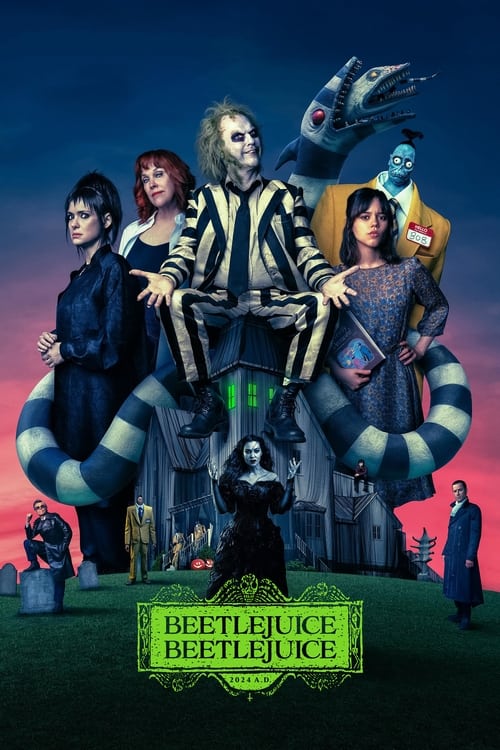
 United States