[7.8/10] *The Invisible Man* is a good nuts and bolts horror thriller. It makes good use of its premise, features a great performance from its lead and plenty of others, and plays the suspense of what’s really happening and who might strike next for all its worth. It’s a little slow in places, and doesn’t reinvent the genre, but it does what it sets out to do quite well.
It’s a story of abuse, and the strongest element of the film is the way it melds the supernatural horror of a pursuer and attacker you can’t see with the real life horror of stalkers and controlling significant others. Like plenty of greater horror movies, *The Invisible Man* roots Cecilia’s inability to be at ease while she thinks an unseen assailant still looms large and her frustration and desperation when no one will believe her, in very real life experiences of victims who cannot feel at ease when their abusers remain at large and struggle to find help and those who believe their stories.
The film is rarely subtle in this, but it doesn’t need to be. The blend of true horrors with fantastical ones works well to revitalize the whole invisible man concept. It gives Adrian’s ploys and abuses, and Cecilia’s suffering and distress, that much more force beyond a simple haunting or attack from a standard ghoul.
Frankly, the only catch is that some of the supernatural horror doesn’t work perfectly given the effects work and, frankly, ends up as a mismatch with the tone of the film in some places. It’s tough to get animation and other CGI work right when showing a character struggling with an invisible assailant. A table flipped over by Adrian doesn’t seem to move with the right weight. In some of the film’s most intense scenes, Cecilia looks a little silly flailing at nothing, especially when her movements seem to violate the laws of physics. There’s even weird details like her seeming to catch the knife that Adrian uses to slice her sister’s neck in a way that feels unnatural.
Likewise, *The Invisible Man* has a gravely serious tone. That works for the most part, and is appropriate for the tale of abuse and attendant mental anguish that the movie spins. But that makes the dude wandering around in a big suit covered in cameras seem a little goofy within that setup. It doesn’t help that the CGI is less-than-convincing in places, and Adrian/Tom practically seem like ninjas when going up against security guards. At times, the movie departs from its psychological horror and tries to be more of an action film, with mixed success at best.
But the psychological horror is expertly crafted. Before the supernatural events kick off in earnest, the film does a good job at conveying Cecilia’s mental state, her sense of unease, and fear that her abuser is still out there, lurking behind every dark corner, waiting to visit every ounce of pain upon her once more. The best accomplishment the movie can boast is the way it puts the audience in her shoes, feeling that same anxiety over what might be invading her sense of safety and security and her anguish over others’ disbelief and actions taken to make her closest friends and confidantes mistrust her.
Not surprisingly for a film centered on that sort of abuse, *The Invisible Man* centers on gaslighting. More than just the physical attacks that line up with the dust-ups in other horror movies, the sense of control that Adrian tries to exert stands out. He (and his brother and accomplice, Tom) are constantly making Cecilia question her own perceptions and beliefs, use their powers to have others to do the same, and leave her in a state of perpetual unease so that she’s dependent on them to “make it all go away.” Elizabeth Moss does a great job at communicating both that constant anxiety but also the disorientation that comes with such things.
That allows the movie to gaslight the audience as well (obviously in a low key, far less harmful way). It conveys the psychological phenomenon that anchors the film by making the audience question what’s really happening, who’s really behind it, and who might be in on it. That requires keeping certain things ambiguous, which works toward creating that unsettling mood and not just including the mandatory twists. Likewise, it keeps Adrian at arms’ length from the viewer until the very end, making him a disturbing unknown. We perceive everything in the world of the film through Cecilia, and ultimately the movie requires us to trust her and her perceptions when everyone else in that world is trying to cause her to doubt those perceptions.
That’s what creates such catharsis in the film’s final sequence. There is something triumphant when Cecilia commits the perfect crime to neutralize her abuser, using Adrian’s same tactics against him to kill this blight on her life while appearing totally innocent. But more than that, it’s a scene of Cecilia trusting her own perceptions, acting on the beliefs she knows in her soul even if she might have trouble persuading others, and even convincing her confidante that it’s what’s right. The final image is one of Cecilia as finally free, a freedom she earns not just by eliminating the source of her anxiety, but by breaking through the omnipresent gaslighting Adrian and his ilk have inflicted and trusting in herself.
That’s the film’s best strength -- mining that arc of escaping, suffering, and overcoming abuse in a way that mixes horrors real and supernatural for maximum effect. The actual plotting and fantastical elements don’t always fire on all cylinders, but the movie manages plenty of good scares and, more importantly, works as a heightened reality version of abuse and control in a way that is palpable and visceral. While *The Invisible Man* doesn’t reinvent the wheel, it does channel a classic monster to explicate a modern one, earning its brutal yet triumphant ending when that beast, whose existence and harms so many doubted, is finally slayed.

 Plex
Plex  Kodi
Kodi  Stremio
  Jellyfin
  Netflix
  Disney+
  Prime Video
  HBO Max
  Trakt
Trakt  TMDB
TMDB  Letterboxd
  IMDb
IMDb  Simkl
Simkl  TVTime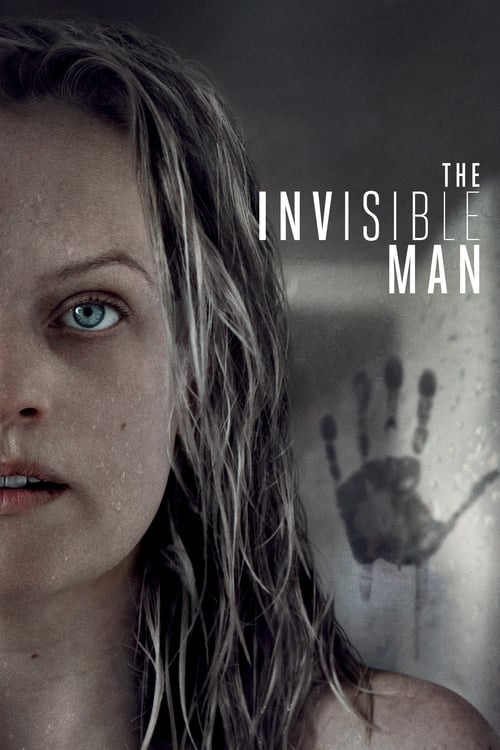
 Australia
 United States