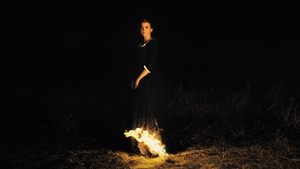
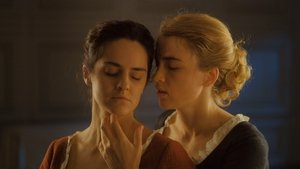
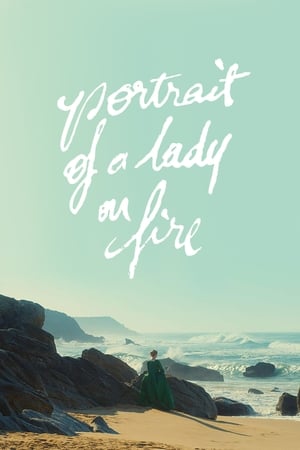
More than anything <i>Portrait of a Lady on Fire</i> is <i>Sciamma</i>'s statement about the interlacing nature of art and love. This time around, the process of creation's usual path isn't altered by a rebellion but by the harmony found in the Marianne and Héloïse's interactions. Although unwilling to cooperate at first, Héloïse decides to pose for Marianne, thus tearing apart the typical passive identity of the muse. As two women navigating life in a patriarchal society in 18th century France, they are both oppressed individuals struggling to be taken seriously, Marianne as a painter and Héloïse as an independent woman refusing to be wed to an aristocrat. This mutual oppression, turns their brief time together into a playing field for the two to explore their roles as lovers of art. In the absence of the stereotypical domination of the master, the balanced power dynamic between the two women reverses the designated roles of the characters. In Portrait of a Lady on Fire, the artist turns into the muse and the muse is in fact equally an artist.
<b>× Best Line: </b>Imagine me happy or unhappy if that reassures you. But do not imagine me guilty. You’d prefer me to resist.

 Plex
Plex  Kodi
Kodi  Stremio
  Jellyfin
  Netflix
  Disney+
  Prime Video
  HBO Max
  Trakt
Trakt  TMDB
TMDB  Letterboxd
  IMDb
IMDb  Simkl
Simkl  TVTime
 France