husband wife relationshipbased on novel or booknaziconcentration campholocaust (shoah)world war iiauschwitz-birkenau concentration campgardenbiographybased on true storynazi officergenocide1940scommandantcomplicity
really good. three scenes especially stood out to me: the scene of the officer fishing in the river, when the ashes float up to him. the scene of them panic washing their children. the scene of him telling his children the tale of hansel and gretel and of pushing the witch into the oven, to the background of the help roaming auschwitz to hide apples.... so intense and insane movie and haunting and uncomfortable and beautiful while grotesque wow wow wow
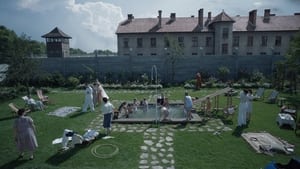
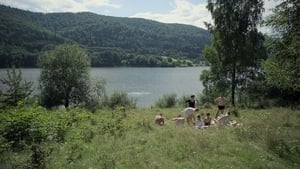
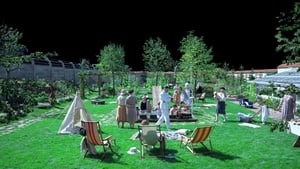
It’s so crazy that this movie shows zero violence, zero death, and almost no description of what is going on a mere 10 feet from Hedwig’s paradise of a backyard. Yet, death is this omnipotent force that drives the movie, with the children being shielded from it by these 12 foot concrete walls.
Also, something about the ending with the cleaning was just crazy. How a place so full of hatred and misery and hopelessness is someone’s workplace; the windows must be cleaned, the hallways vacuumed. It must be ready for the next group. Funny how they would’ve said the same thing in 1943: we must get it ready for whoever is next.
I find it a bit difficult to rate, it does a perfect job of showing how normalized this extreme evil was but that also made it hard for me to stay focussed on the movie. Interesting movie for sure.
bizarro... acho que só isso basta. A vida banal de uma "família" que vive ao lado do maior campo de concentração da Alemanha nazista. Impossível conceber como levavam uma vida tão tranquila e para eles, dos sonhos, sendo vizinhos de tudo aquilo.
Thumper said it best in Bambi: “If you can’t say something nice, don’t say nothing at all.”
I try to avoid writing lengthy pieces about material that I do not enjoy. If it wasn’t fun or interesting the first time around, revisiting it for another hour or two while I ruminate on all of the intricacies isn’t exactly an attractive premise; the lack of a statement is usually a statement on its own. However, when that movie is nominated for five Academy Awards (Best Picture among them) and has a hefty momentum going into the season, it’s hard to simply say nothing.
It has long been my mantra that just because you or I don’t like a piece of art, it does not mean that the piece of art is, in and of itself, bad. Not everything is for everyone. A far more meaningful (and interesting) question beyond if you merely liked something, then, is why you did or didn’t enjoy it. It puts the conversation back into criticism and creates an invitation.
All of this being said, I am simply baffled by The Zone of Interest.
Finally receiving a wide release from A24, the premise behind this film is borrowed from a 2014 book of the same title by Martin Amis: a Nazi commander in charge of the Auschwitz concentration camp lives with his family next door to the site of unspeakable horrors and atrocities. The trouble I run into with giving a brief synopsis is that that’s about it – nothing much else happens in this movie. The idea is startling on the surface, but when most of the movie is long takes of mundane day-to-day actions, I find that the startling nature of the idea is somewhat diluted by how stagnant the action is. There is much to be said about the impartiality with which the characters go about their lives even as thousands are being tortured and murdered just yards away – the “banality of evil” conversation is a heavily-trod path in discussions about this movie.
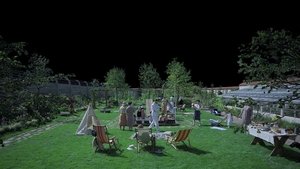
I certainly applaud the conceit of disturbing the audience with telling two different stories, one visual and one audible. Through every scene of the family having conversations about going to school, or getting the groceries, the background noise is permeated by gunshots, shouts, and screams. The characters sometimes even need to raise their voices to hear one another over the charnel sounds coming from Auschwitz, and yet never acknowledge what is going on next door. At night, a warm glow illuminates the rooms of the family home – a glow that comes from the fires bursting out of the chimneys next door. The strongest points here are when we most poignantly experience the contrast between evil and ordinary.
Despite having a really strong concept, this movie’s monotony of plot (or lack thereof) makes it a tough sell for general audiences. It has been polarizing, and will absolutely continue to be no matter the results of the Academy Awards in March. Most of the film is shot at a distance, making us experience the entire thing at a remove. This leads to the characters becoming inaccessible. With nary a plot point in sight, and characters that we can’t connect with, what could have been devastating ends up more provocative in concept than in practice. Though perhaps this indifference is intentional, to mirror the way in which this family treats the horrors just over the garden wall. And as Holocaust survivor Elie Wiesel reminds us:
The opposite of love is not hate, it’s indifference. The opposite of art is not ugliness, it’s indifference. The opposite of faith is not heresy, it’s indifference. And the opposite of life is not death, it’s indifference.
– U.S. News and World Report (October 27, 1986)
'Artistic' attempt without any concept of story or development. What could have shown the reality only shows carefully crafted picture of 'the terrible nazis having perfect life next to a concentration camp'.
The view is very shallow, demonizing normal people for the sake of a show. Where could have been shown the manipulation and brainwashing of the Germans there's only Germans=bad just because they are German. Because how dare they live the best life next to dying people? It doesn't matter you and me would be the exact same in the situation, we would also grow accustomed to the ideology, the gunfire, the deaths.

 Plex
Plex  Kodi
Kodi  Stremio
  Jellyfin
  Netflix
  Disney+
  Prime Video
  HBO Max
  Trakt
Trakt  TMDB
TMDB  Letterboxd
  IMDb
IMDb  Simkl
Simkl  TVTime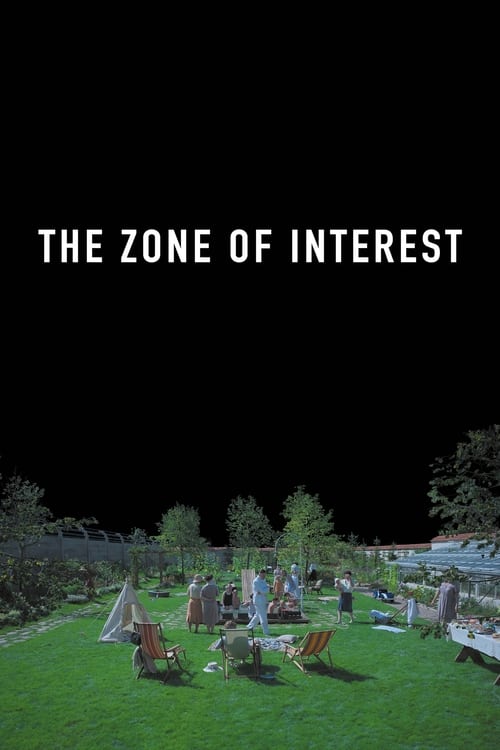
 United States
 Poland
 United Kingdom