[8.6/10] *Mandy* is a film that thrives on vibes and mood. The story is simple: a vengeance plot about a fridged love interest killed by some combination of LSD-riddled monsters and new age death cultists. But that’s not what powers this movie.
Instead, it’s built on the panoply of colors that wash over the film from minute to minute. It lives on the deft choices in lighting that bathes the players in an eerie glow or lightly illuminates them as they skulk around in the darkness. It’s lifted by the ethereal score that, while occasionally a bit oppressive, sets a tone in a movie more about images and impressions than words. It engages with its hallucinatory imagery, stretching the bounds of reality but reaching a truth and an emotional scratch better than more literal or explained features can.
In short, *Mandy* is an experience. Part love story, part cult horror tale, part revenge flick, it is at all times a feast for the eyes and ears, and maybe the soul. The movie is tough to watch in places, not flinching from theatrical gore mixed with more stomach-churning losses. But it is also captivating, alternating between deliberately-paced sequences that gradually spill out over the audience, and raucous combat scenes that keep the blood pumping quickly on both sides of the screen.
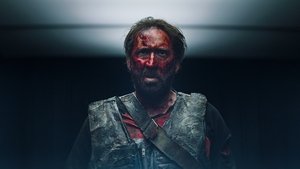
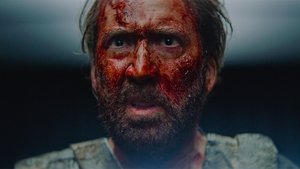
Both are aided by performances that go for broke. Perhaps, after nearly forty years in film, that’s no surprise for the known quantity that is Nicolas Cage. But his willingness to unleash himself on a role with reckless abandon remains remarkable. This is not a pretty dose of acting, with intimate pain and accessible anger. It is, instead, an animalistic performance of a poor soul losing himself in anger and grief, along with drugs and mayhem, and growing ever more unhinged in the process. The rawness and vulnerability of Cage’s approach stands out.
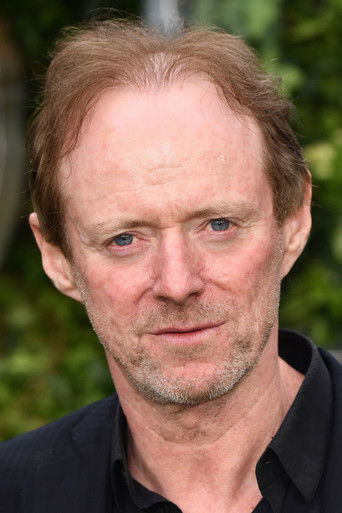
As does the unctuousness of Linus Roache as Jeremiah, a cult leader who may or may not be possessed by some supernatural force, but who is, nonetheless, self-aggrandizing and convinced of his own right to all that lies within this world. Roache practically licks the scenery with his macabre and manipulative tenor, but also shows the cracks of insecurity beneath the peacocking that the murderous would-be prophet unveils in moments when the ego that protects his psyche begins to crumple.
Despite those volcanic performances, *Mandy* is not a character piece. It is, instead, a dark epic. The film increasingly takes on the aura of a fable, with larger than life happenings and emotions that stretch the bounds of the literal and crash into the liminal. The movie never stops to explain itself: the exact contours of the two lovers’ relationship, whether the monstrous biker gang are genuine ghouls or just messed up human beings, why precisely these men and women follow Jeremiah in this deranged hierarchy. It simply presents these figures passing through tremendous vision after tremendous vision, trusting that the wisps of these things will be enough to invite us into the world without needing to define it.
Therein sits the terror of the film. Director Panos Cosmatos plays on lizard brain fears of bad people coming to shatter your peace in the night. He and cinematographer Benjamin Loeb shroud the monster motorcycle gang in blackness, giving us just enough of a glimpse at their grotesque forms to comprehend them as something unnerving and inhuman. They focus on the wide eyes and demon grins of those involved, a sign of the screws loose in hero and villain alike as they do battle in the night. There is a gesturing quality to the horror here, a suggestion of what lurks in the darkness that is as potent as any more discernible figures, which makes it all the more impactful when the creative team sheds the grace and grabs onto more visceral kills and combat.
Even then, the action is well-staged and riveting. A chainsaw duel should play as ridiculous but instead comes off as intense thanks to sound composition and sharp cuts. The protagonist’s confrontation with the monsters in their den of sin, armed with a crossbow and home-forged axe, could be ridiculous in other hands, but here, it plays as the epic battle between a deranged mortal and defiled fiends it should. Despite a languid pace at times, no skirmish overstays its welcome, and each comes with its own twist or flavor that keeps the movie from feeling samey.
But the main attraction is the waterfall of images that crash and flow across the screen. There is an otherworldly atmosphere to the film from minute one, a Lynchian willingness to embrace the elliptical and impressionistic that draws the viewer in. While disorienting in places, *Mandy* doesn’t ask you to understand it, despite the fairly simple outline of the story. It asks you to feel these events, aided by a kaleidoscope of colors and sounds and expressions that affect you on a more instinctual than intellectual level.
That approach may reach its peak in the villain’s showpiece monologue, a trippy and disturbing experience where he attempts to puff himself up in front of his drugged victim before she derisively laughs in his face for his deludedness. It may come in the animated interludes and dream sequences that wrap themselves around symbolism and texture rather than comprehension. Or it may simply be the flashes of light and color, almost omnipresent for such a dark picture, which radiate off the screen and elevate the goings on into something spiritual and uncanny.
Those elements evoke something: the transcendence of a deep love, the unnerving drips of mental imbalance, the epic rage fueled by incredible loss. Cosmatos and *Mandy* channel these elemental ideas into expressive forms and a dreamlike tone that envelop the viewer within this heightened world and don’t let go until the credits roll. For such a rudimentary plot, with predictable beats, it nonetheless rises into something transcendent from the sheer craft, imagery, and atmosphere on display, which make this singular dark night of the soul come alive in cinematic splendor.

 Plex
Plex  Kodi
Kodi  Stremio
  Jellyfin
  Netflix
  Disney+
  Prime Video
  HBO Max
  Trakt
Trakt  TMDB
TMDB  Letterboxd
  IMDb
IMDb  Simkl
Simkl  TVTime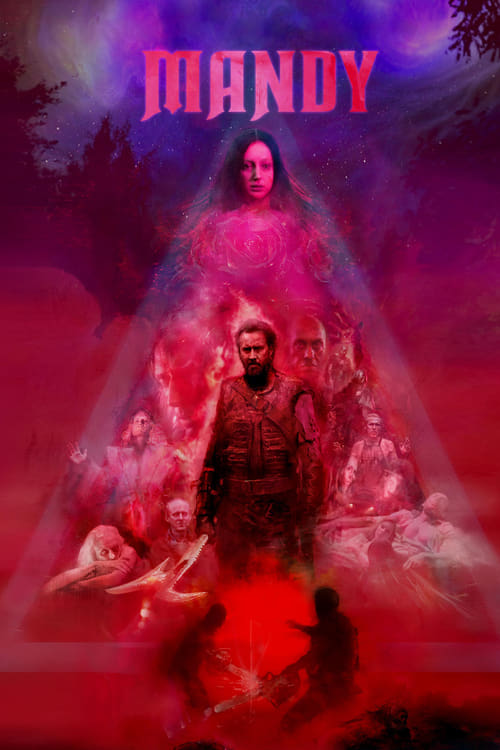
 United Kingdom
 United States
 Belgium