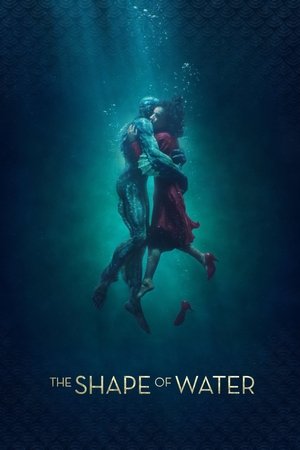
[8.1/10] Guillermo Del Toro finally has his Edward Scissorhands. The writer-director likes to paint his characters in primary colors, so the good guys are oh so good, kind, and innocent. The bad guys racist, sexist and cruel. And the world can be divided into those who can appreciate the beauty and humanity in something different from them and those who would rather kill it than let it fall into enemy hands.
But therein lies the heartening core of The Shape of Water which borrows from Tim Burton’s 1990 classic the same sense of a peculiarity disrupting the rhythms of nominally idyllic period-era Americana, the same sense of myopic antagonists who want to destroy what they don’t understand, and the same sense of soul in finding common cause among oddballs who fall outside the norm, whether they have blades, hairpieces, or gills.
The film is, like so many of both Del Toro’s and Burton’s films, a paean to those oddballs, to the people who don’t fit with the expectations or demands of the time in which they live, but still deserve the same dignity and compassion that anyone does. The Shape of Water isn't shy about drawing the line (or rather, exposing the line) between the well-coiffed, supercilious men who run the show and threaten to stomp on anything not to their liking, and the people who fall outside of the “decent” life and nuclear family du jour.
But those people are the film’s heroes. There is Elisa, the film’s hero, who is mute and gets by with the help of her friends. There is Giles, her neighbor who struggles to earn a living painting pictures of happy families that an older, closeted gay man like him is excluded from. There is Zelda, Elisa’s coworker who also does the cleaning at the government laboratory where they both work. There’s Dr. Hoffstetler, the Soviet spy who disobeys in handlers because he values sentient life.
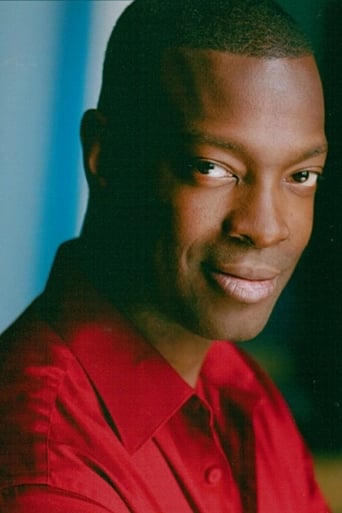
And then there’s the creature himself, who’s never given a name, but is the cause of all the fuss in The Shape of Water. Some sort of amphibious fish man, Del Toro standby Doug Jones steps into the prosthetics once again to portray “the asset”, a being worshipped as a god in South America, but dragged in chains by the United States military to a place where he’s imprisoned, tortured, and treated as an inherently inferior.
What these people all have in common is that they go unseen by the people who better fit the mores and standards of American society. You only see it on the margins, but the film is set at a time when social change was challenging the notion that the post-war peace was a utopian time in the history of the United States. The Shape of Water, then, choose to shine its spotlight on the people who were ill-served by those times: people of color, people with disabilities, people with different sexual orientations, and more.
Again, Del Tero isn’t subtle about this. The most heavy-handed moment in a film not short on them is delivered from General Hoyt, a walking representation of American decider-ism, giving a speech to Colonel Strickland, the film’s antagonist, about how thin the line between “decency” and being kicked out of the club is. And Strickland, a rather onenote villain in the beginning, gains strength and dimension as Michael Shannon turns on the intensity, but also reveals the character’s desperation not to be sent away from the American Dream, a dream only available to people who look like him, but nevertheless elusive and so easily lost.
Despite those stakes, and the streak of brutality that runs through what Del Toro himself describes as a fairy tale, The Shape of Water is also a funny, heartfelt film. The exchanges between earnest Elisa and the perpetually flustered and motor-mouthed Giles, the amusing yarns and smart remarks from Zelda, and barely heard exchanges from Russian spies shouted at one another all make the movie one with plenty of laughs amid its grander ambitions.
It’s also unquestionably warm despite a certain amount of blood and bodily harm. There is solace that these oddballs find in one another. Part of what makes Burton’s ouvre so present to me when watching this film the devotion to the camaraderie of the misfit toys. The friendship, the shared struggle but also shared joys of Elisa and her allies, buoys the film in even its darker stretches.
The same is true for the romance. You’d have to be Troy McClure for a romantic relationship between a human woman and an amphibious sea creature to seem natural, but Del Toro lets you buy into not only the affection, but the rapture of finding someone who can understand you, even if they come from somewhere very different. This is where the director’s magical realism most seeps into the film, with flooded bathrooms and healing touches and hidden talents that suggest across continents, societies, and species, these two souls were made for one another. The impressionistic fantasy sequence, where the pair enjoy the classical romance of black and white films that so many are chasing, is a testament to Del Toro’s ability to find sweetness and intimacy in unusual places.
And yet the film comes down to that same conflict. It sets Strickland, as the avatar for a myopic us vs. them self-certainty used to hold people like Elisa down, against the combined efforts of her cohort to set the creature free. Along the way there are casualties, and pain inflicted, and bizarre unravelings that raise the tension and heighten the catharsis. And it’s all set within a backdrop of sea greens and blues -- the shades of which are repeatedly noted in the film -- that uses color and tone to visually connect the world above to the briny deep below.
It’s a world apart from the perfect suburban life that Strickland is chasing after, a life that has no understanding of, let alone a place for, something like the creature. That’s the key to The Shape of Water. Del Toro isn’t subtle, but he uses his fish man as a litmus test for the soul, a way to see whether in the troubled times of the Cold War and competing ways of life it brought with, you can recognize the glimmer of a soul in someone like you. For those who can, Del Toro offers grace and redemption, and for those who can’t, he offers only the ignoble ends they would otherwise impose on those who don’t match their own limited view of what’s right, normal, and fair.

 Plex
Plex  Kodi
Kodi  Stremio
  Jellyfin
  Netflix
  Disney+
  Prime Video
  HBO Max
  Trakt
Trakt  TMDB
TMDB  Letterboxd
  IMDb
IMDb  Simkl
Simkl  TVTime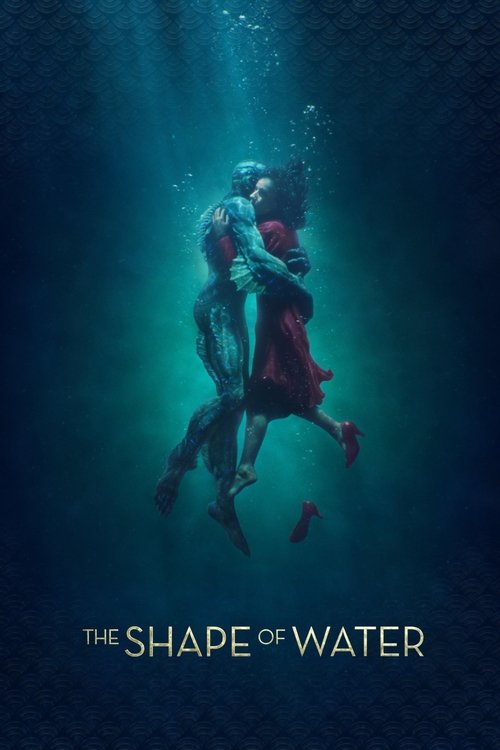
 United States