Being the adventures of a young man whose principal interests are rape, ultra-violence and Beethoven.
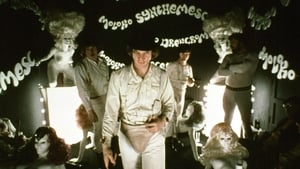
In a near-future Britain, young Alexander DeLarge and his pals get their kicks beating and raping anyone they please. When not destroying the lives of others, Alex swoons to the music of Beethoven. The state, eager to crack down on juvenile crime, gives an incarcerated Alex the option to undergo an invasive procedure that'll rob him of all personal agency. In a time when conscience is a commodity, can Alex... see more
Being the adventures of a young man whose principal interests are rape, ultra-violence and Beethoven.
In a near-future Britain, young Alexander DeLarge and his pals get their kicks beating and raping anyone they please. When not destroying the lives of others, Alex swoons to the music of Beethoven. The state, eager to crack down on juvenile crime, gives an incarcerated Alex the option to undergo an invasive procedure that'll rob him of all personal agency. In a time when conscience is a commodity, can Alex... see more
i forgot that kubrick changed the ending of the book :// anyways i love this story love this movie ! one star missing because i am a nerd and wish it was more like the book sorry
muito legal ver que basicamente os neologismos do filme/livro são palavras em russo, que antes eu não fazia ideia mas agora entendo.
comparando o filme do kubrick com a versão original do burgess, acho que ambas têm seu valor. dito isso, a do kubrick me parece mais rica.
alex é uma pessoa horrível, mas a tentativa de "curá-lo" nunca parte de uma preocupação ética. o objetivo é econômico e político. e, conforme a história avança, percebemos que o problema não está apenas nele; a própria sociedade é igualmente doente. os antigos amigos continuam violentos, o escritor se entrega à vingança, o estado instrumentaliza indivíduos conforme sua conveniência.
por isso, a obra me parece menos sobre a maldade individual de alex e mais sobre uma sociedade que continuamente produz e reproduz violência. alex pode até ser um caso extremo, mas a lógica competitiva e desumanizante que o cerca permanece intacta. no filme, as elites não querem resolver o problema, apenas administrá-lo da forma mais conveniente para manter sua posição.
é justamente por isso que prefiro o final do kubrick. ele mostra que, sem mudanças estruturais, as mesmas contradições continuarão surgindo indefinidamente.
já o final do burgess me parece mais otimista, mas também mais simplista. ele desloca a questão para uma transformação individual, quase sugerindo que alex supera sua violência simplesmente porque amadureceu e decidiu mudar. isso acaba deixando em segundo plano as condições sociais, políticas e materiais que contribuíram para formar alguém como ele.
por isso, enquanto o burgess oferece uma saída mais esperançosa, o kubrick me parece mais incômodo justamente porque não oferece essa saída confortável. ele insiste que o problema não está apenas no indivíduo violento, mas na própria sociedade que continuamente produz, pune, instrumentaliza e depois reproduz a mesma violência que diz combater.
<b><i>He deserved worse. </i></b>
I never quite know what I'm signing up for when I start a Stanley Kubrick movie...
I'm not sure what Stanley was trying to make me feel. If I was meant to feel sorry for the guy, I didn't. I guess it was an interesting commentary, but I think it would have been better told through a character that ISNT a rapist.
Good to check off another Evan Peters movie, though

 Plex
Plex  Kodi
Kodi  Stremio
  Jellyfin
  Netflix
  Disney+
  Prime Video
  HBO Max
  Trakt
Trakt  TMDB
TMDB  Letterboxd
  IMDb
IMDb  Simkl
Simkl  TVTime
 United Kingdom
 United States