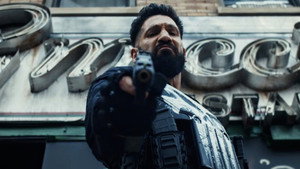
[89/100] There’s a peculiar dichotomy at the heart of *The Punisher: One Last Kill*. On the one hand, the film is achingly real, with a grim, if ultimately affirming look at the impulse toward self-destruction that comes in the wake of the gravest sorts of losses, coupled with the restlessness and pain of soldiers returning from war. Director Reinaldo Marcus Green marries that approach to Frank Castle’s inner turmoil with a vivid, almost lurid look for the film’s visuals, to where you can practically feel the sweat and blood dripping off the characters, adding a sense of real life immediacy to the proceedings.
On the other, the film is awash in exaggeration and caricature, with over-the-top visions of a crime-ridden neighborhood that mirrors 1970s exploitation flicks. The plot is an absurd mob hit turned feeding frenzy. Once again, the Punisher knocks heads around with a larger-than-life flair, enduring wounds that would fell a normal man ten times over and showing a preternatural ability to win a fight even when outmanned and overmatched. The combat du jour, and the mob widow orchestrating it, feel closer to the outsized, impressionistic vibe of something like *Sin City* than they do the grittier, more down to earth story of Frank’s mental struggles that otherwise occupy the proceedings.
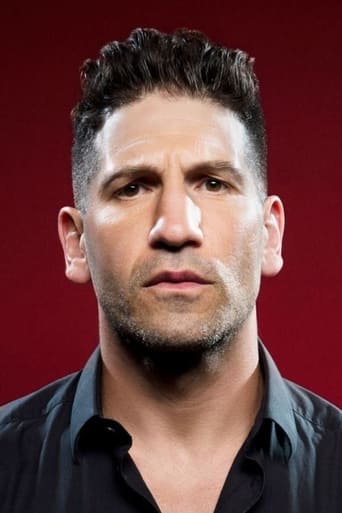
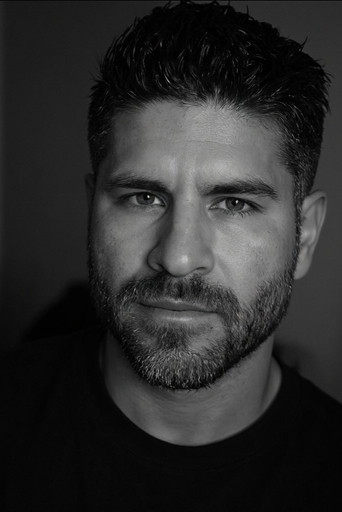
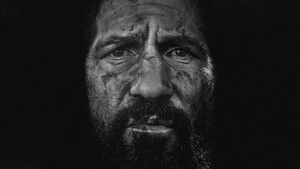
Somehow, the marriage works. Much of that rests on the tremendous asset that has elevated all of the MCU’s Punisher outings -- Jon Bernthal. I don’t know how many actors are capable of grunting out a trite rhyming stanza from a children’s book while sitting at their daughter’s grave and making it feel poignant rather than unbearably cheesy, but Bernthal earns the moment and then some. As the actor's shown brilliantly in the past, the visceral sense of Frank Castle at the end of his rope comes through with gutting clarity.
In that, the film offers the portrait of an ex-soldier who is losing it, tortured by his memories and ready to give up, with unflinching commitment from Bernthal. And he is just as credible as the brutal badass, shooting up mooks and brawling his way out of trouble. Bernthal is the definitive on-screen Punisher, and *One Last Kill* cements that.
It’s that more high-octane material that likely brought most viewers to the dance, and the film doesn’t disappoint in its fisticuffs. The premise of an angry mafiosa putting a bounty on Frank’s head, to where an entire neighborhood’s worth of criminals descends on his scratched out habitat in the projects makes for a good foundation for the raucous action. The single locale of the apartment building allows Green and company to establish the setting for the first half of the film, and then turn it into a brutal playground for Frank to bust heads in from there.
Within those confines, the way Punisher destroys the seemingly endless stream of thugs ready to claim the prize more than makes weight. The editing chops up the combat all to hell, which is par for the course in MCU/Defenders-verse action. But here it works, since the watchword of Frank’s brutal urban rumble is “chaos.” The energy of these sequences come from the fact that Castle’s attackers come from all angles, with this entire corner of the city practically coming unglued once the mob paints a target on his back. The editing serves that energy, giving us quick cuts and a sense of constant motion and with it, constant danger.
That said, the creative team still finds creative choreography and set pieces for Frank. The combat portions occasionally seem structured like a video game, where Punisher enters a level, beats up a bunch of bad guys, and then transitions to another level to beat up a new set of bad guys, ad infinitum. The approach can feel exhausting and a bit samey by the end, despite the changes in scenery, and the movie never quite tops Punisher’s flame-ridden, claustrophobic combat in his neighbor’s apartment when hell first breaks loose.
But the film goes in for over-the-top ultraviolence in ways that get the blood pumping. The past outings for Bernthal’s Punisher certainly never lacked in lead or claret. But *One Last Kill*’s efforts at a Hard-R approach within the MCU bumps that up a notch. And if the kills alone don’t quicken your pulse, then backing tracks that vary from the somehow fitting discordance “La Vie en Rose” to the intensity of a metalcore song certainly will.
And yet, the film is more than a carousel of eye-popping but empty violence. As much as the pugilism will bring in enthusiasts, and the blood and brutality will keep them clapping, there’s something going on under the hood here, and it’s what makes *One Last Kill* memorable and even piercing, rather than just a disposable showcase of a vigilante enforcers smashing faces.
Most clearly, the movie asks the question of what Frank Castle does when he’s gotten all the revenge that's left to have. What is life when everyone who’s even remotely connected with his family’s death has finally been snuffed out. Wrapped up in that question is a broader theme of the unmooring loss of purpose that befalls too many veterans who return home unsure what to do with themselves. The combination of that destabilizing rudderlessness, the loss of loved ones, and the sense of alienation from friends and family, results in a version of Frank Castle who is ready to give up.
Bernthal acts the hell out of those scenes, communicating a raw-and-raggedness that is at once outsized and viscerally real. The choice to show him haunted by the ghosts of his past, living and dead, uses the impressionistic choice for maximum emotional force. And while the piece occasionally feels manipulative (see: establishing the lawlessness and cruelty of the local thugs by having one of them casually toss the little dog of a disabled, homeless veteran into traffic), if you don’t crack a little at the image of a confused child, covered in blood, pleading for her father, you're made of sterner stuff than me.
Along the same lines, the film’s over-the-top depictions of crime run amok in Little Sicily reach almost comical levels. When Frank numbly walks the streets of the neighborhood, and one dose of vandalism or assault or murder in the streets after another takes place after another, the stylized dance of violence and lawlessness feels cool and even bracing in its clusterbomb of images feeding into one another, but it also feels wholly unreal. Still, the point is not just the transgression and disorder itself; it’s Frank’s indifference to it, haunted by his daughter’s death in particular and the detachment that comes with a readiness to give up for good.
This is where it’s worth noting that, to some extent, the *Punisher* series kind of did all this already. It did the “Frank has hit rock bottom and needs to find purpose again” routine at the beginning of season 1. It did the “What do Frank’s life and psyche become once he’s fully avenged his family?” bit in season 2. It did the “How does a soldier self-destruct without the regimented existence and purpose provided by the military?” bit with Lewis Wilson in the first season. It did the “Frank processes his grief over his daughter by protecting someone else’s child” bit with Amy Bendix in the second. And it even did the “Frank considers letting go and dying to escape his pain but instead chooses to live and keep fighting to stop others from suffering at the hands of bad men” as [the emotional climax](https://trakt.tv/comments/939102) of the series’ first batch of episodes.
*One Last Kill* is ostensibly in continuity with that series. The movie brings back Jason R. Moore as Frank’s fellow vet and confidante Curtis, who was one of the best parts of the television show. Kelli Barrett returns for more dark-tinged nightmares as Frank’s deceased wife. And most notably, Deborah Ann Woll makes an appearance as Karen Page, with the complicated but intense relationship Frank’s shared with her across multiple series taking center stage for one of the movie’s pivotal moments.
Despite those connections, *One Last Kill* often feels like it’s covering the same territory as its Netflix predecessor in redux. Despite some repeated beats and themes, I don’t really mind. The movie does what it does well. Grief, especially of the kind Frank experienced, is not linear. And while the show addressed the void that would need to be filled once Frank fully and finally got his revenge, it never fully committed to the idea, so it’s nice to have a project that does.
More to the point, I appreciate the way *One Last Kill* answers that question. The crux of the piece comes near the end, where Frank is effectively confronted with two paths: one is to go after Ma Gnucci, who orchestrated this madness, and add one more notch of revenge, the other is hear the cries of a different child calling for her father and save an innocent percent from suffering the way he and his family did.
In a brutal and harrowing (if often a bit loony) film, there’s something genuinely uplifting about the fact that Frank decides to go help a father protect his young daughter rather than drink one more dose of the poison of more empty vengeance. There emerges the reason for Frank to keep on living, not to mourn his daughter or avenge her, but to use his skills and the most decent parts of him to spare anyone else from having to suffer the kinds of losses he suffered. It represents a turning away from attack and trying to raise the dead by adding to their ranks, and a turning towards defense and trying to revive your soul through the care of others.
That becomes Frank’s new purpose, as communicated deftly in subtext and performance rather than spelling it out for the audience. (A sin many of the Netflix Defenders shows were guilty of even at their peak.) As much as modern day Punisher projects have tried to deconstruct the “angry vigilante” archetype he represents, there’s something a little pernicious about this movie’s throwback implication that what we need in order to stop crime and clean up the streets is a harsh, merciless enforcer slaughtering the “bad elements” in the neighborhood without recourse or limitation. (Which is at least true to the sensibility of the film’s *One Last Kill* is borrowing from.)
But compartmentalizing that, I still love the film’s notion that what brings Frank back to the land of the living is the same thing that nearly dragged him under -- his love for his daughter. The way he’s able to process that loss, and turn into a cause to keep others from such degradation of the heart, giving him a reason to care and use his talents to keep people safe, is about as wholesome a conclusion as you could get to a psychologically torturous, blood-drenched outing like this one. The movie’s match of such real emotions and authenticity in its ideas with such an unreal story and larger-than-life presentation is not easy or obvious. But in the heart of a haunted soul that still has some good worth giving in it, the contradiction finds good purchase, and *One Last Kill* resolves its final blow with style and surprising sincerity.

 Plex
Plex  Kodi
Kodi  Stremio
  Jellyfin
  Netflix
  Disney+
  Prime Video
  HBO Max
  Trakt
Trakt  TMDB
TMDB  Letterboxd
  IMDb
IMDb  Simkl
Simkl  TVTime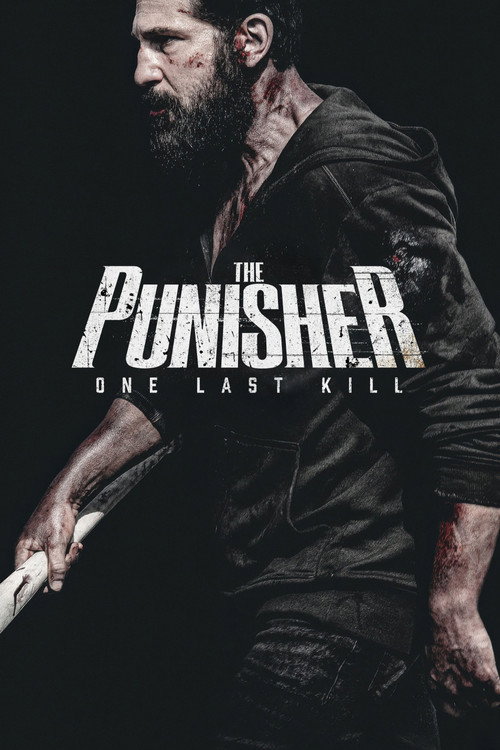
 United States