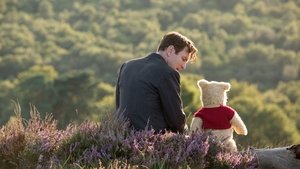
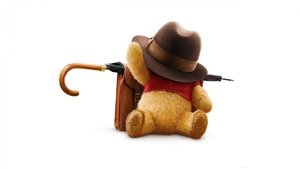
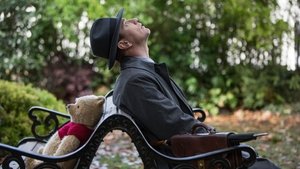
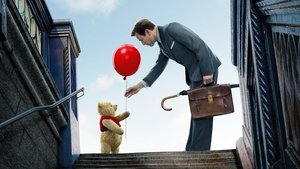
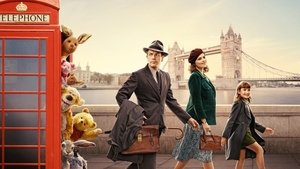
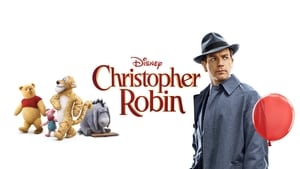
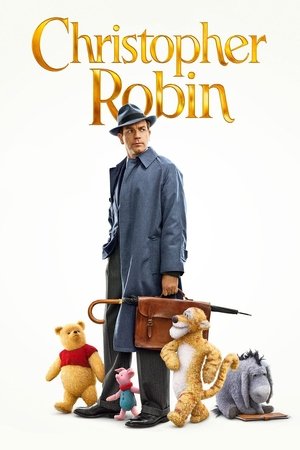
Christopher Robin, the boy who had countless adventures in the Hundred Acre Wood, has grown up and lost his way. Now it’s up to his spirited and loveable stuffed animals, Winnie The Pooh, Tigger, Piglet, and the rest of the gang, to rekindle their friendship and remind him of endless days of childlike wonder and make-believe, when doing nothing was the very best something.
Christopher Robin, the boy who had countless adventures in the Hundred Acre Wood, has grown up and lost his way. Now it’s up to his spirited and loveable stuffed animals, Winnie The Pooh, Tigger, Piglet, and the rest of the gang, to rekindle their friendship and remind him of endless days of childlike wonder and make-believe, when doing nothing was the very best something.
If I had to summarize how I felt after watching this film using only one word, that word would be "underwhelmed".
Maybe I went in with inflated expectations, but this live-action addition to the "Winnie-the-Pooh" film franchise carried over little of the cartoons' charm. It honestly failed to convince me that the stakes were really that important.
Pooh and his friends were not… quite… real. Yes, I know they're really stuffed animals (or most of them are), but I'm referring to the production's technical side. I haven't been able to decide whether they fell into the infamous "uncanny valley" by being _too_ realistic, or just weren't designed well as character models. Pooh in particular never seems to look like he's properly talking, which is a problem when he has the most lines of all the Hundred Acre Wood residents. Actually, I found _most_ of their lip-sync distracting because it was "off".
How the animals looked and moved definitely pulled my attention away from the good parts. There are a number of genuinely funny lines in this movie.¹ Eeyore gets most of them, which meshes with what I remember of the animated installments. (He's got to have _something_ to make up for that dark cloud he lives under, right?) Christopher's heffalump fight and pretty much everything involving Pooh in London did have me grinning, despite the aforementioned animation issues.
As for structure, I thought the use of chapters (complete with "In Which…" titles) in the beginning was great. It was frustrating that most of the film seemed to be one chapter, after burning through something like eight of them in the first few minutes (showing how Christopher Robin goes from childhood to working father). More of those line-drawn animation inserts would have been really nice. Perhaps they could have helped connect the story a bit better; as it was, the plot felt a bit disjointed at times.
I have my own theories on why this is, starting with the fact that there are two "Story by" credits and three "Screenplay by" credits, all separated by "and". That indicates a possible dilution of vision, since so many people touched the script.² It's the opposite of "Written and Directed by", which is akin to publishing a book without an editor's help. A second set of eyes can really help tighten a story, but too many pairs of eyes can melt it into a puddle of conflicting creative visions. It doesn't usually result in an _awful_ script (though it can). Rather, having too many writers involved more often limits how great a script can become.³
I'd actually love to ask the writers if they considered devoting a little more time to explaining how Pooh ends up in London. The Hundred Acre Wood's connection to the real world is kind of just… there, but I think it would have been interesting to explore how the tree tunnel works a bit more. (Fantasy elements are much more fun when we question them and push their limits!)
_Christopher Robin_ was definitely not as great as it could have been. It was enjoyable enough, but it didn't earn a spot in my "Rewatch Over and Over" collection next to _The Many Adventures of Winnie-the-Pooh_ (1977).
----
1. _How_ funny is up for debate, since I can't actually _remember_ any of them less than 24 hours later…
2. In film credits, "and" between names usually means those writers worked separately, i.e. writer 1 finishes, then writer 2 is hired to rework it independently, etc. Teams who worked together simultaneously (and presumably collaborated) are joined by "&" instead. These conventions come from the Writers' Guild of America's pile of rules for who gets credited and in what order.
3. It's implied, but bears restating in relation to this specific assertion: This is _entirely_ my own opinion based on observations, **not fact.**
A wonderful movie on how attached people are to their daily routine, social obligations and other things manufactured and of no true value at all. It shows the importance of having fun and living in the now without worrying about the past or the future.

 Plex
Plex  Kodi
Kodi  Stremio
  Jellyfin
  Netflix
  Disney+
  Prime Video
  HBO Max
  Trakt
Trakt  TMDB
TMDB  Letterboxd
  IMDb
IMDb  Simkl
Simkl  TVTime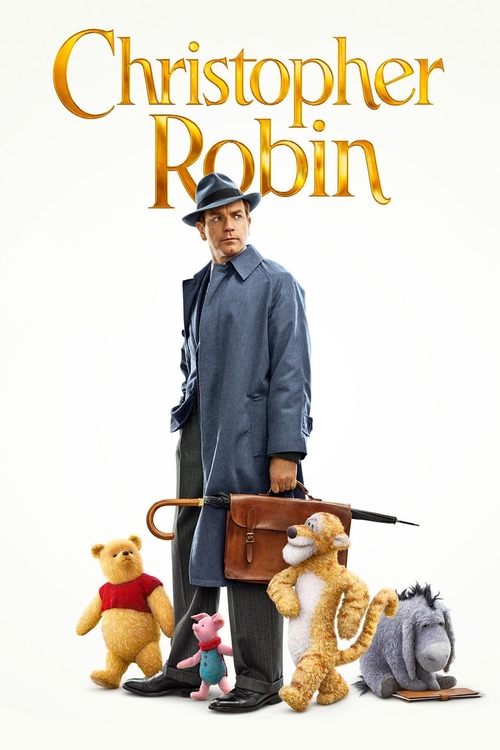
 United Kingdom
 United States